Carotid sinus (Latin: sinus caroticus)
The carotid sinus is
· Nerve supply: the glossopharyngeal nerve, through its carotid sinus branch (the carotid sinus nerve, or nerve of Hering). Small contributions from the vagus nerve and the sympathetic trunk are also described (see nerves of the vessels).
· Function: it senses blood pressure and takes part in its regulation.
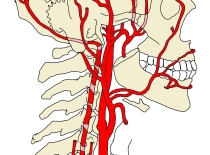 Arteries of the neck
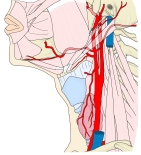 Arteries and muscles of the neck
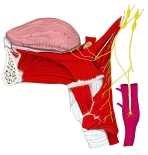 Glossopharyngeal nerve (schematic)
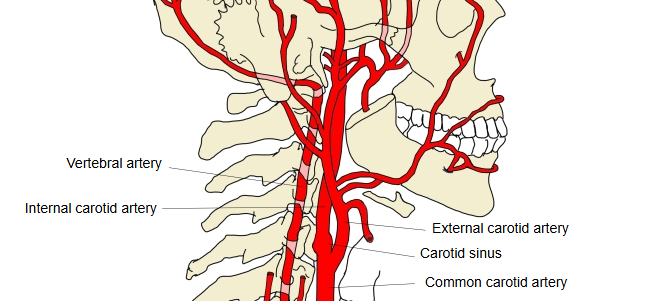
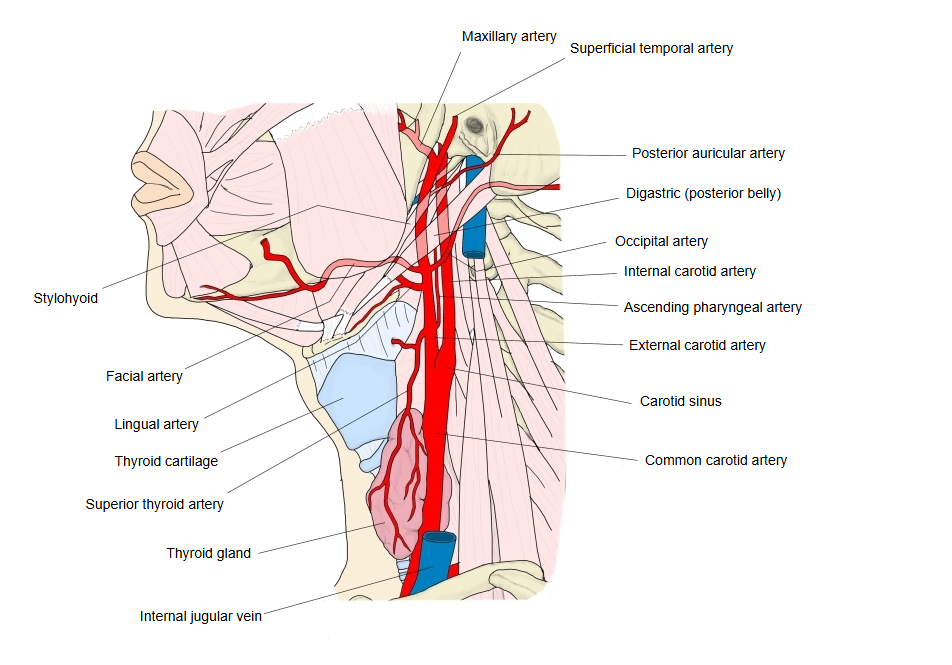
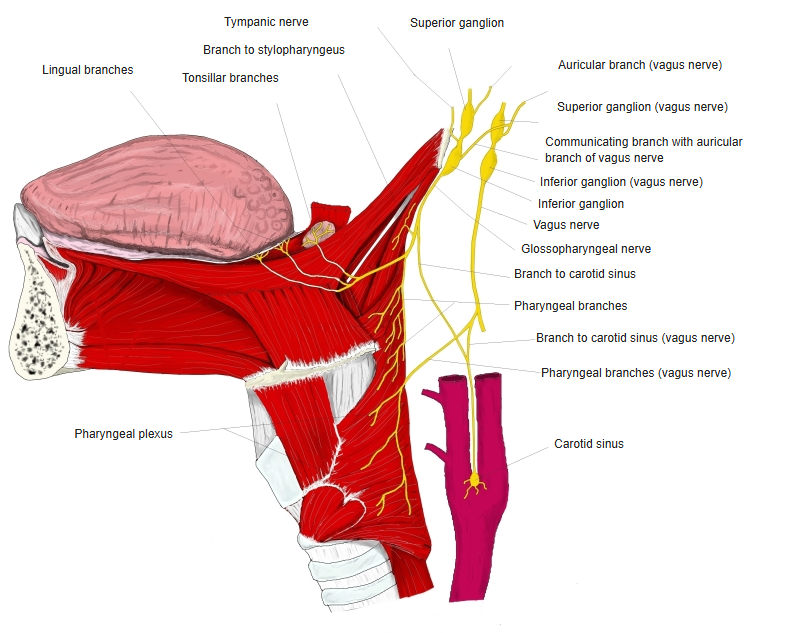
The carotid sinus lies at about the level of the upper border of the thyroid cartilage, where the common carotid artery divides into the internal and external carotid arteries. The widening is usually at the start of the internal carotid artery and is often more marked in older people. Its wall is thin and rich in baroreceptors (stretch receptors) in the adventitia; together with the aortic arch it is the main baroreceptor site of the body. Do not confuse it with the carotid body, a small chemoreceptor organ that lies in the angle of the bifurcation.
Reference websites
[Wikipedia]
· Carotid sinus, Wikipedia.
Structure: the carotid sinus is the reflex area of the carotid artery; the nerve endings in its wall act as pressure receptors.
Function: a rise in blood pressure stretches the wall and increases the firing of the baroreceptors. The signals travel in the carotid sinus nerve and the glossopharyngeal nerve to the nucleus of the solitary tract in the medulla oblongata. The brainstem then slows the heart and widens the blood vessels, so the pressure falls (baroreceptor reflex). The baroreceptors of the aortic arch send similar signals through the vagus nerve. Pressure on the sinus (carotid sinus massage) can slow the heart; in people with a hypersensitive sinus it may cause fainting.
Useful sites
· Carotid sinus (figure, HealthTap)

· Baroreflex (Wikipedia)
Where it is found
Related terms
- Common carotid artery
- Internal carotid artery
- External carotid artery
- Glossopharyngeal nerve
- Carotid branch
- Vagus nerve
References and sources
- Further reading: Carotid sinus, Wikipedia.
- Further reading: Baroreflex, Wikipedia.
- Federative International Programme for Anatomical Terminology (FIPAT). Terminologia Anatomica, 2nd ed. (TA2), 2019.