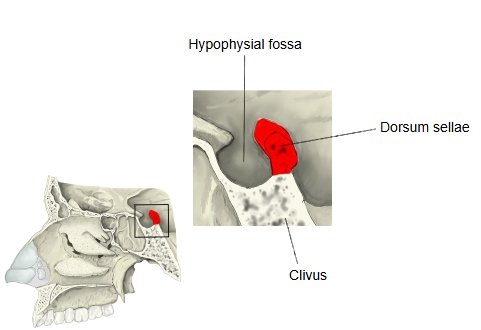
Dorsum sellae (Latin: dorsum sellae)
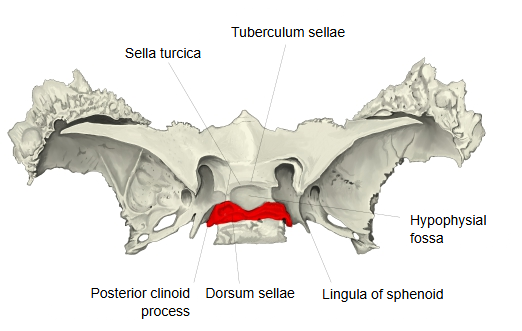
On this site the sella turcica is taken to consist of the following parts, so the dorsum sellae is regarded as a part of the sella turcica.
Sella turcica = tuberculum sellae (the front elevation) + hypophysial fossa (holds the pituitary gland) + dorsum sellae (the back elevation)
Some sources, however, use "sella turcica = hypophysial fossa" and do not count the dorsum sellae as part of it.
It is a roughly square plate rising from the body of the sphenoid and forms the back wall of the hypophysial fossa.
The posterior clinoid processes vary greatly in size.
Its back surface slopes down into the clivus, which it forms together with the basilar part of the occipital bone.
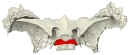 Sphenoid bone (superior view)
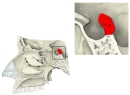 Right nasal cavity, lateral wall (section)
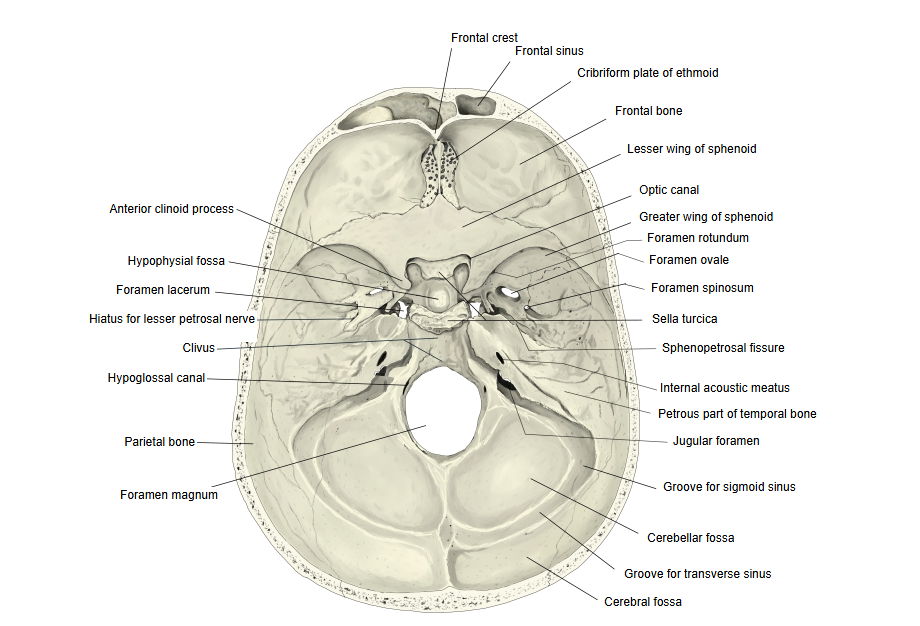
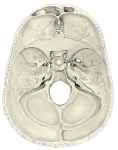 Cranial fossae (internal surface of the cranial base)
Reference websites
[Wikipedia]
· Dorsum sellae, Wikipedia.
[Websites with illustrations]
· Middle cranial fossa: boundaries and contents (TeachMeAnatomy)
· Sphenoid bone: anatomy, function and development (Kenhub)
· Sphenoid bone, upper and posterior surfaces (Gray's Anatomy, fig. 147) (Wikimedia Commons)

Related terms
References and sources
- Further reading: Dorsum sellae, Wikipedia.
- Federative International Programme for Anatomical Terminology (FIPAT). Terminologia Anatomica, 2nd ed. (TA2), 2019.