Enamel sheath
Also called Rod sheath or the prism sheath
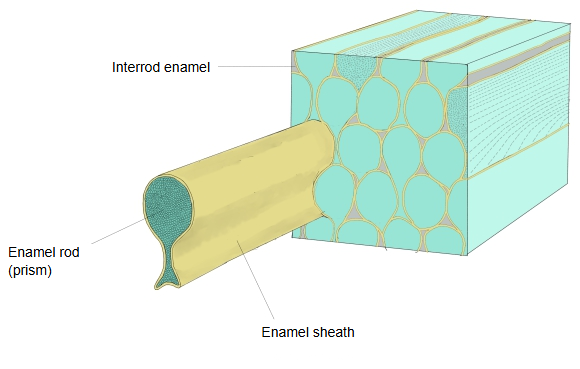
The enamel sheath is the thin boundary layer that wraps each enamel rod of the enamel; it is richer in organic matter (enamel proteins) than the rest of the enamel.
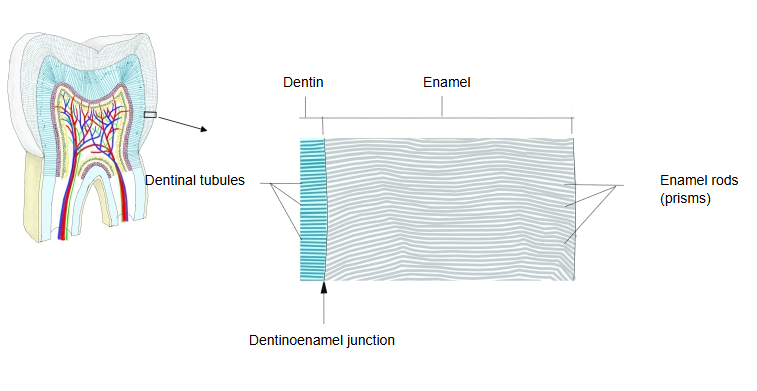
Enamel rods: run closely packed through the enamel from the inner side toward the surface of the crownEnamel proteins: for example amelogenins and enamelins
Structure
of enamel
of enamel
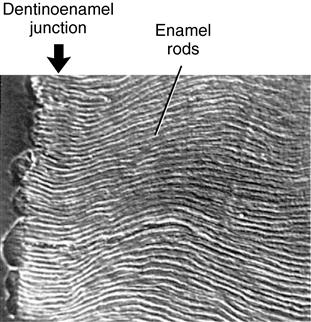
- Enamel rod : the main element of enamel: a bundle of hydroxyapatite crystals that runs closely packed, without branching, from the dentinoenamel junction to the surface of the crown
- Enamel sheath : the thin boundary layer around each rod, less mineralized and richer in organic matter
- Interprismatic substance : hydroxyapatite crystals that fill the narrow spaces between the rods (interrod enamel)
At the sheath, the crystals of the rod and those of the interrod enamel meet at a sharp angle, leaving a narrow, less tightly packed zone. Because it is less mineralized, the sheath outlines each rod in sections of a tooth, and when the enamel is acid-etched or demineralized the sheaths give it a "fish-scale" look under the microscope.
Some sources describe the sheath as an organic envelope that binds the rods together; others treat it only as the boundary between rod and interrod enamel. Sources differ.
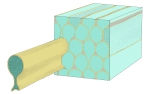 Enamel rod and sheath
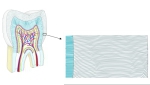 Course of enamel rods
Reference websites
[Wikipedia]
· Tooth enamel, Wikipedia.
[Websites with illustrations]
· Enamel rods and rod sheaths (Pocket Dentistry)
· Enamel rods and interrod enamel (lecture slide) (Muhadharaty)

Related terms
References and sources
- Further reading: Tooth enamel, Wikipedia.
- Federative International Programme for Anatomical Terminology (FIPAT). Terminologia Anatomica, 2nd ed. (TA2), 2019.