Lips (Latin: labia oris)
- Overview
- Structure
- Vessels and nerves
- Reference websites
- (Wikipedia, websites with illustrations)
- Related terms
Overview
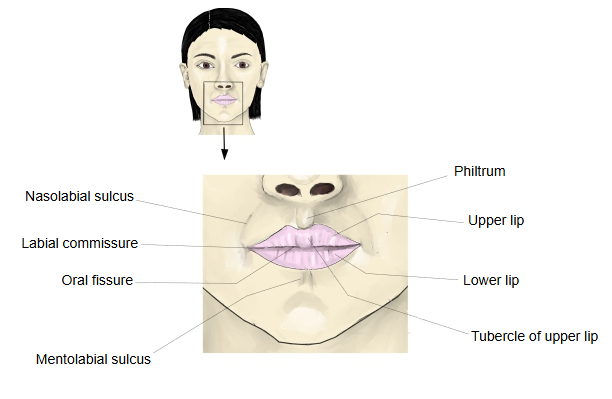
· A shallow groove that runs obliquely downward and outward between the upper lip and the cheek is the nasolabial groove (nasolabial sulcus).
· The broad groove in the midline of the skin part of the upper lip is the philtrum.
· The free edge at the lower end of the philtrum is raised and is called the tubercle of the upper lip.
· The small groove that forms the boundary between the lower lip and the chin is the mentolabial groove (mentolabial sulcus).
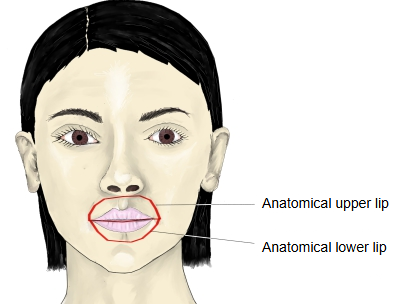
· In anatomy the lips are the region above the mentolabial groove (the lower lip) and below the nasolabial groove (the upper lip), so they are much larger than their red part.
Structure
of the
lips
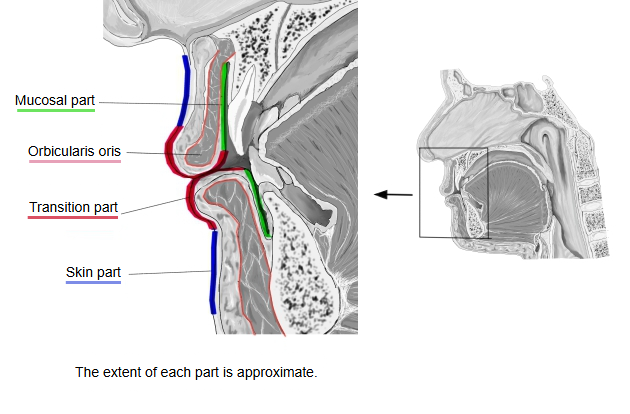
- Skin part : like ordinary skin, with hair follicles, sweat glands and sebaceous glands; in men it carries the moustache and beard.
- Transition part : = transitional skin, between the skin part and the mucosal part ⇒ the part everyday language calls "the lips" (the red part, vermilion).
- Surface : covered by stratified squamous epithelium, very thin and non-keratinised or only thinly keratinised (sources differ); no hairs.
- Lamina propria : tall connective-tissue papillae rich in capillaries ⇒ the lips look red; no sweat glands, so the red part dries easily.
- Mucosal part : continuous with the oral mucosa (non-keratinised epithelium), with few papillae; contains the labial glands.
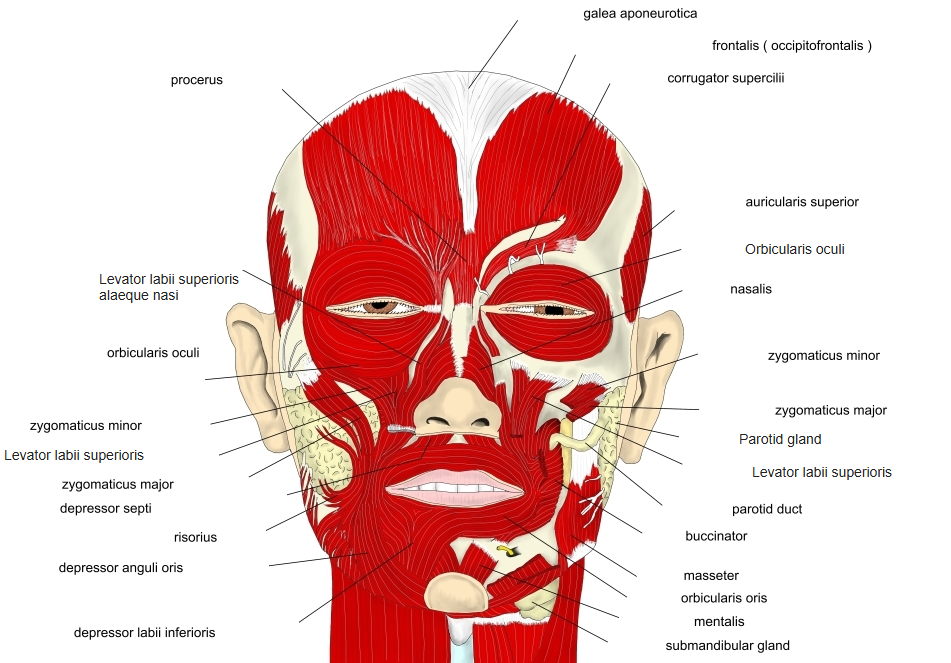
Other facial muscles that raise, lower or widen the lips insert into the orbicularis oris, which closes and purses the mouth.
Between the fibres of the orbicularis oris there are striated muscle fibres that run from the skin to the mucosa; they are called the compressor muscle of the lip (compressor labii). They are said to be well developed in newborns and to help in sucking.
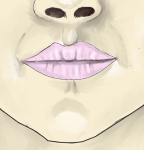 Lips and surrounding skin
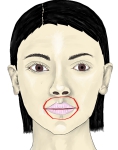 Anatomical lips
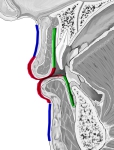 Parts of the lip (median section)
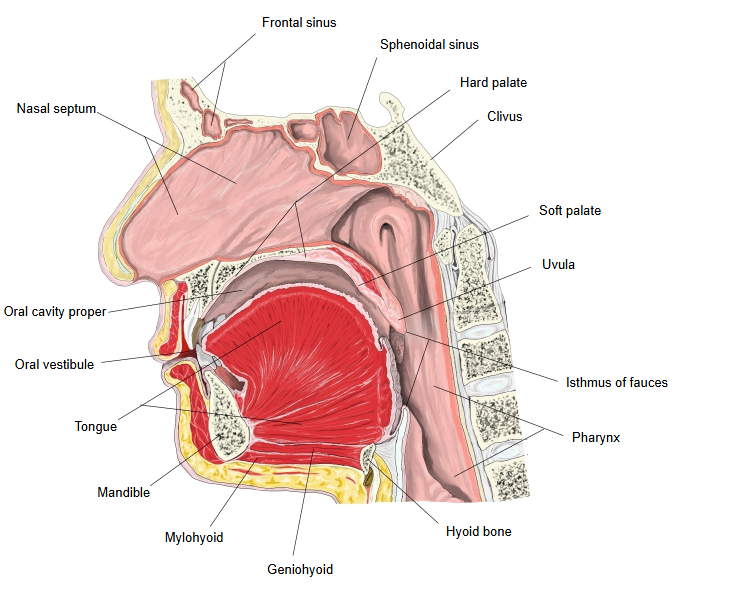
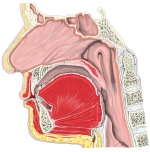 Nose, mouth and pharynx (median section)
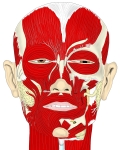 Muscles of facial expression
Vessels and nerves
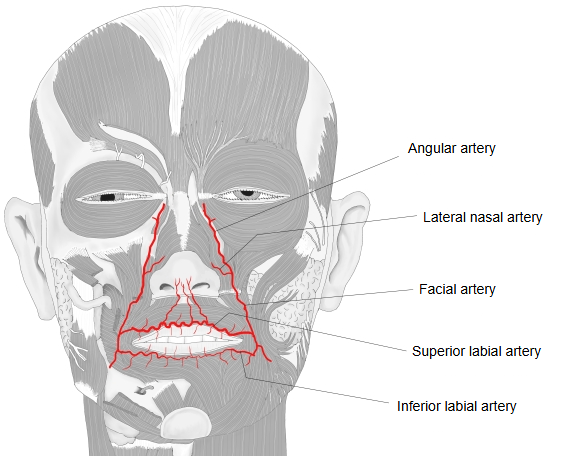
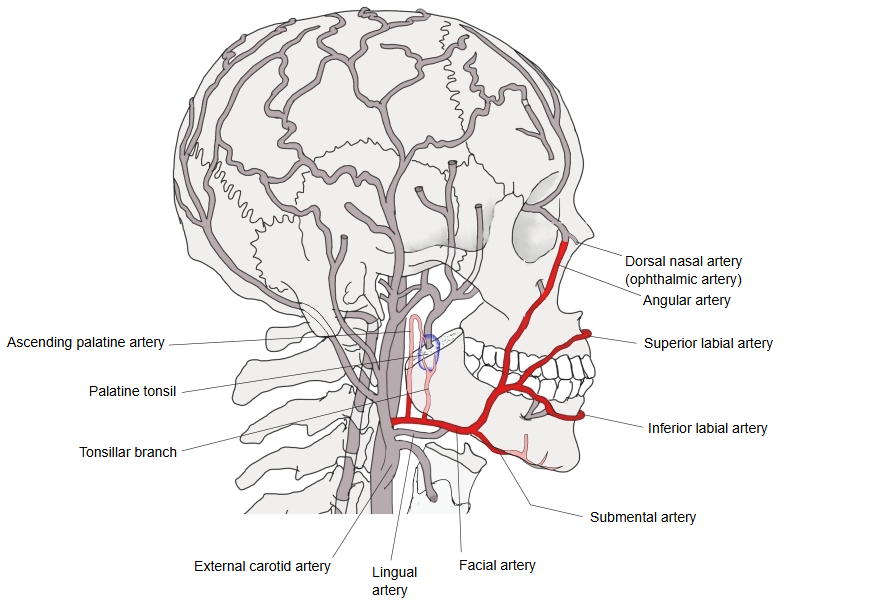
Arteries: the superior labial artery and the inferior labial artery (branches of the facial artery); the arteries of the left and right sides join across the midline, forming a ring around the mouth.
Lymph: drains mainly to the submandibular and submental lymph nodes.
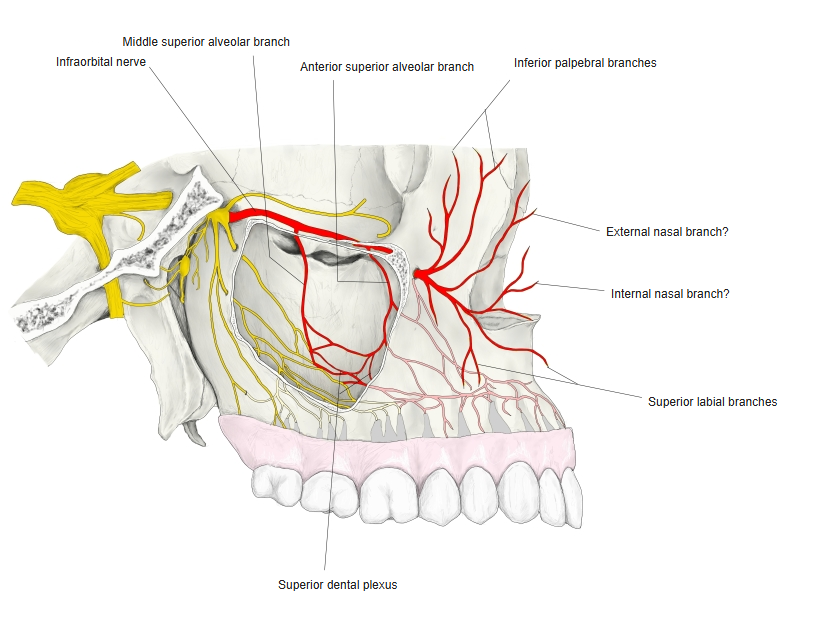
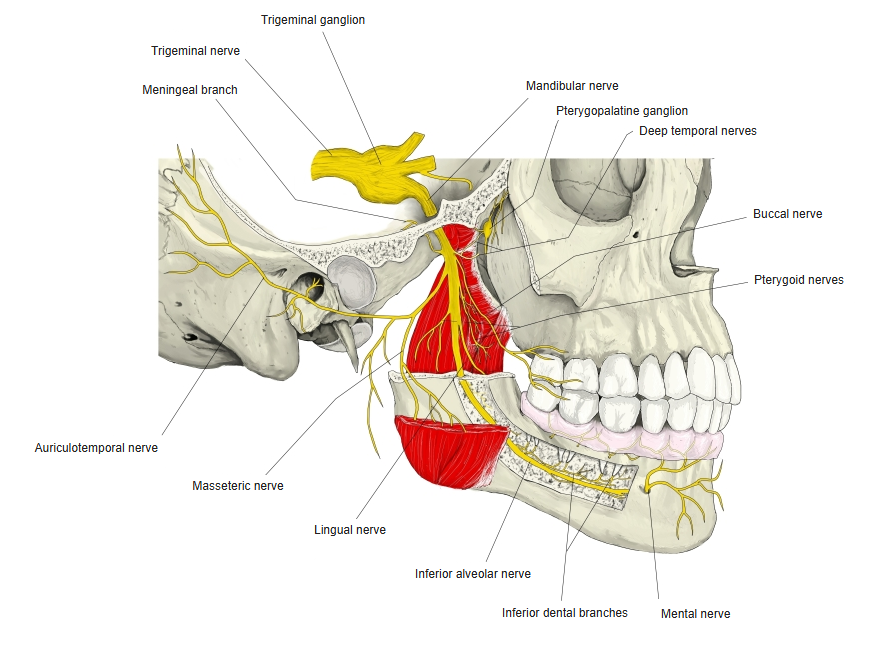
Nerves: sensory to the upper lip from the infraorbital nerve (a branch of the maxillary nerve), to the lower lip from the mental nerve (a branch of the mandibular nerve). Motor: the facial nerve supplies the orbicularis oris and the other muscles of the lips.
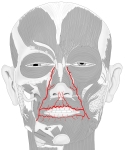 Labial arteries (anterior)
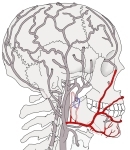 Labial arteries (right side)
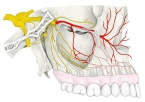 Infraorbital nerve (right side)
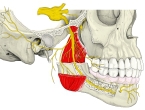 Mandibular nerve (right side)
Reference websites
[Wikipedia]
· Lip, Wikipedia.
[Websites with illustrations]
· Orbicularis oris (Kenhub)
· Oral cavity (Kenhub)
· The oral cavity (TeachMeAnatomy)
Related terms
- Upper lip
- Lower lip
- Angle of mouth
- Nasolabial sulcus
- Mentolabial sulcus
- Orbicularis oris
- Oral cavity
References and sources
- Further reading: Lip, Wikipedia.
- Federative International Programme for Anatomical Terminology (FIPAT). Terminologia Anatomica, 2nd ed. (TA2), 2019.