Posterior region of leg (Latin: regio cruris posterior)
Also called: posterior crural region
The posterior region of the leg
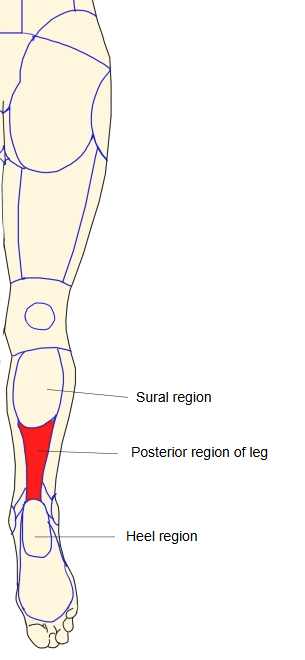
In the anatomical regions of the body, the posterior region of the leg (posterior crural region) is one of the regions of the lower limb: on this site, the part on the back of the leg below the sural region.
In this narrower sense it lies roughly over the calcaneal (Achilles) tendon.It is paired: there are a right and a left posterior region of the leg.
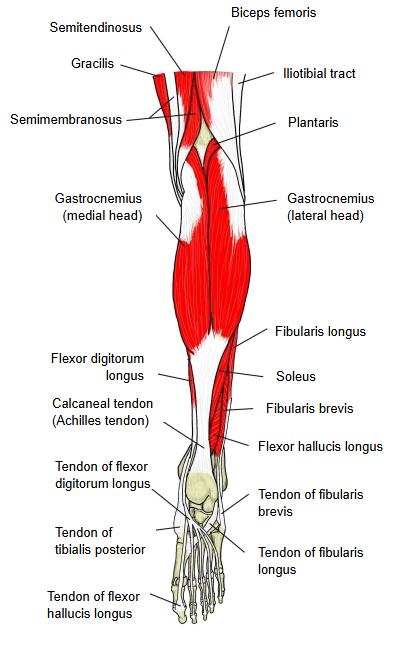
Sources differ on this boundary: in standard terminology the posterior region of the leg covers the whole back of the leg, between knee and ankle, and the sural region (calf) is part of it. Beneath the back of the leg lies the posterior compartment, with gastrocnemius, soleus and the deep flexors such as tibialis posterior, behind the tibia and fibula.
 Posterior region of leg
 Regions of the lower limb (posterior)
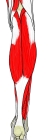 Muscles of the leg (posterior)
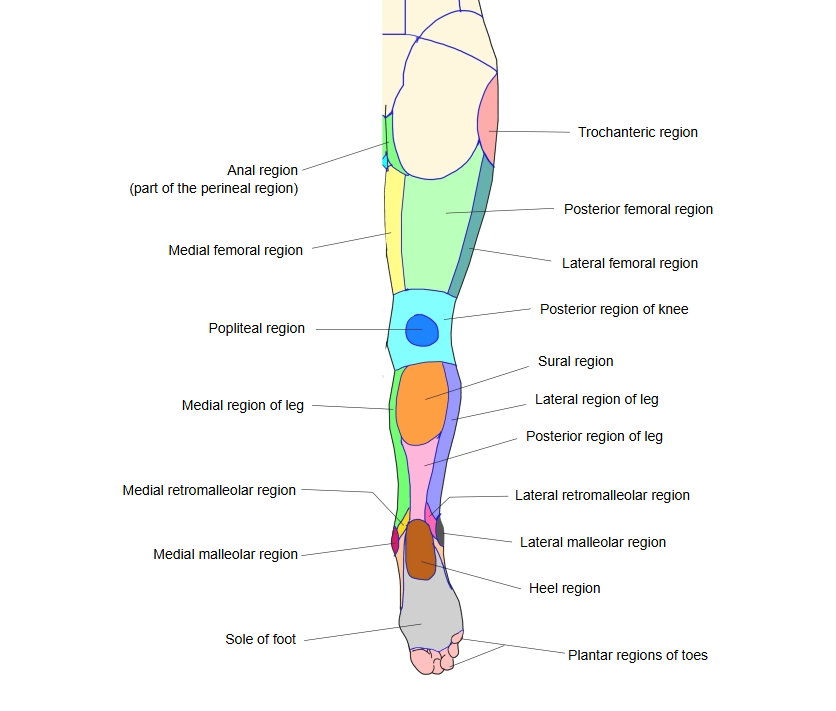
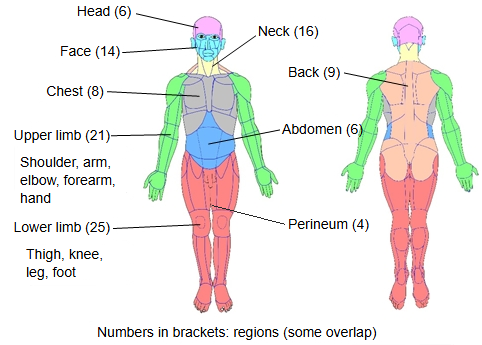
On this site the body is divided into three main parts, the head and neck, the trunk and the limbs, and the limbs into the upper and lower limbs. Each part is divided further into smaller regions.
Regions
of the
body
of the
body
- Head and neck : 1. head (head, face) 2. neck
- Trunk : 1. chest 2. abdomen 3. back
- Limbs
- Upper limb : 1. shoulder 2. arm 3. elbow 4. forearm 5. hand
- Lower limb : 1. perineum 2. thigh 3. knee 4. leg 5. foot
Related terms
References and sources
- Further reading: Posterior compartment of leg, Wikipedia.
- Federative International Programme for Anatomical Terminology (FIPAT). Terminologia Anatomica, 2nd ed. (TA2), 2019.