Superior articular facet of vertebra (Latin: facies articularis superior vertebrae)
Also called the superior articular surface
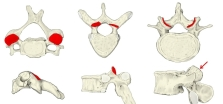 Superior articular facets (C4, T6, L4)
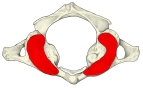 Atlas (superior view)
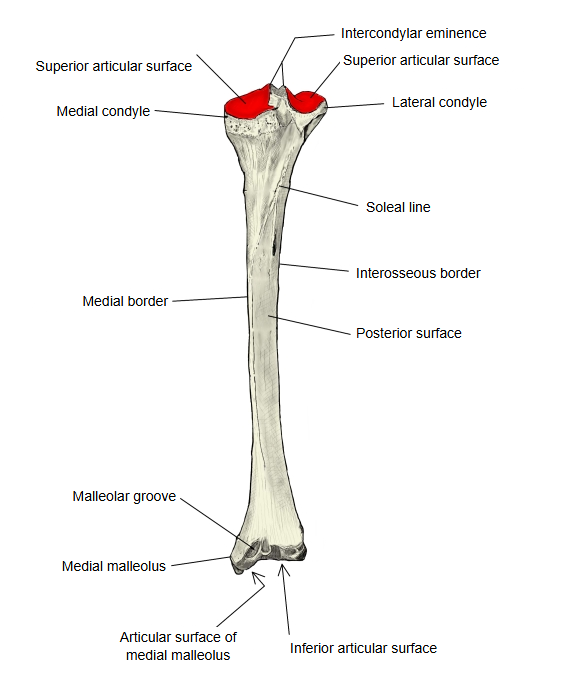
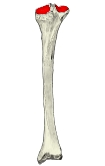 Not a vertebra: the superior articular surface of the tibia, a different surface with the same name (right tibia, posterior view)
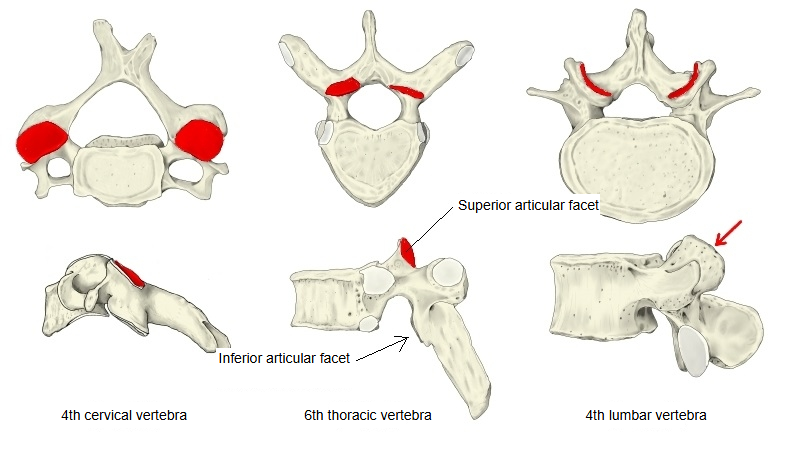
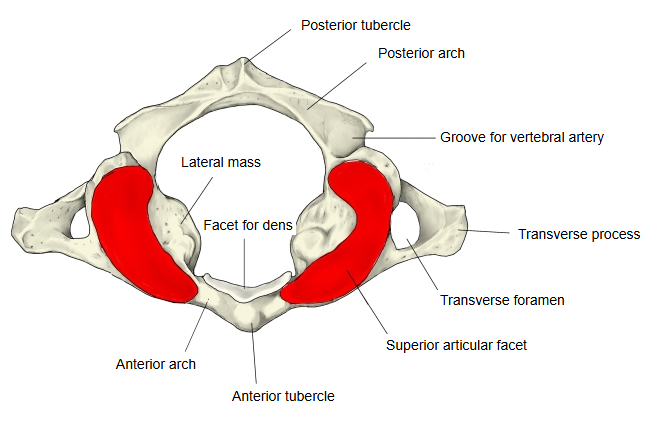
Each vertebral arch carries two superior articular processes, one on each side, projecting upwards from the junction of the pedicle and lamina. The facet covers the surface of each process that meets the inferior articular facet of the vertebra above, forming a zygapophysial (facet) joint.
Its direction changes along the vertebral column: in the cervical vertebrae it faces upwards and backwards; in the thoracic vertebrae mainly backwards and slightly laterally; in the lumbar vertebrae it is concave and faces medially and backwards. These changes are a main reason why the regions of the spine differ in the movements they allow.
Related terms
- Superior articular facet of atlas
- Superior articular process
- Inferior articular facet of vertebra
- Vertebral column
- Cervical vertebrae
- Thoracic vertebrae
- Lumbar vertebrae
- Superior articular surface of tibia
References and sources
- Further reading: Facet joint, Wikipedia.
- Further reading: Articular processes, Wikipedia.
- Federative International Programme for Anatomical Terminology (FIPAT). Terminologia Anatomica, 2nd ed. (TA2), 2019.