Unipolar neuron (Latin: neuron unipolare)
Also called the unipolar nerve cell
A unipolar neuron is one of the types of neuron sorted by shape: a neuron from whose cell body only a single process leaves.
Neuron: the basic cell of nervous tissue (nerve cell)By shape: mainly by the number of dendrites and axonsCell body: holds the organelles (nucleus, mitochondria and others)
· Most neurons of the central nervous system of invertebrates (for example insects) are unipolar; their cell bodies lie at the edge of the neuropil and do not take part in signal transmission, and the single process branches into receiving (dendritic) and sending (axonal) parts. In the human body true unipolar neurons are rare, and sources do not agree where they are found; immature neurons pass through a unipolar stage during development. Many texts use the term loosely for the pseudounipolar sensory neurons of the spinal and cranial sensory ganglia (sources differ).
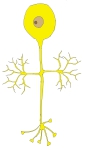 Unipolar neuron
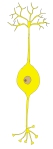 Bipolar neuron
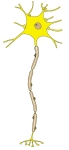 Multipolar neuron
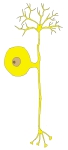 Pseudounipolar neuron
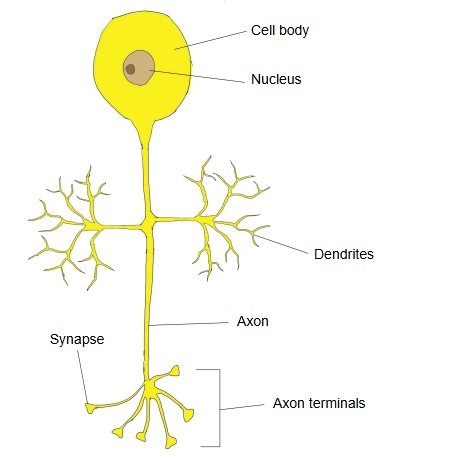
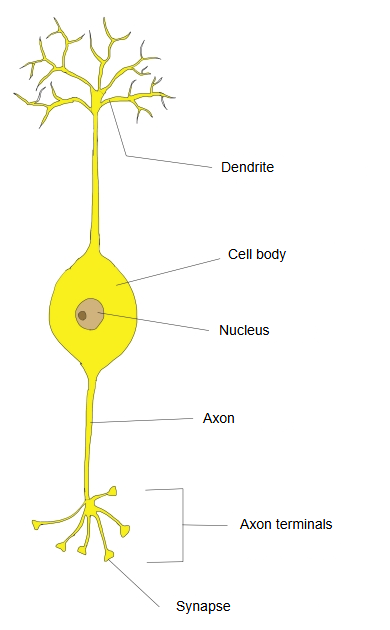
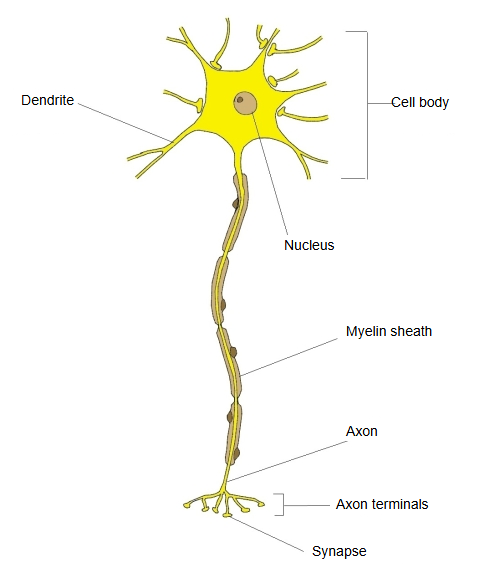
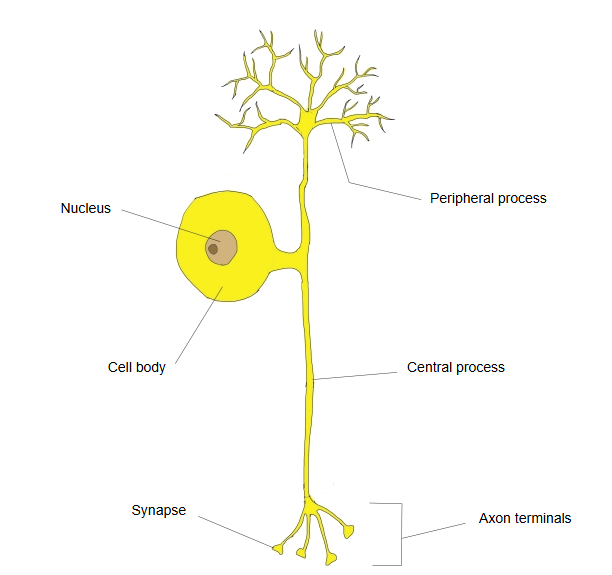
Reference websites
[Wikipedia]
· Unipolar neuron, Wikipedia.
Related terms
- Neuron
- Multipolar neuron
- Pseudounipolar neuron
- Interneuron
- Cell body
- Axon
- Dendrite
- Nervous tissue
- Glial cell
References and sources
- Further reading: Unipolar neuron, Wikipedia.
- Federative International Programme for Anatomical Terminology (FIPAT). Terminologia Anatomica, 2nd ed. (TA2), 2019.