Zygomaticoalveolar crest (Latin: crista zygomaticoalveolaris)
Also called the infrazygomatic crest or the key ridge
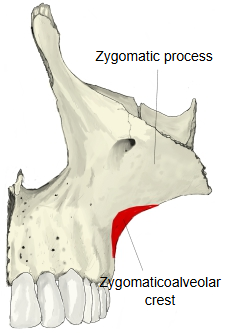
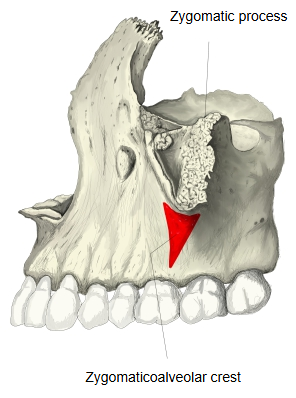
The zygomaticoalveolar crest is a part of the maxilla: the bony ridge running from the lower edge of the zygomatic process down towards the first molar.
Maxilla: one of the bones of the viscerocranium (facial skeleton)Zygomatic process: comes out from the outer side of the body of the maxilla and joins the zygomatic bone
The same ridge is also called the infrazygomatic crest; in dentistry it is called the key ridge.
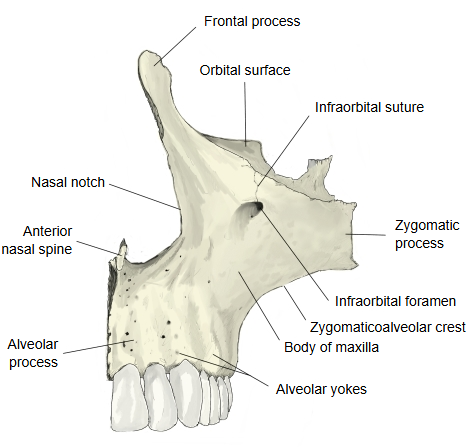
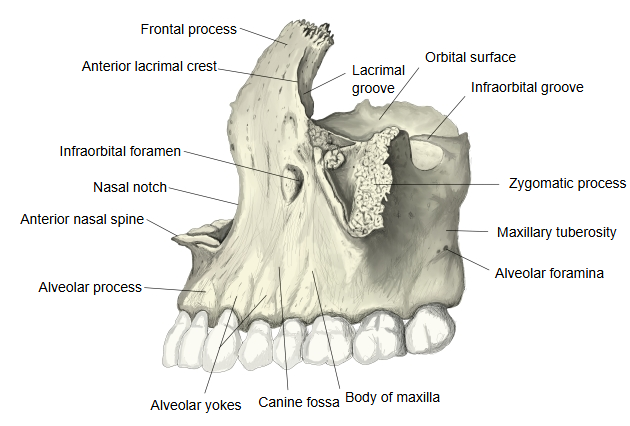
It lies on the lateral side of the body of the maxilla, between the anterior surface and the infratemporal surface, and runs from the lower edge of the zygomatic process down to the alveolar process above the first upper molar. It separates the canine fossa in front from the maxillary tuberosity behind. It is a buttress that passes chewing forces from the upper teeth to the zygomatic bone. It can be felt through the mouth in the upper vestibule, where dentists use it as a landmark.
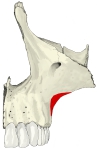 Maxilla: lateral view
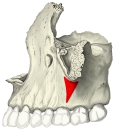 Maxilla: anterolateral view
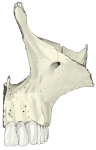 Maxilla: main features
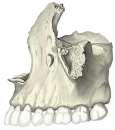 Maxilla: lateral view, main features
Related terms
- Body of maxilla
- Zygomatic process
- Alveolar process
- Maxillary tuberosity
- Canine fossa
- Maxilla
- Zygomatic bone
References and sources
- Further reading: Maxilla, Wikipedia.
- Federative International Programme for Anatomical Terminology (FIPAT). Terminologia Anatomica, 2nd ed. (TA2), 2019.