Latin: glandula sublingualis
Overview
- The smallest of the major salivary glands: a long, flat gland in the floor of the mouth under the sublingual fold.
- A mixed gland, strongly mucous; produces only about 3–5% of saliva.
- Compound tubuloalveolar; it has many serous demilunes, rudimentary striated ducts and loose connective tissue between its lobules.
- Has no true capsule; its back end touches the submandibular gland.
- Lies above the mylohyoid, beside the genioglossus, and can be felt in the floor of the mouth behind the lower canine.
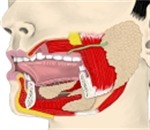
Salivary glands from the side 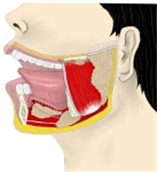
Major salivary glands 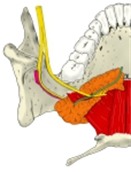
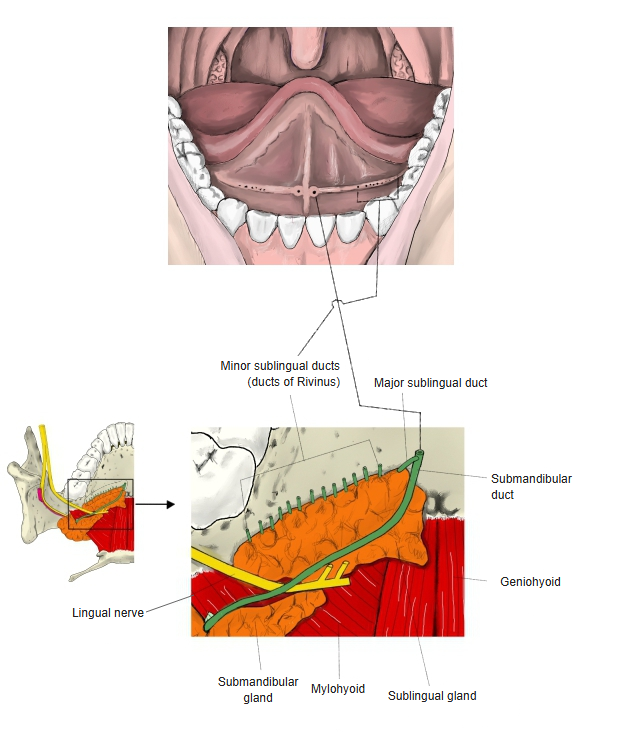
Floor of the mouth from above
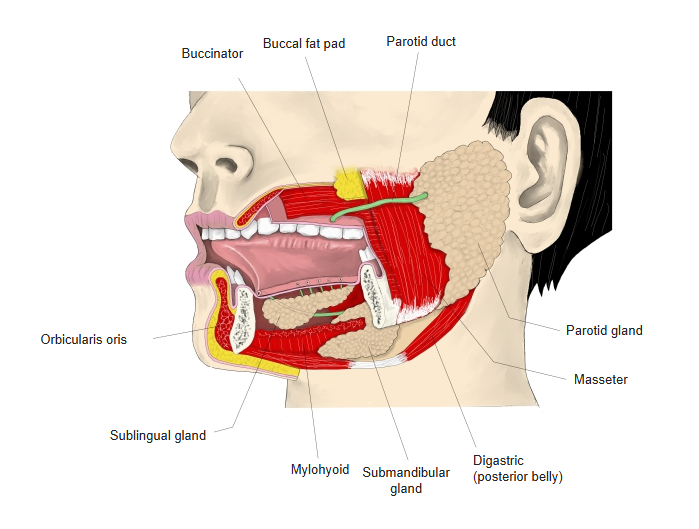
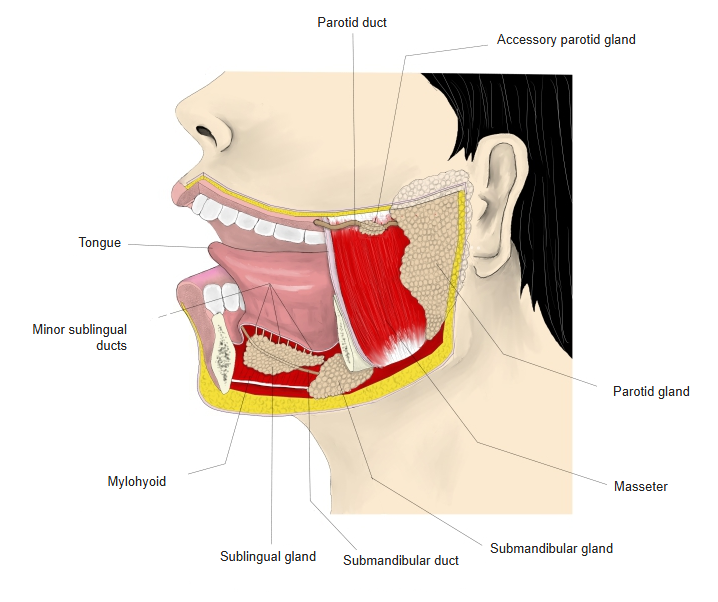
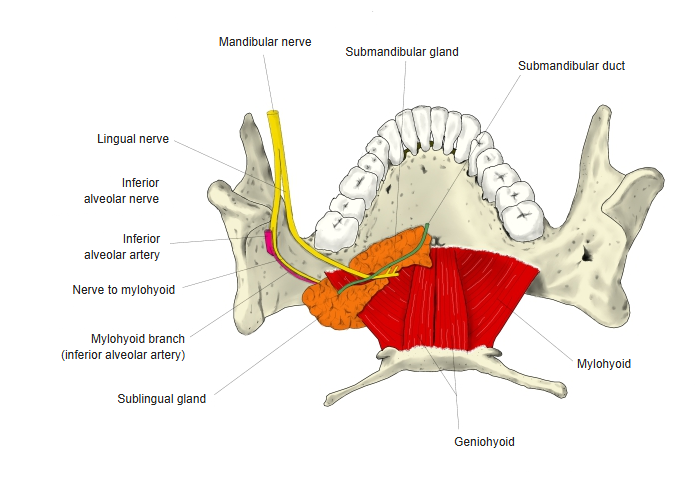
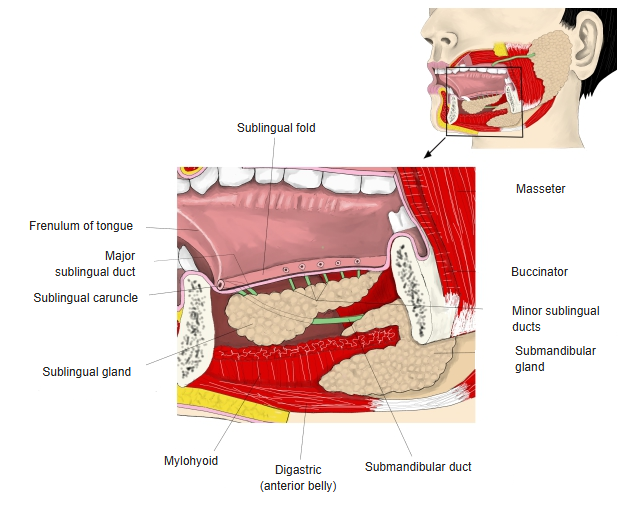
Sublingual ducts
- Major sublingual duct (Bartholin’s duct): a single duct from the main part of the gland; opens at the sublingual caruncle, with or beside the submandibular duct.
- Minor sublingual ducts (ducts of Rivinus): 8–20 small ducts from the smaller accessory lobes lateral to it; each opens separately on the sublingual fold.
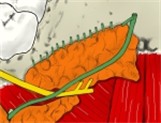
Sublingual ducts 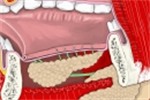
Floor of the mouth from inside
Blood supply, lymph and nerves
| Supply | Source |
|---|---|
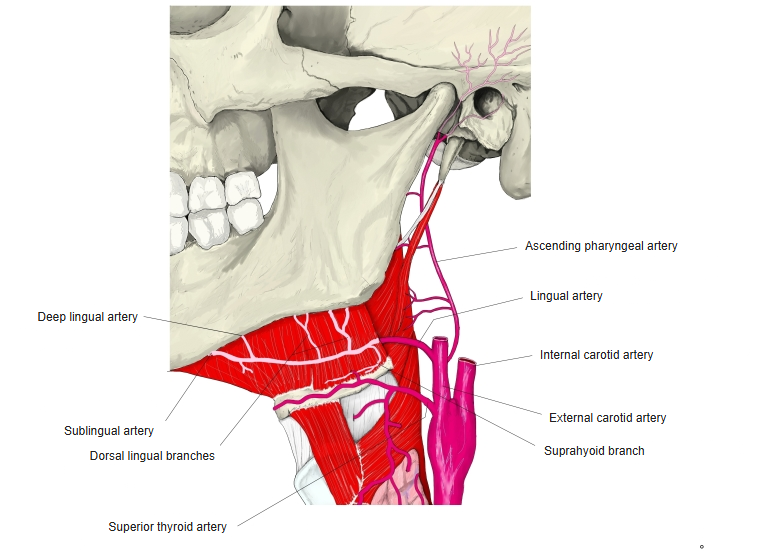
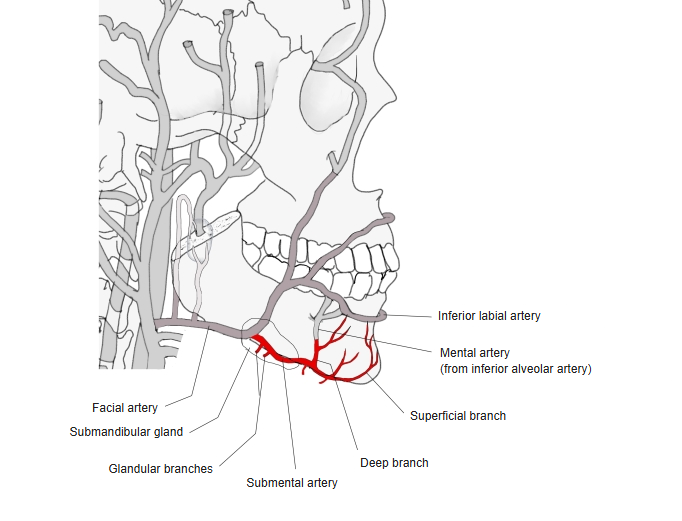
| Arteries | Sublingual artery (from the lingual artery) and submental artery (from the facial artery) |
| Veins | Follow the arteries |
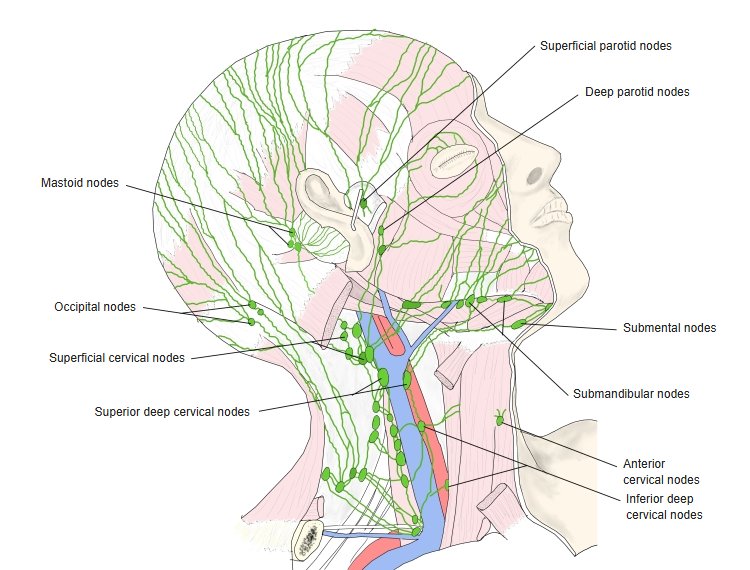
| Lymph | Submandibular nodes |
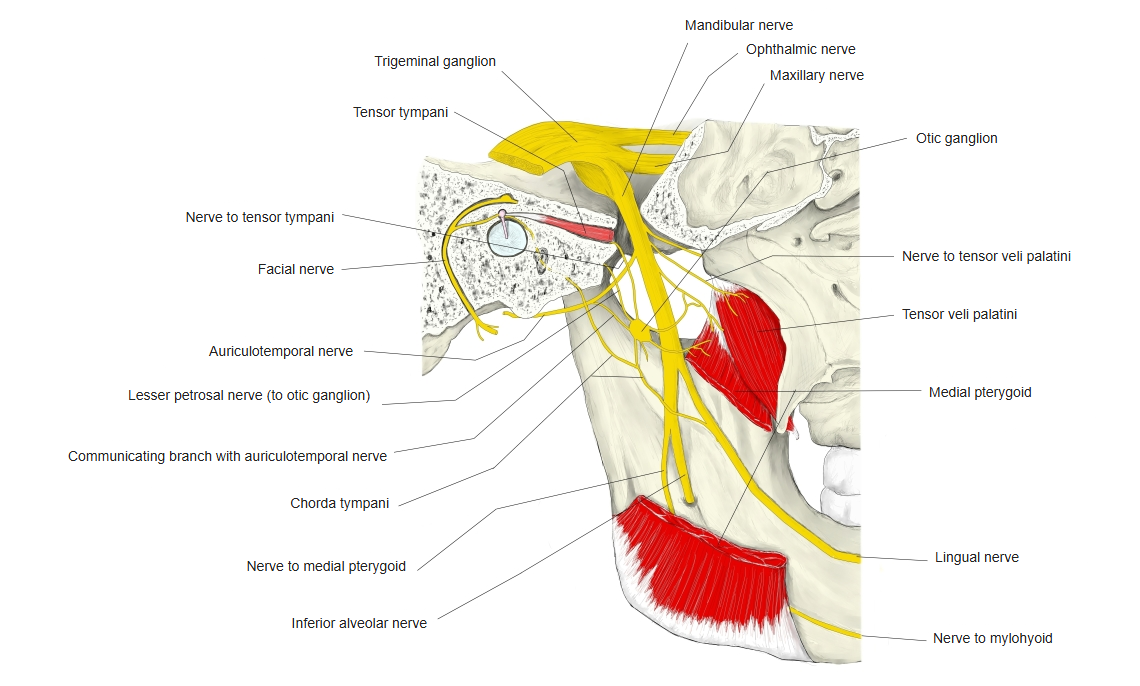
| Nerves | Same as the submandibular gland: parasympathetic fibres from the facial nerve via the chorda tympani, lingual nerve and submandibular ganglion; sympathetic fibres along the arteries |
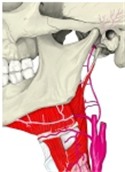
Lingual artery 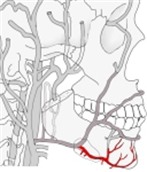
Submental artery 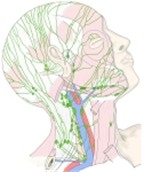
Lymph nodes of the head and neck 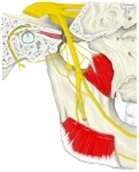
Mandibular nerve (medial view)
References and sources
- Further reading: Sublingual gland, Wikipedia.