Latin: ossicula auditus
Overview
- Three tiny bones in the tympanic cavity: the malleus, incus and stapes – the smallest bones of the body.
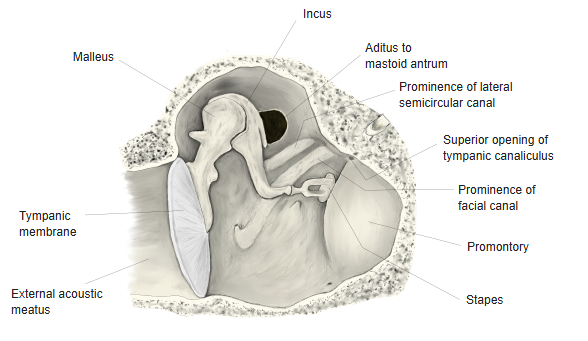
- They form a chain from the tympanic membrane to the oval window and pass on its vibrations.
- The chain acts as a lever and, together with the size difference between the tympanic membrane and the base of the stapes, raises the sound pressure about 20 times.
- Each bone has its own page in the bones section; glossary entry: auditory ossicles.
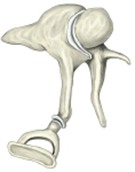
Left auditory ossicles, medial view 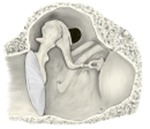
Ossicles in the tympanic cavity
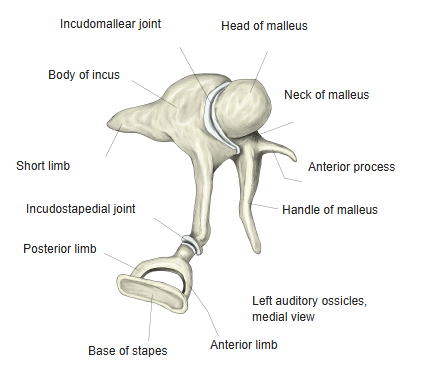
The three ossicles
| Bone | Parts | Connections |
|---|---|---|
| Malleus (hammer) | Head, neck, handle, lateral and anterior processes | Handle attached to the tympanic membrane; head joins the incus |
| Incus (anvil) | Body, short limb, long limb with the lenticular process | Body joins the malleus; long limb joins the stapes |
| Stapes (stirrup) | Head, anterior and posterior limbs, base (footplate) | Base fixed in the oval window by the annular ligament |
- Joints: incudomallear joint (glossary) and incudostapedial joint, both synovial.
- The ossicles are held by small ligaments and covered by the mucous membrane of the tympanic cavity.
Muscles of the ossicles
- Tensor tympani: inserts on the handle of the malleus; tenses the tympanic membrane. Supplied by the mandibular nerve.
- Stapedius: the smallest skeletal muscle; inserts on the neck of the stapes; pulls the stapes back from the oval window. Supplied by the facial nerve.
- Both contract reflexly to loud sounds and dampen the movement of the chain.
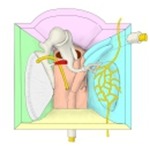
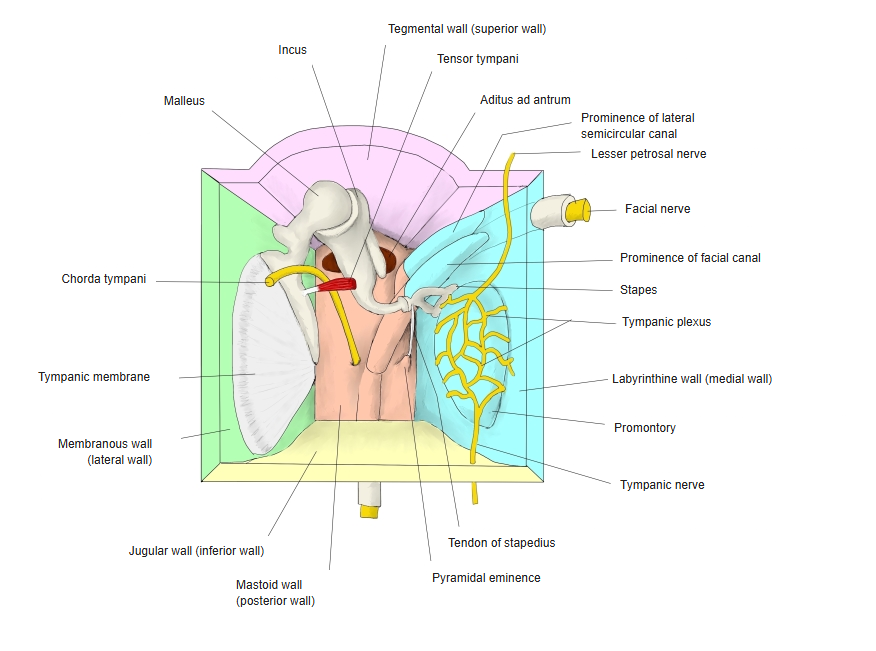
Walls of the tympanic cavity (model) 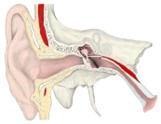
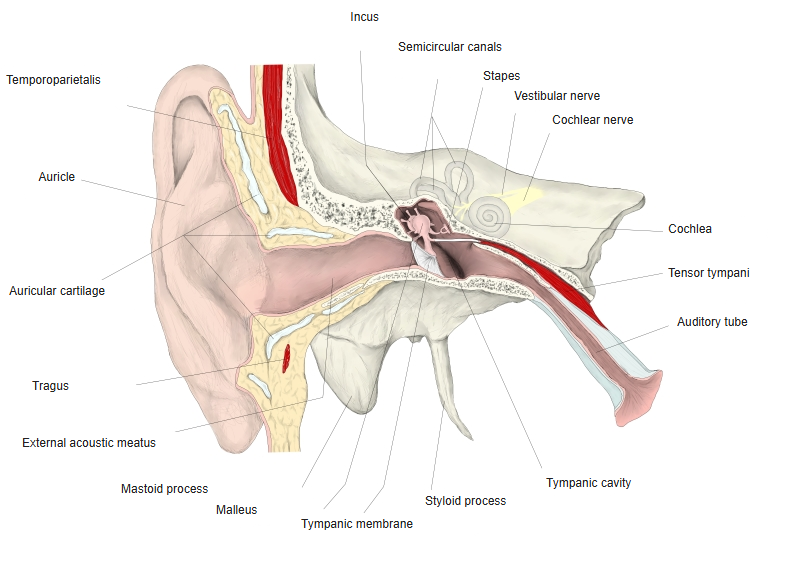
Ear, coronal section
References and sources
- Further reading: Auditory ossicles, Wikipedia.