Duodenal impression (Latin: impressio duodenalis hepatis)
of the liver
- Right lobe
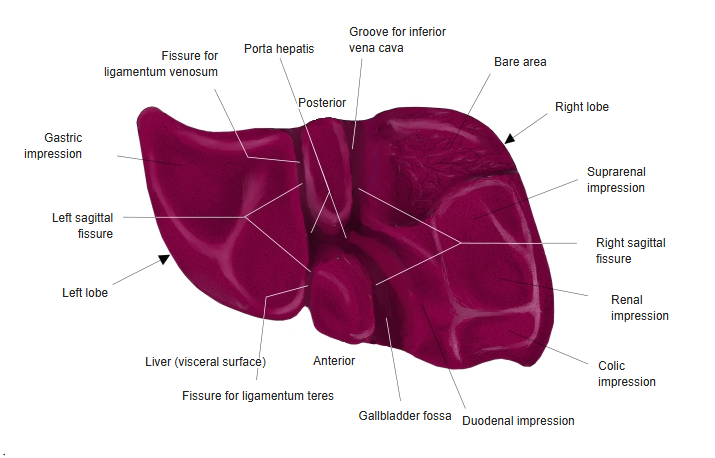
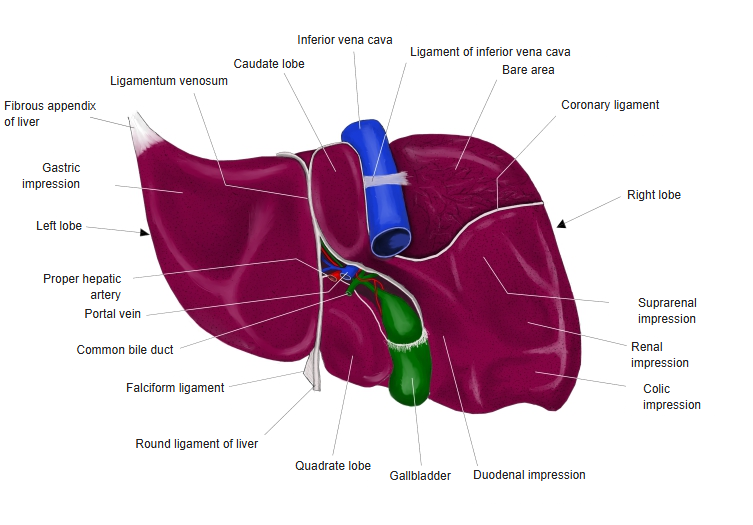
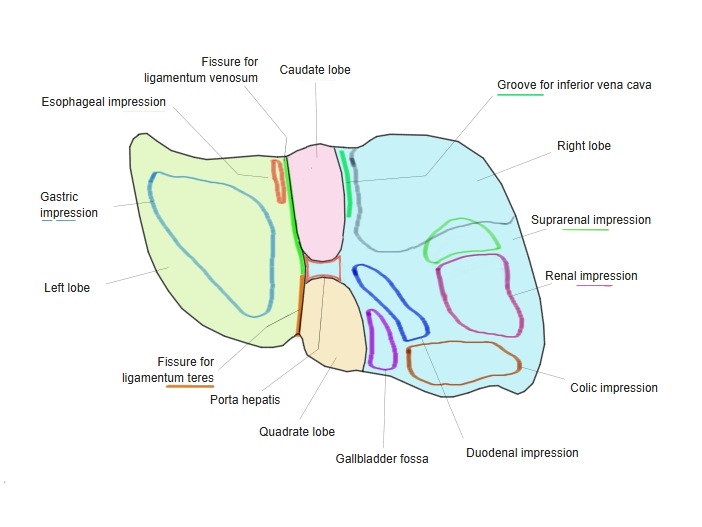
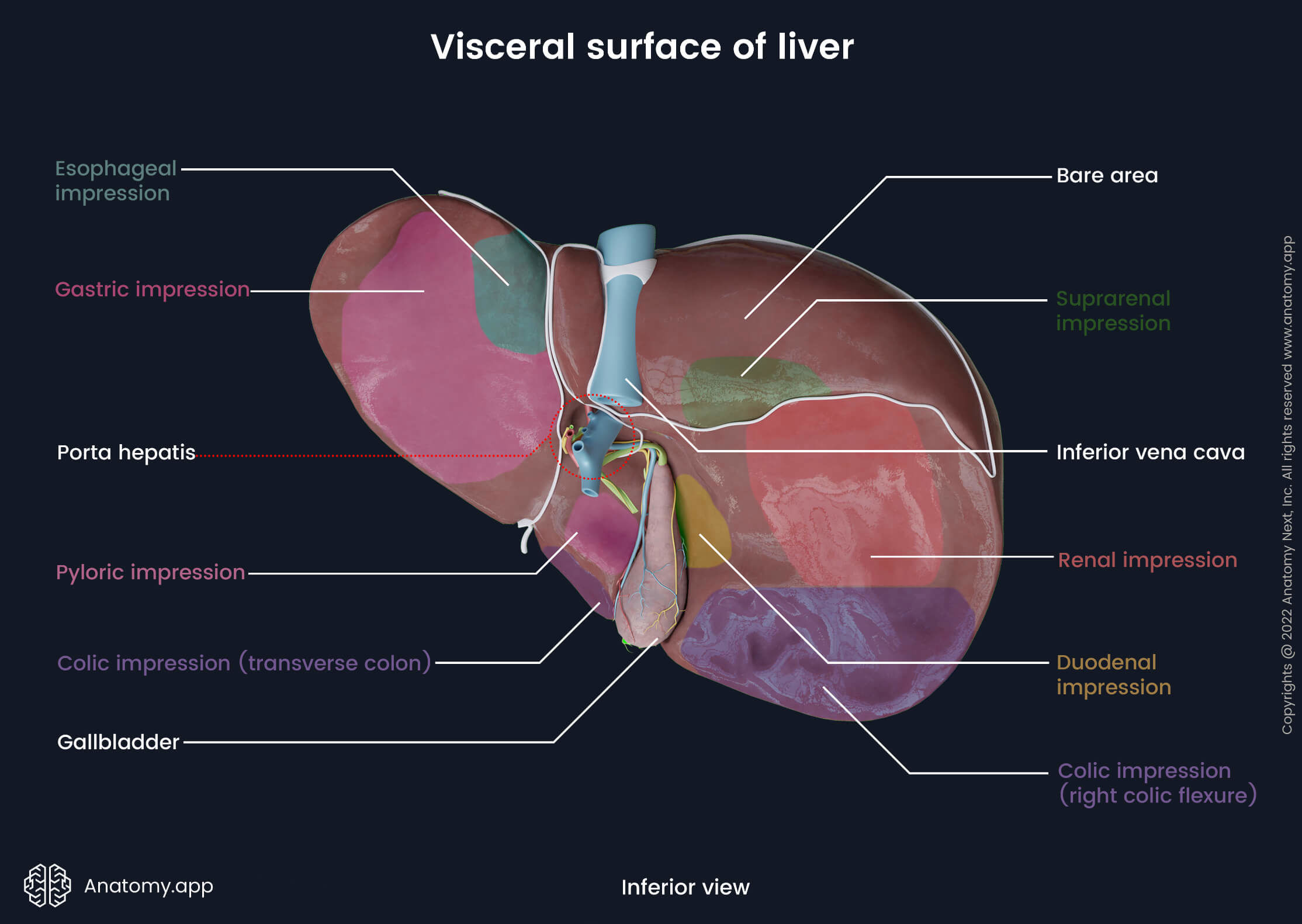
- Suprarenal impression : made by the right suprarenal gland; partly or wholly on the bare area.
- Renal impression : made by the right kidney.
- Colic impression : made by the colon; to the right of the gallbladder.
- Duodenal impression : made by the duodenum; to the right, near the neck of the gallbladder.
- Left lobe
- Esophageal impression : made by the esophagus; not always distinct.
- Gastric impression : made by the stomach; the largest impression.
· It is a small, shallow impression on the right lobe, just to the right of the neck of the gallbladder and the gallbladder fossa, between the colic impression in front and the renal impression behind.
· It is made mainly by the superior duodenal flexure, where the first part of the duodenum turns down into the second part; sources differ on how much of the first and second parts is in contact. It is narrow and often poorly marked. The other impressions are made by the right suprarenal gland, the right kidney, the colon, the esophagus and the stomach.
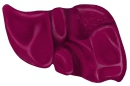 Liver (visceral surface)
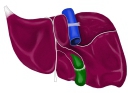 Liver: lobes and structures
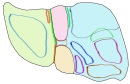 Visceral surface (diagram)
Reference websites
[Wikipedia]
· Liver, Wikipedia.
[Websites with illustrations]
· Gray's Anatomy: posterior and inferior surfaces of the liver (Wikimedia Commons)

· The liver (TeachMeAnatomy)
· Liver (illustration) (Anatomy.app)
Where it is found
Related terms
- Colic impression
- Renal impression
- Gastric impression
- Neck of gallbladder
- Right lobe of liver
- Duodenum
- Liver
References and sources
- Further reading: Liver, Wikipedia.
- Federative International Programme for Anatomical Terminology (FIPAT). Terminologia Anatomica, 2nd ed. (TA2), 2019.