Infraorbital groove (Latin: sulcus infraorbitalis)
Also called the infraorbital sulcus
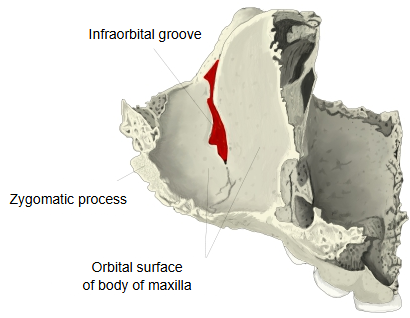
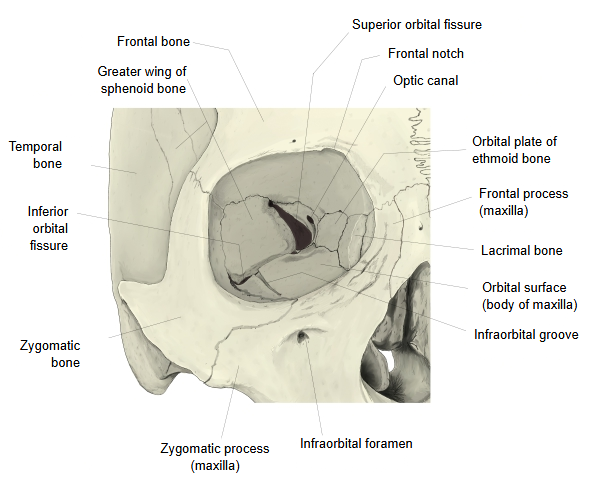
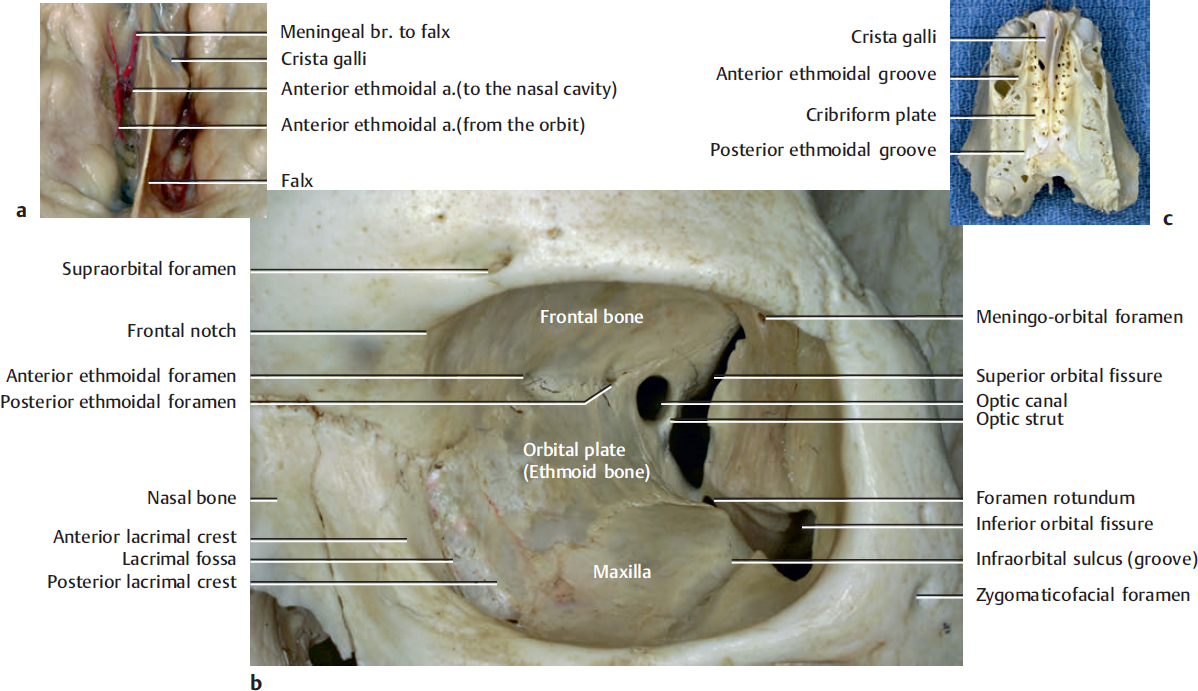
The infraorbital groove is a part of the maxilla: a groove on the orbital surface of the body of the maxilla, in the floor of the orbit, that runs forwards from its posterior border and carries nerves and vessels.
Maxilla: one of the bones of the facial skeletonBody of the maxilla: the main part of the bone apart from its four processesNerves and vessels: the infraorbital nerve, artery and vein
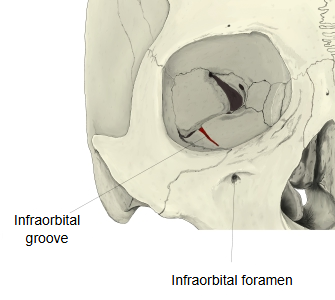
It starts near the middle of the posterior border of the orbital surface of the body of the maxilla, where the floor of the orbit meets the inferior orbital fissure, runs forwards (and slightly medially) and ends at the entrance of the infraorbital canal.
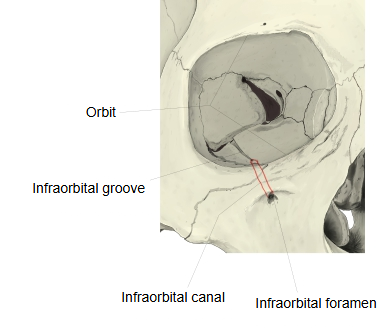
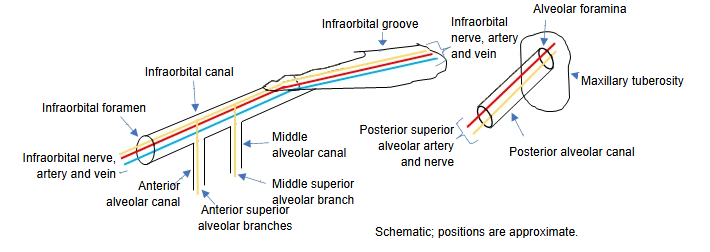
Infraorbital canal: leads the nerve and vessels of the groove on to the infraorbital foramen on the face
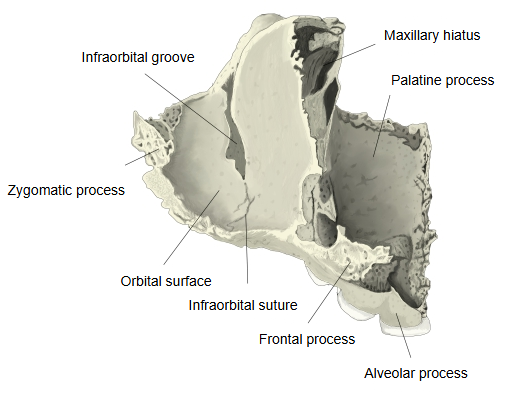
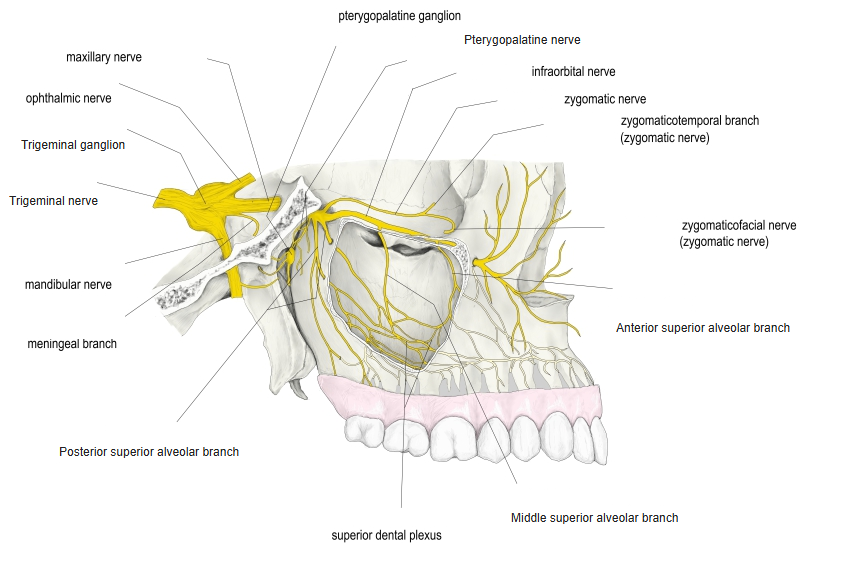
· Its average length is about 16.7 mm (about 1.7 cm), with little difference between individuals or between the sexes. The infraorbital suture often runs from the front of the groove to the orbital margin, marking where the roof of the canal closed over. The nerve in the groove is the continuation of the maxillary nerve.
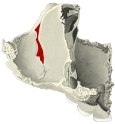 Infraorbital groove (maxilla)
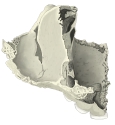 Maxilla (superior view)
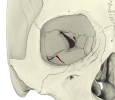 Infraorbital groove in the orbit
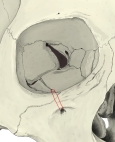 Infraorbital groove, canal and foramen
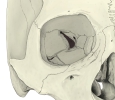 Orbit (anterior view)
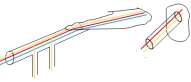 Infraorbital and alveolar canals (diagram)
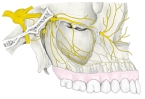 Maxillary nerve and its branches
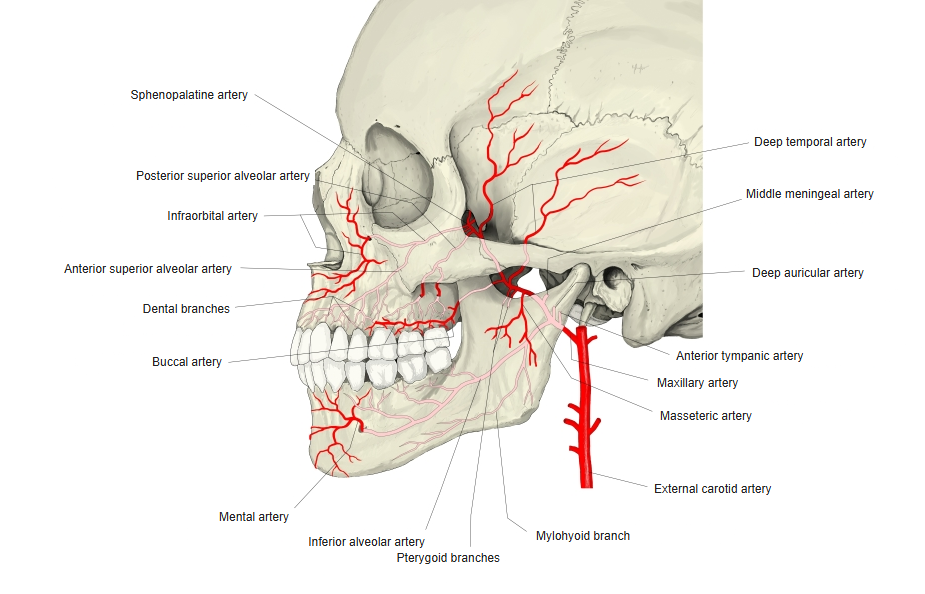
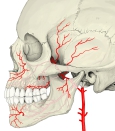 Maxillary artery and its branches
Reference websites
[Wikipedia]
· Infraorbital groove, Wikipedia.
· Maxilla, Wikipedia.
[Websites with illustrations]
· Orbital floor (figure) (Springer Nature)

· Bones of the orbit (figure) (Elsevier)

· Orbital floor and infraorbital groove (figure) (Plastic Surgery Key)
Related terms
- Infraorbital canal
- Infraorbital foramen
- Infraorbital suture
- Inferior orbital fissure
- Orbit
- Infraorbital nerve
- Infraorbital artery
References and sources
- Further reading: Infraorbital groove, Wikipedia.
- Further reading: Maxilla, Wikipedia.
- Federative International Programme for Anatomical Terminology (FIPAT). Terminologia Anatomica, 2nd ed. (TA2), 2019.