Tendinous arch (Latin: arcus tendineus)
A tendinous arch is a structure in which a tendon or fascia forms an arch; in most cases it is a site of muscle attachment and a passage for nerves and blood vessels.
Main examples
| 1 | Tendinous arch of levator ani | A thickened line in the obturator fascia on the side wall of the pelvis, from which much of the levator ani arises. |
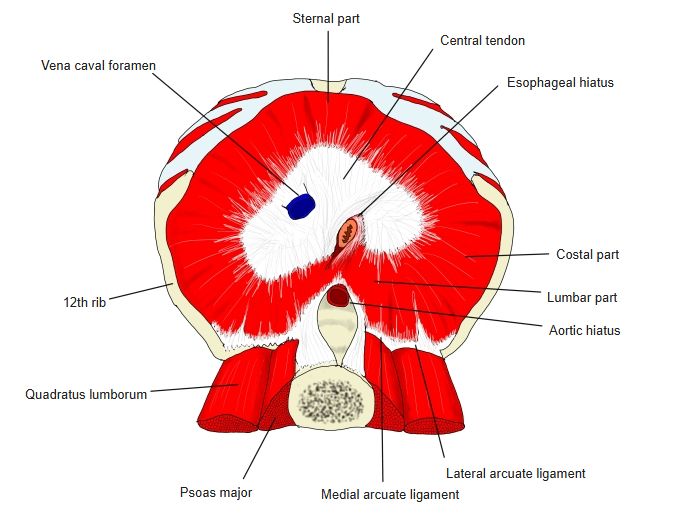
| 2 | Tendinous arches of the diaphragm | The medial arcuate ligament, arching over psoas major, and the lateral arcuate ligament, arching over quadratus lumborum. |
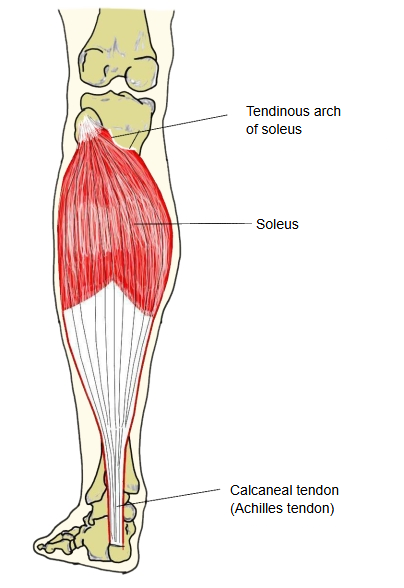
| 3 | Tendinous arch of soleus | At the upper part of the soleus, between its tibial and fibular origins; the popliteal vessels and the tibial nerve pass under it. |
| 4 | Tendinous arch of pelvic fascia | A thickened band of the pelvic fascia running from the pubis towards the ischial spine, beside the bladder and the vagina or prostate. |
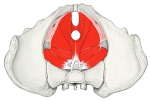 Tendinous arch of levator ani (pelvic floor from above)
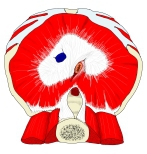 Diaphragm (from below)
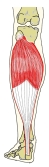 Tendinous arch of soleus
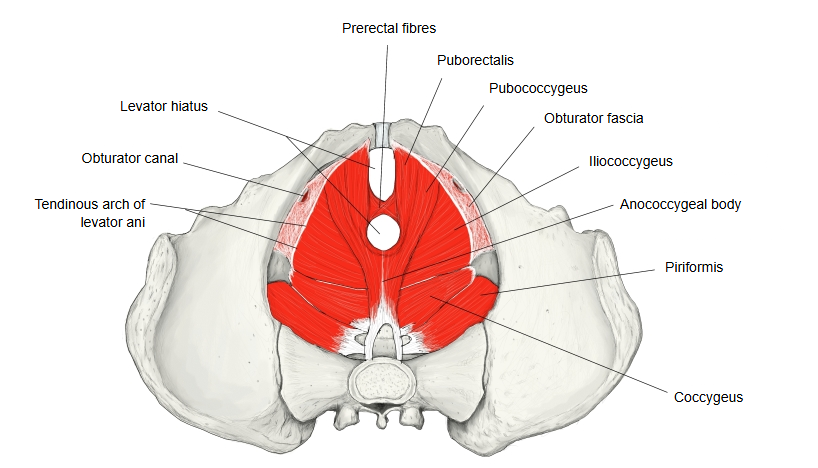
Related terms
- Tendinous arch of levator ani
- Tendinous arch of soleus
- Obturator fascia
- Medial arcuate ligament
- Lateral arcuate ligament
- Diaphragm
- Soleus
References and sources
- Further reading: Tendinous arch of pelvic fascia, Wikipedia.
- Further reading: Soleus muscle, Wikipedia.
- Federative International Programme for Anatomical Terminology (FIPAT). Terminologia Anatomica, 2nd ed. (TA2), 2019.