Superior ganglion of glossopharyngeal nerve (Latin: ganglion superius nervi glossopharyngei)
Also called the jugular ganglion of glossopharyngeal nerve
It is small and often fused with the inferior ganglion; some people have no separate superior ganglion. Like a spinal ganglion, it holds the cell bodies of sensory neurons and has no synapses. Most of its neurons carry general sensation; the inferior ganglion carries most of the visceral and taste fibres.
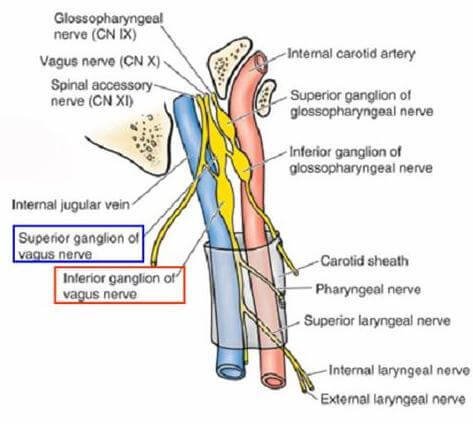
The vagus nerve has its own superior ganglion in the same foramen; the two should not be confused.
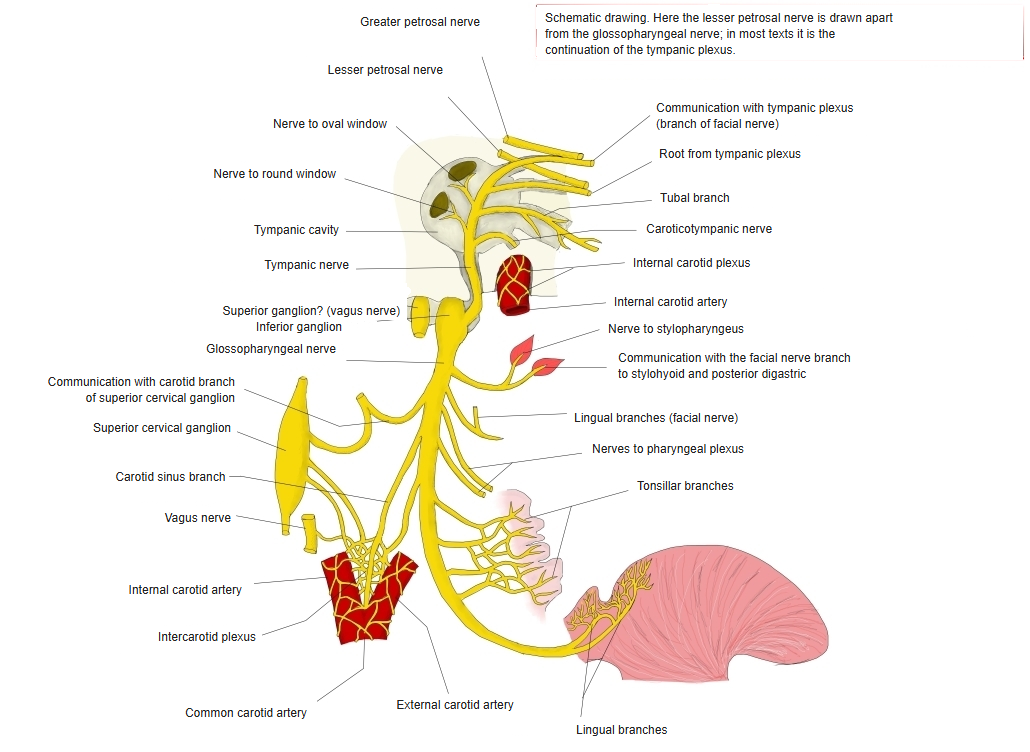
Glossopharyngeal nerve: from the brainstem to its branches (schematic)
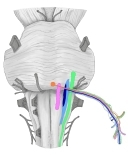 Origin of the glossopharyngeal nerve
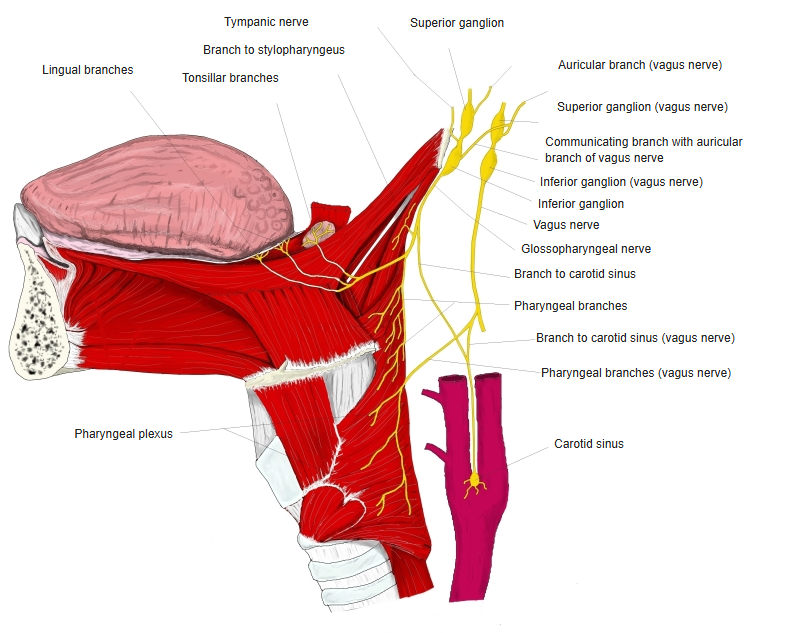
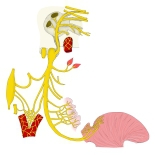 Glossopharyngeal nerve and its branches
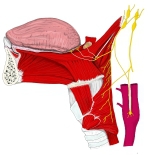 Glossopharyngeal and vagus nerves
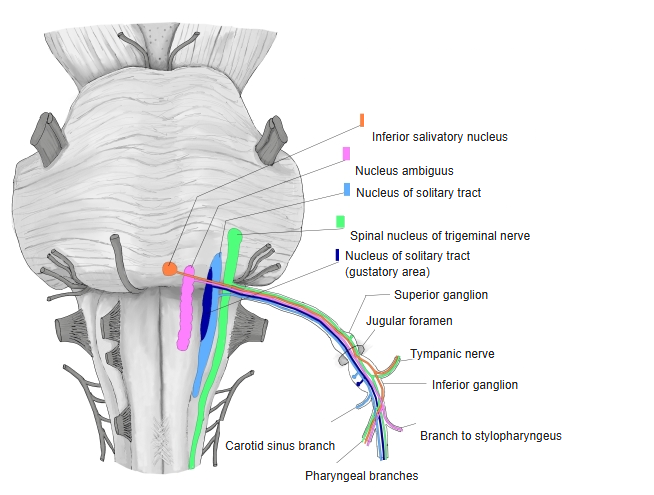
Reference websites
[Wikipedia]
· Superior ganglion of glossopharyngeal nerve, Wikipedia.
· Glossopharyngeal nerve, Wikipedia.
[Websites with illustrations]
· Superior and inferior ganglia of the glossopharyngeal and vagus nerves, with the carotid sheath (HealthFixIt)
· Glossopharyngeal nerve and its ganglia (cranial nerves overview slide) (SlideShare)

Related terms
- Glossopharyngeal nerve
- Inferior ganglion of glossopharyngeal nerve
- Jugular foramen
- Tympanic nerve
- Superior ganglion of vagus nerve
- Temporal bone
References and sources
- Further reading: Superior ganglion of glossopharyngeal nerve, Wikipedia.
- Further reading: Glossopharyngeal nerve, Wikipedia.
- Federative International Programme for Anatomical Terminology (FIPAT). Terminologia Anatomica, 2nd ed. (TA2), 2019.