Hinge joint (Latin: ginglymus)
Also called Ginglymoid joint
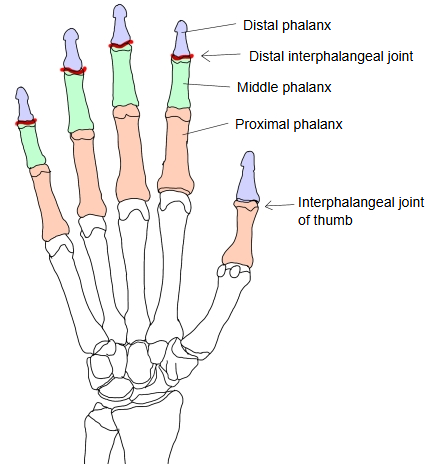
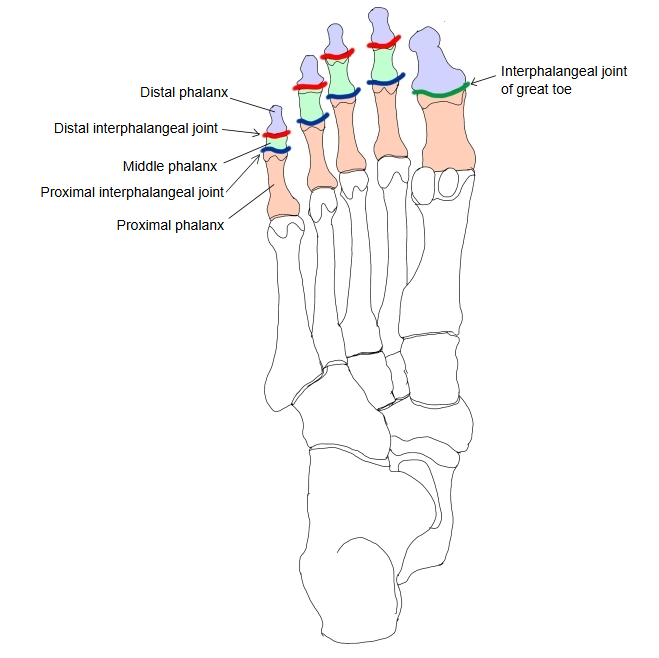
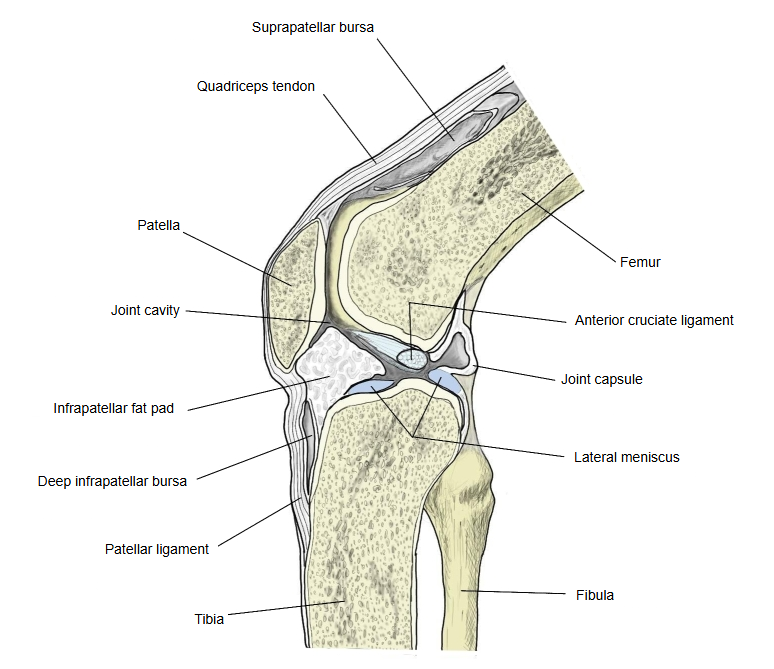
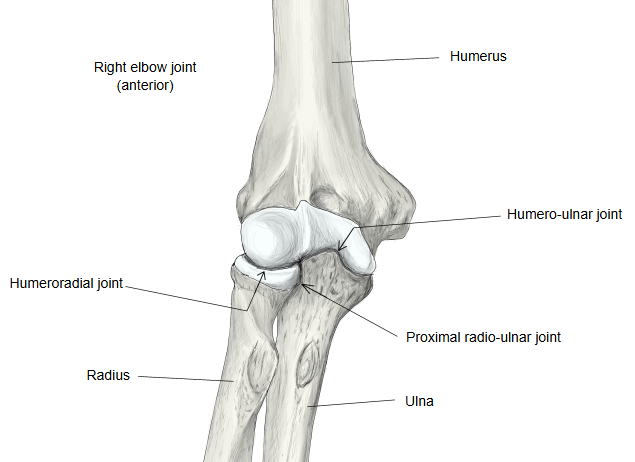
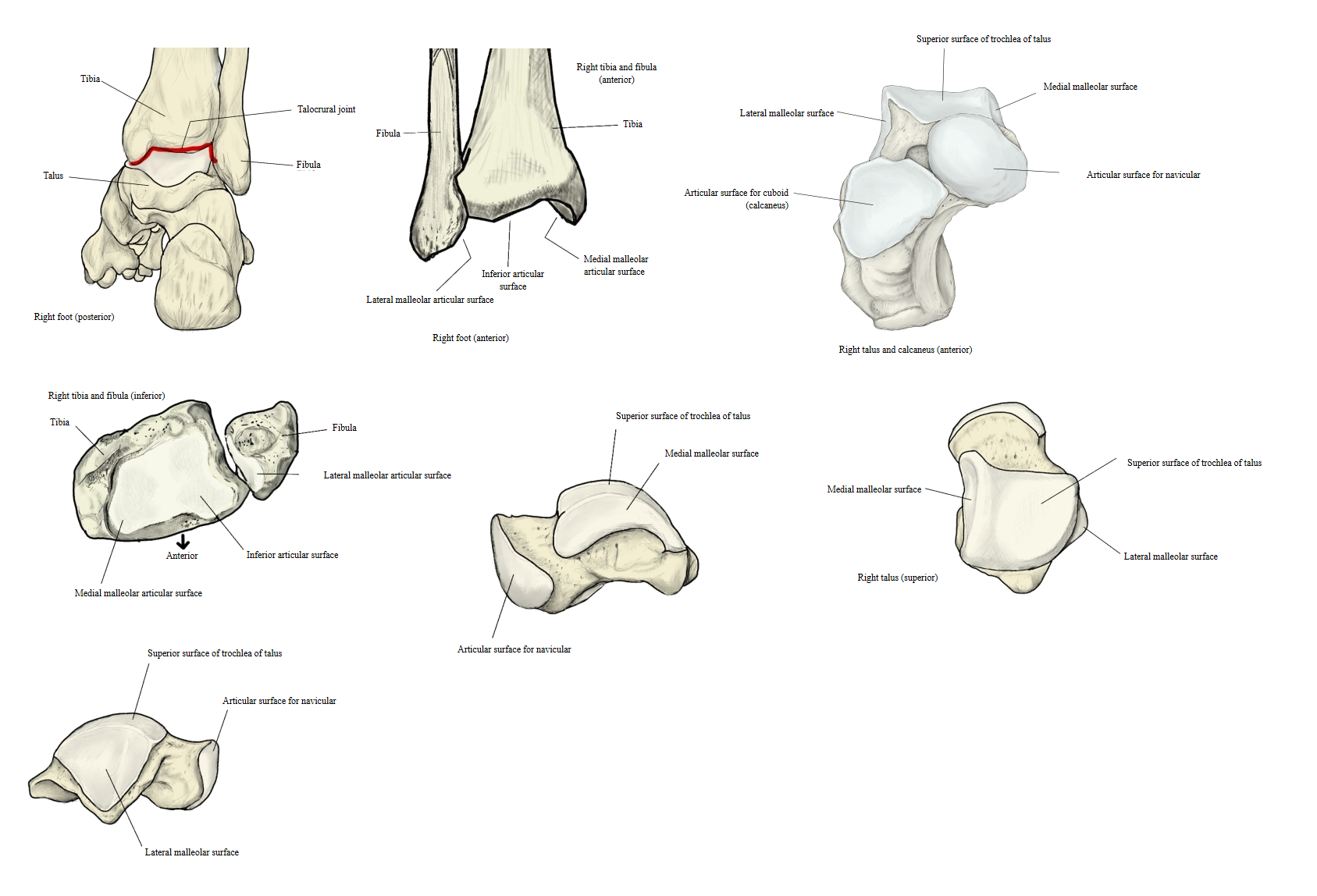
Examples: the interphalangeal joints (of the fingers and toes), the knee joint, the elbow joint (humero-ulnar joint) and the talocrural (ankle) joint.
· It has one degree of freedom. The other uniaxial joints are the pivot joint and the spiral joint (a variant of the hinge joint); biaxial joints are the condylar and saddle joints, and multiaxial joints the ball-and-socket and plane joints.
· Strong collateral ligaments on each side hold the bones together and stop sideways movement, while the front and back of the capsule are thin.
· The knee also allows some rotation when bent and is often called a modified hinge joint; sources differ on how to classify it.
joints
- Uniaxial joints : move about one axis only: hinge joints, spiral joints and pivot joints.
- Biaxial joints : move about two axes at right angles: ellipsoid joints (= condylar joints) and saddle joints.
- Multiaxial joints : move about three or more axes: ball-and-socket joints (enarthroses) and plane joints.
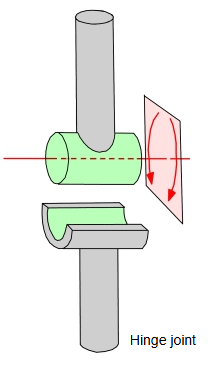
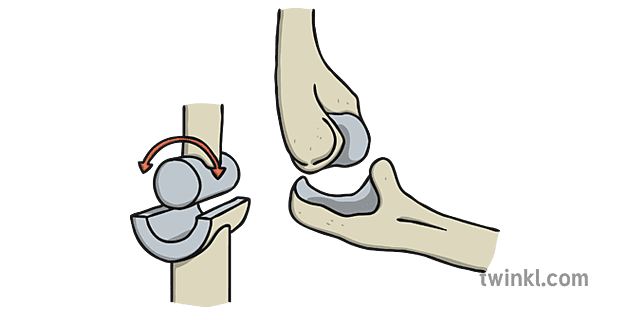
In a hinge joint both articular surfaces are parts of a cylinder, so the joint can move in one direction only (uniaxially), like a hinge. The knee joint, the elbow joint (humero-ulnar joint), the talocrural joint and the interphalangeal joints belong to this group. Except in the interphalangeal joints, the axis is not perfectly fixed and the moving bone follows a slightly helical path; such a joint is called a spiral (cochlear) joint, for example the humero-ulnar joint between the trochlea of the humerus and the trochlear notch of the ulna.
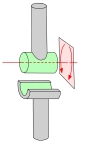 Hinge joint (model)
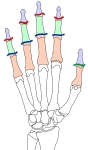 Interphalangeal joints (hand)
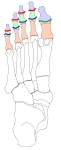 Interphalangeal joints (foot)
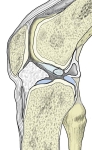 Knee joint
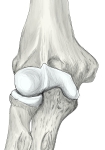 Elbow joint
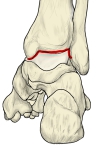 Talocrural (ankle) joint
Reference websites
[Wikipedia]
· Hinge joint, Wikipedia.
· Synovial joint, Wikipedia.
[Websites with illustrations]
· Hinge joint (model, e.g. the elbow) (Radiopaedia)

· Hinge joint and the elbow (illustration) (Twinkl)
Related terms
References and sources
- Further reading: Hinge joint, Wikipedia.
- Further reading: Synovial joint, Wikipedia.
- Federative International Programme for Anatomical Terminology (FIPAT). Terminologia Anatomica, 2nd ed. (TA2), 2019.