Ellipsoid joint (Latin: articulatio ellipsoidea)
Examples: the radiocarpal joint and the atlanto-occipital joint.
· Some sources distinguish the condylar joint from the ellipsoid joint.
joints
- Uniaxial joints : move about one axis only: hinge joints, spiral joints and pivot joints.
- Biaxial joints : move about two axes at right angles: ellipsoid joints (= condylar joints) and saddle joints.
- Multiaxial joints : move about three or more axes: ball-and-socket joints (enarthroses) and plane joints.
Both joint surfaces are oval, and the joint moves about two axes that correspond to the long and short axes of the oval. Some sources separate condylar joints from ellipsoid joints: the radiocarpal joint is then an ellipsoid joint, while the knee joint and the temporomandibular joint are condylar joints. The line between the two kinds is not always clear.
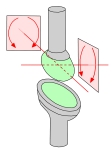 Ellipsoid joint (model)
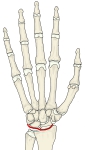 Radiocarpal joint
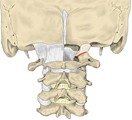 Atlanto-occipital joint (posterior)
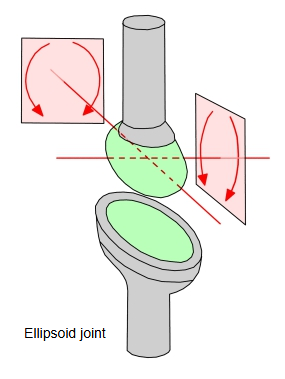
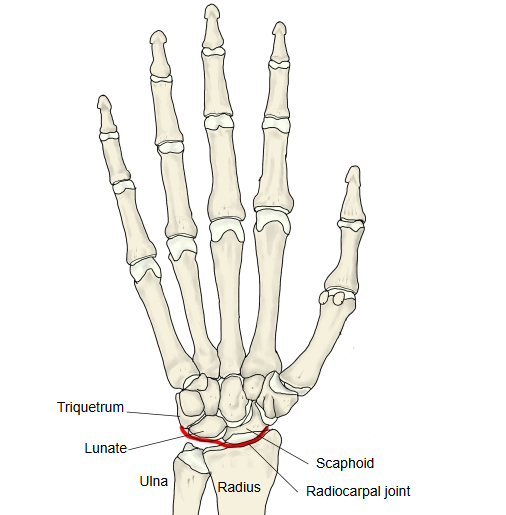
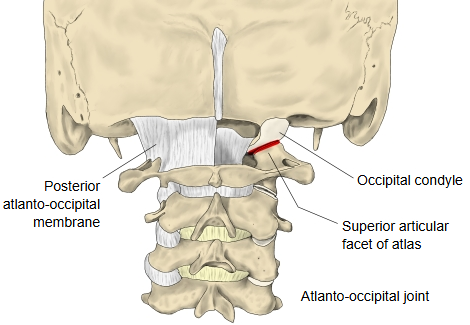
In an ellipsoid joint an oval process of one bone fits into an elongated, oval cavity of the other. It allows flexion and extension, and abduction and adduction, about two main axes at right angles to each other, but no axial rotation. Examples are:
the wrist joint (radiocarpal joint)
the metacarpophalangeal joints
the metatarsophalangeal joints
Reference websites
[Wikipedia]
· Condyloid joint, Wikipedia.
· Ellipsoidal joint, Biology Online Dictionary.
[Websites with illustrations]
· Condyloid joint (model, e.g. the radiocarpal joint) (Radiopaedia)
