Latin: vertebra prominens · seventh cervical vertebra (C7)
Overview
- The seventh and lowest cervical vertebra (C7). Of the seven cervical vertebrae, only three have names of their own: the atlas (C1), the axis (C2) and the vertebra prominens (C7).
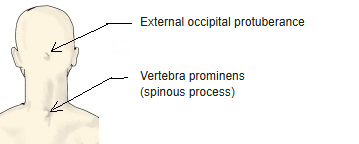
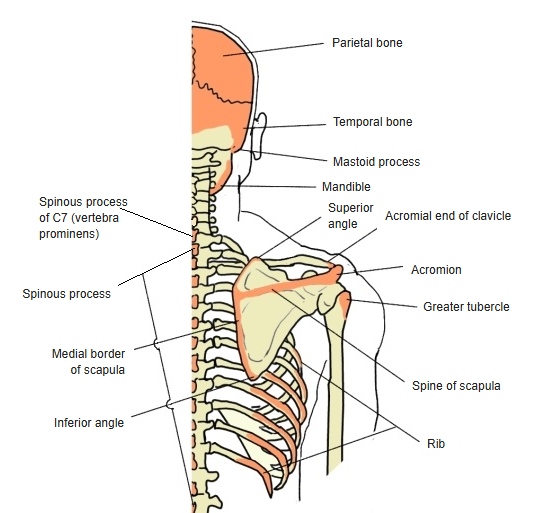
- Its main feature is the long, prominent spinous process. When the neck is bent forwards it is usually the most projecting spinous process at the base of the neck, and it is a key landmark for counting vertebrae – hence the name.
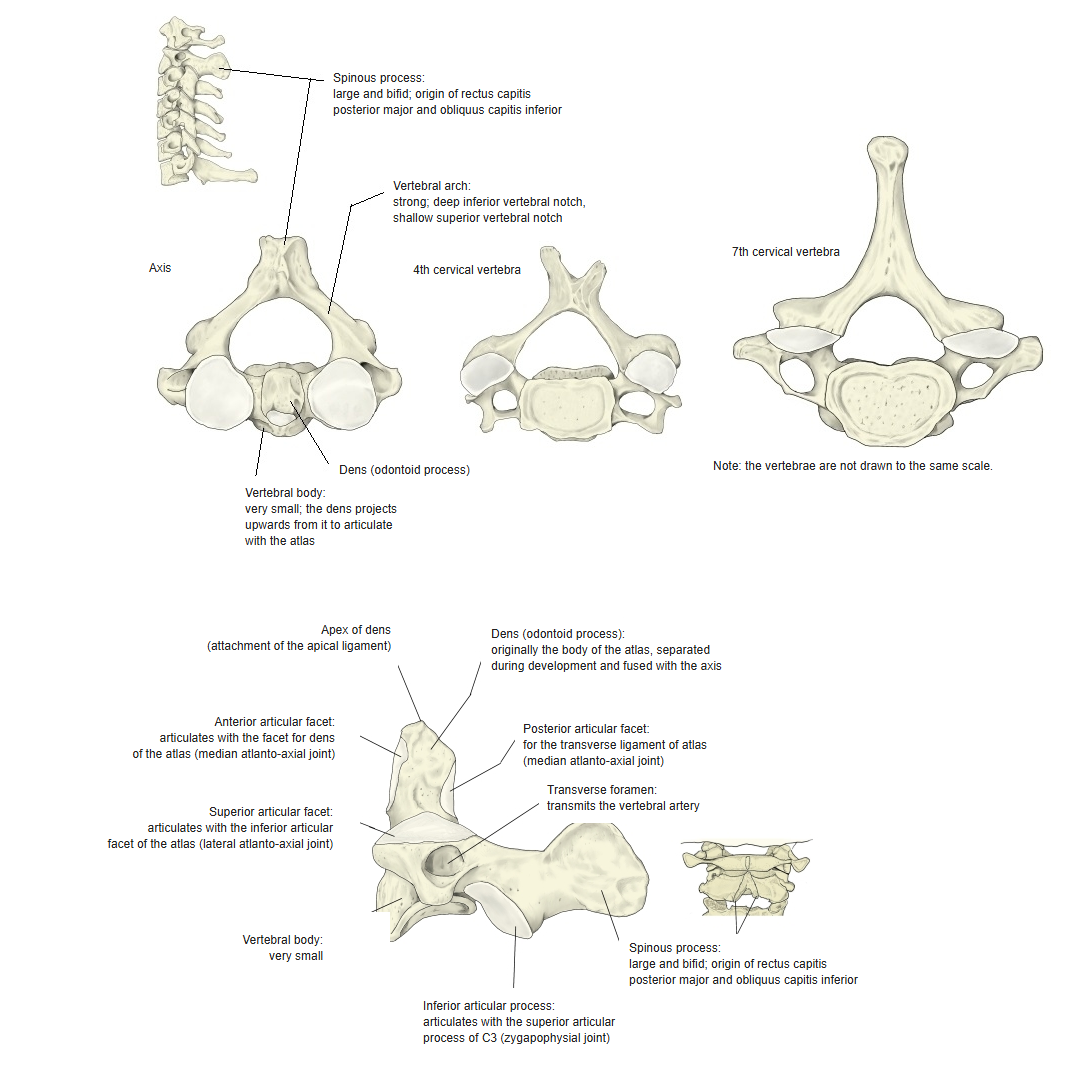
- As the lowest cervical vertebra it is transitional towards the thoracic vertebrae: its body is about as large as that of the upper thoracic vertebrae, its spinous process is long and not bifid, and its articular facets are set more steeply.
- Its transverse foramen is small and usually transmits only the vertebral vein (and sometimes small accessory veins); the vertebral artery normally enters the transverse foramina at C6.
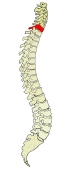
Vertebral column (left lateral), vertebra prominens highlighted 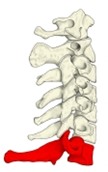
Cervical vertebrae (left lateral), vertebra prominens highlighted
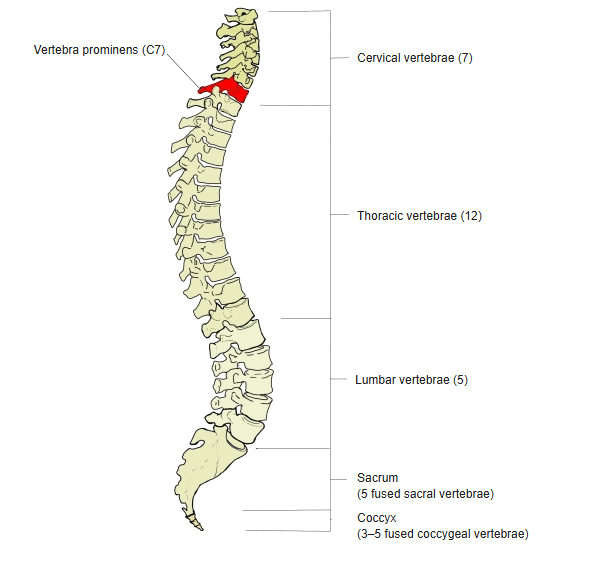
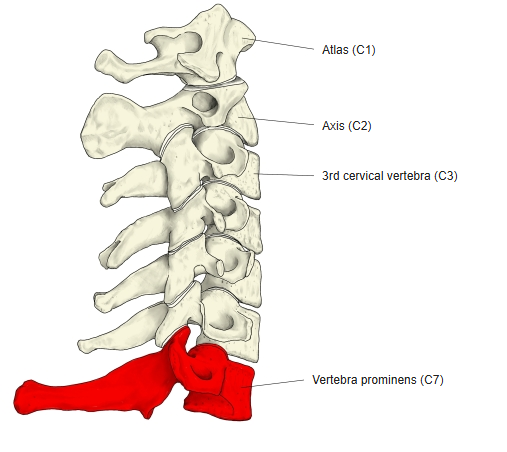
- Bones of the trunk
- Vertebral column
- Cervical vertebrae (7)
- Thoracic vertebrae (12)
- Lumbar vertebrae (5)
- Sacrum (1)
- Coccyx (1)
- Thoracic cage
- Sternum (1)
- Ribs (24)
- Vertebral column
Illustrations
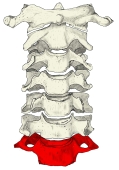
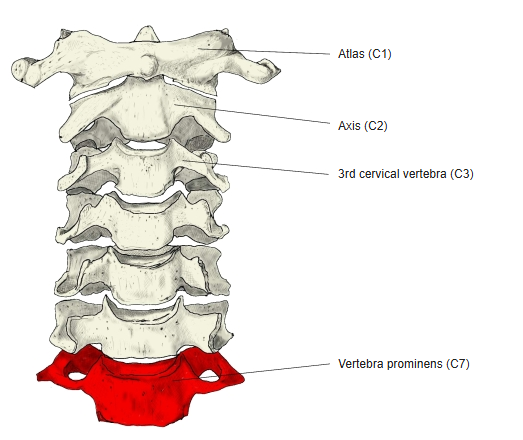
Cervical vertebrae (anterior), vertebra prominens highlighted 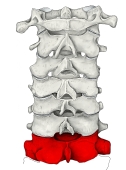
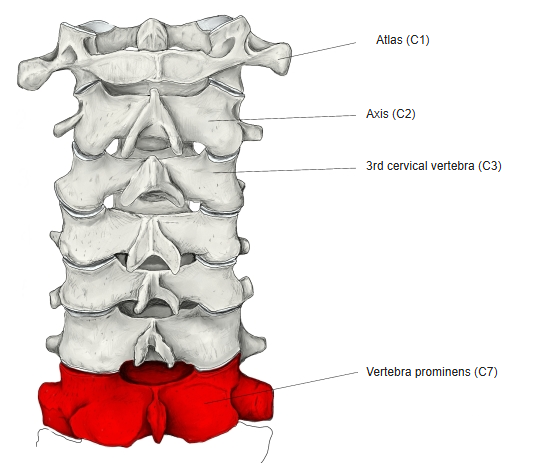
Cervical vertebrae (posterior), vertebra prominens highlighted 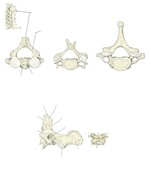
Axis, 4th and 7th cervical vertebrae compared 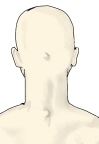
Surface landmarks: vertebra prominens 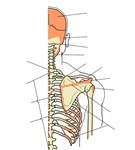
Palpable bony landmarks of the back of the neck and shoulder 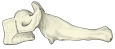
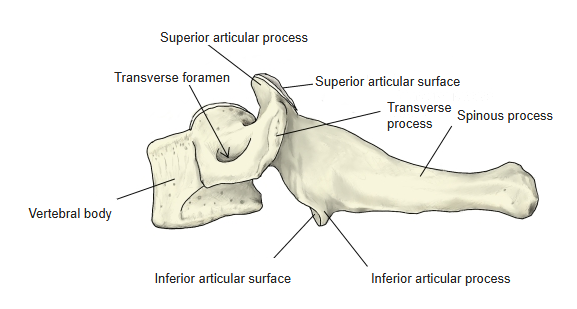
7th cervical vertebra (left lateral) 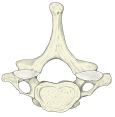
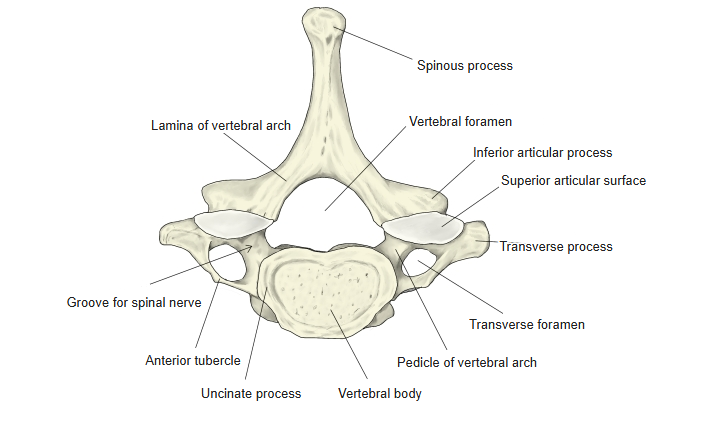
7th cervical vertebra (from above) 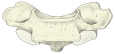
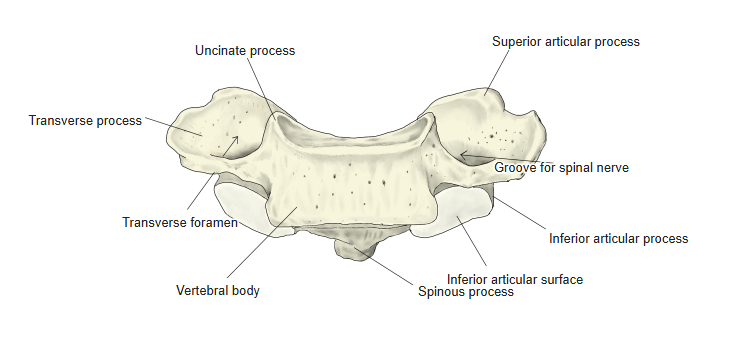
7th cervical vertebra (anterior)
Articulations
| # | Bone | Joint |
|---|---|---|
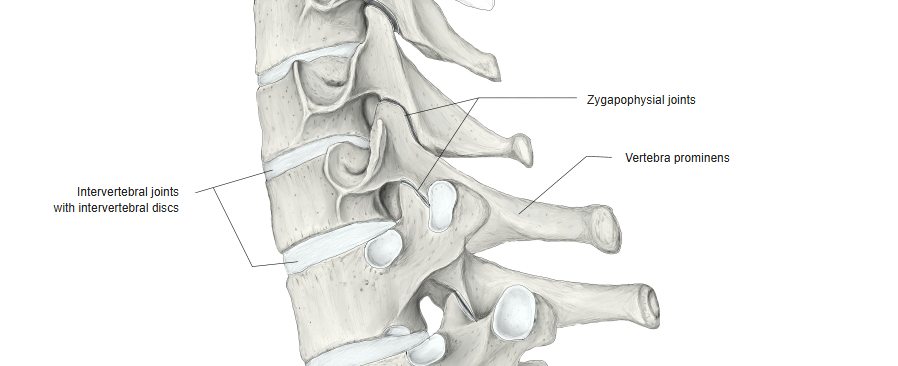
| 1 | 6th cervical vertebra | Zygapophysial joints (superior articular processes of C7 – inferior articular processes of C6) and intervertebral joint (disc) |
| 2 | 1st thoracic vertebra | Zygapophysial joints (inferior articular processes of C7 – superior articular processes of T1) and intervertebral joint (disc) |
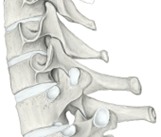
Joints of the lower cervical vertebrae
Ligaments
The following ligaments attach to the vertebra prominens. The list is intended to be comprehensive but may omit minor ligaments.
| # | Ligament | Connects |
|---|---|---|
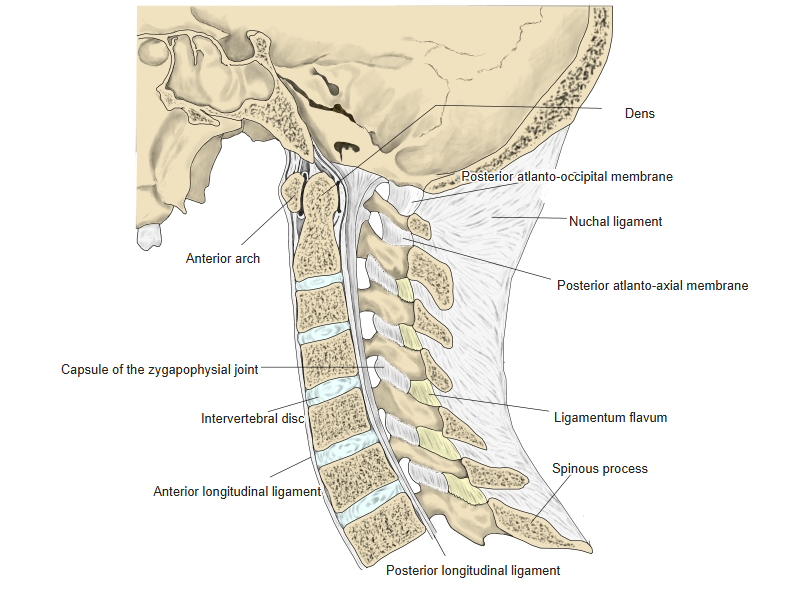
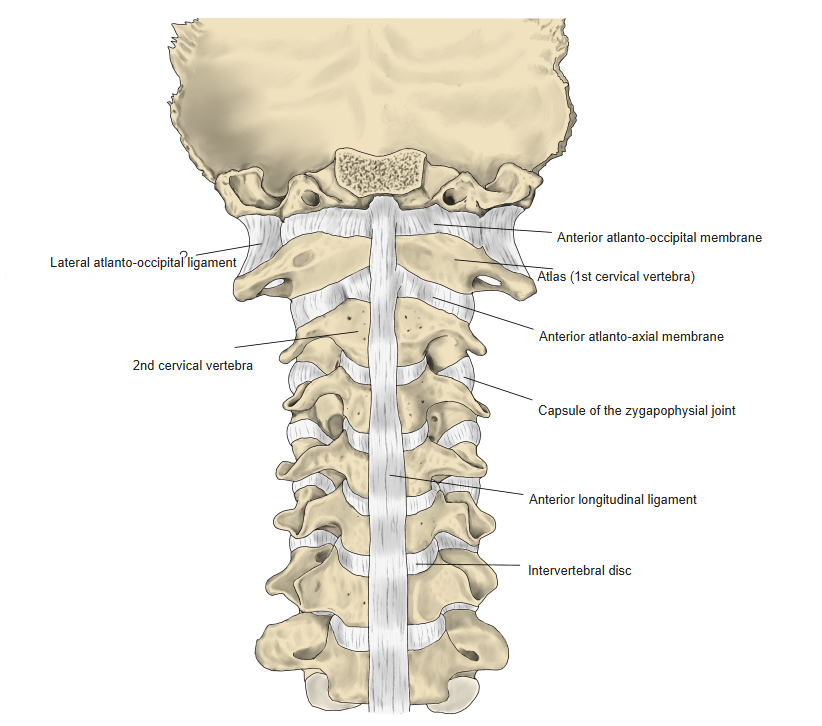
| 1 | Anterior longitudinal ligament | Occipital bone (pharyngeal tubercle) – front of the sacrum |
| 2 | Posterior longitudinal ligament | Occipital bone (clivus) – sacral canal |
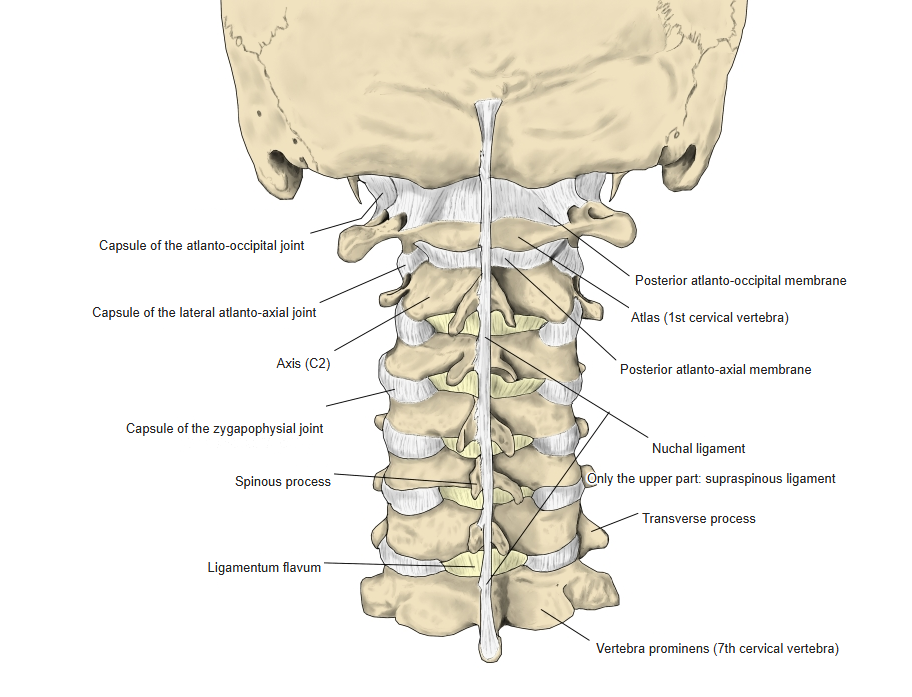
| 3 | Nuchal ligament | External occipital protuberance – spinous process of C7 (and the cervical spinous processes) |
| 4 | Supraspinous ligament | Tips of the spinous processes from C7 downwards |
| 5 | Interspinous ligament | Between adjacent spinous processes |
| 6 | Ligamenta flava | Between the laminae |
| 7 | Intertransverse ligaments | Between the transverse processes |
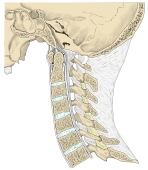
Ligaments of the cervical spine (median section) 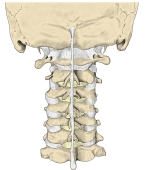
Ligaments of the cervical spine (posterior) 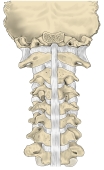
Ligaments of the cervical spine (anterior)
Muscle attachments
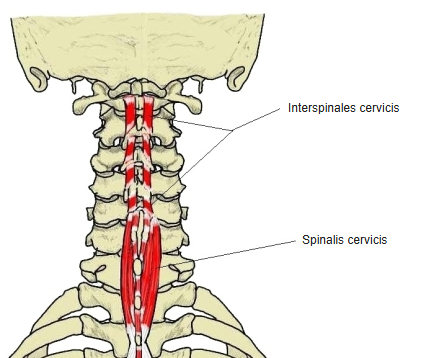
- Origin of: Trapezius, Rhomboid minor, Serratus posterior superior, Splenius capitis, Spinalis cervicis, Interspinales cervicis, Longus colli, Semispinalis capitis, Levatores costarum, Intertransversarii
- Insertion of: Multifidus, Rotatores, Intertransversarii, Interspinales cervicis
Spinous process: trapezius, rhomboid minor, serratus posterior superior and splenius capitis arise here (with the nuchal ligament); spinalis cervicis also arises here, and multifidus and rotatores insert. Body: longus colli (vertical part) arises from the bodies of C5–T3. Transverse process: semispinalis capitis and the first levator costarum arise here. Interspinales and intertransversarii run between neighbouring vertebrae.
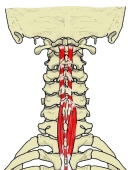
Interspinales cervicis and spinalis cervicis 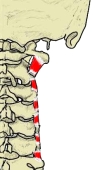
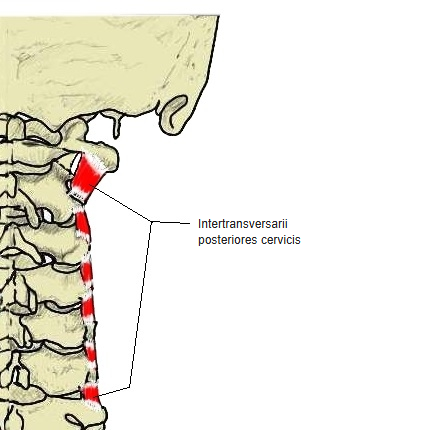
Intertransversarii posteriores cervicis 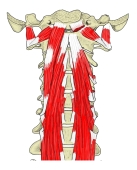
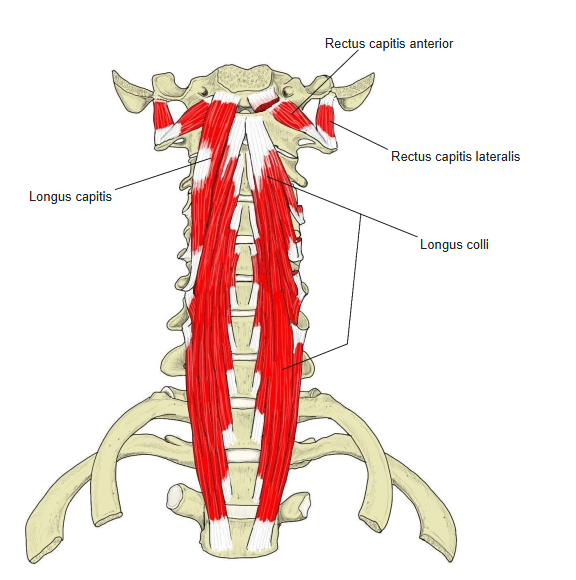
Prevertebral muscles (anterior)
Features
- Vertebral body – larger than in the other cervical vertebrae, similar in size to the upper thoracic vertebrae.
- Spinous process – long, nearly horizontal and ending in a single tubercle (not bifid); the nuchal ligament attaches to it.
- Transverse process – large, with a prominent posterior tubercle and a small anterior tubercle; the anterior part is sometimes separate as a cervical rib.
- Transverse foramen – small; usually transmits only the vertebral vein.
- Articular processes – the facets are inclined more steeply than in the higher cervical vertebrae, approaching the thoracic pattern.
References and sources
- Further reading: Cervical vertebrae#Vertebra prominens, Wikipedia.