Cisterna chyli (Latin: cisterna chyli)
Also called the receptaculum chyli or the chyle cistern
Overview
· Size: a few centimetres long and about 1–2 cm wide (sources differ a good deal).
· Shape: an elongated, flattened sac, or a triangular (pyramid-shaped) one.
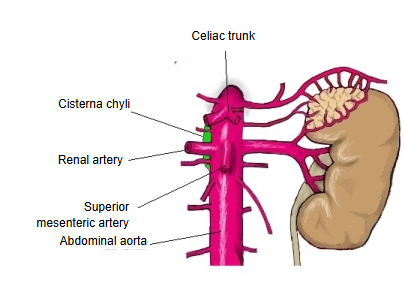
· Position: behind the peritoneum, on the front of the bodies of the first and second lumbar vertebrae, just to the right of and behind the abdominal aorta, near the origin of the superior mesenteric artery.
· It does not always form a clear swelling: in many people the trunks join without a distinct sac, or form a small plexus instead.
Relations: in front, the right crus of the diaphragm and the abdominal aorta partly overlap it; behind lie the bodies of the first and second lumbar vertebrae; above, it narrows into the thoracic duct, which passes through the aortic hiatus at about T12.
Sources differ on its size and exact level (from T12 to L2), and on how often a distinct sac is found.
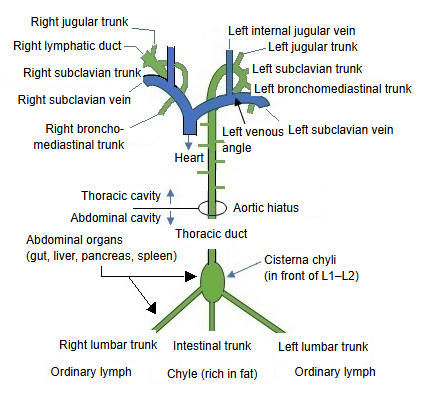
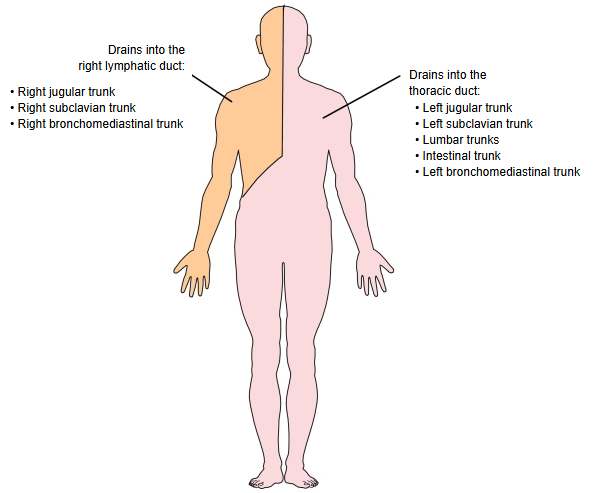
The path of chyle
Chyle is the milky, fat-rich lymph of the intestine; the thoracic duct carries it together with ordinary lymph.
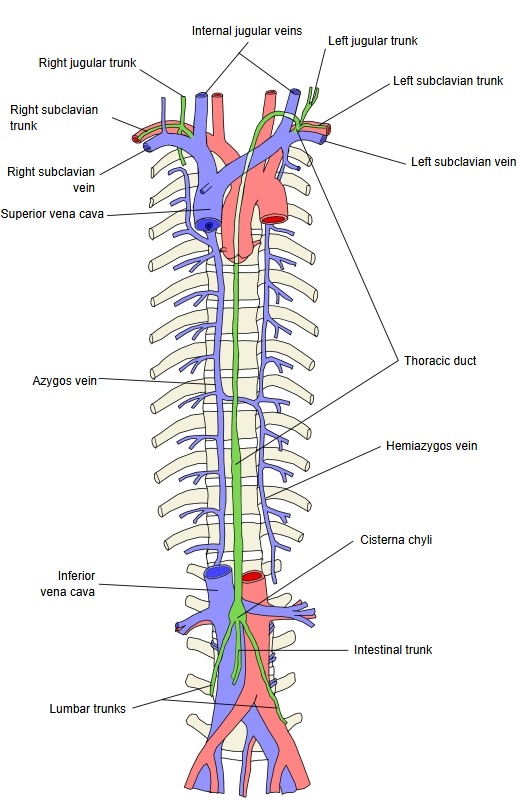
 Thoracic duct and the azygos system
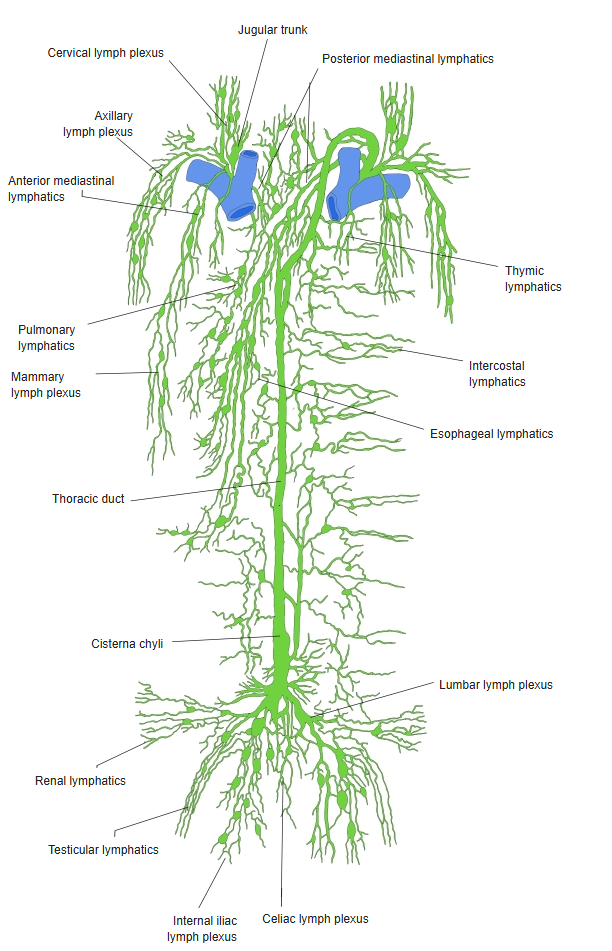
 Lymph vessels of the trunk
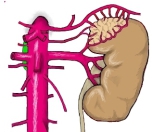 Cisterna chyli and the abdominal aorta
Reference websites
[Wikipedia]
· Cisterna chyli, Wikipedia.
· Thoracic duct, Wikipedia.
[Websites with illustrations]
· Abdominal lymph nodes, from the iliac nodes to the cisterna chyli (Shutterstock)

· Thoracic duct, cisterna chyli, lumbar and intestinal trunks and the abdominal and pelvic lymph nodes (Clinical Imaging)

Related terms
References and sources
- Further reading: Cisterna chyli, Wikipedia.
- Further reading: Thoracic duct, Wikipedia.
- Federative International Programme for Anatomical Terminology (FIPAT). Terminologia Anatomica, 2nd ed. (TA2), 2019.