Latin: os ischii
Overview
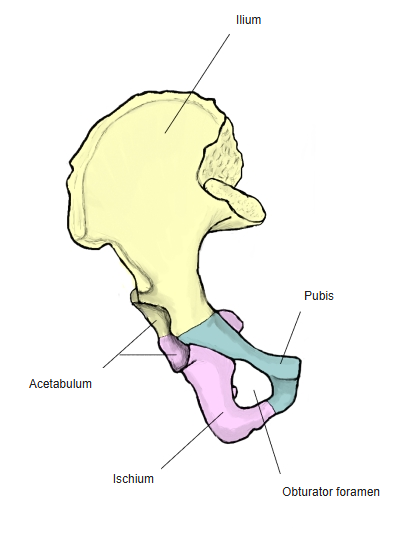
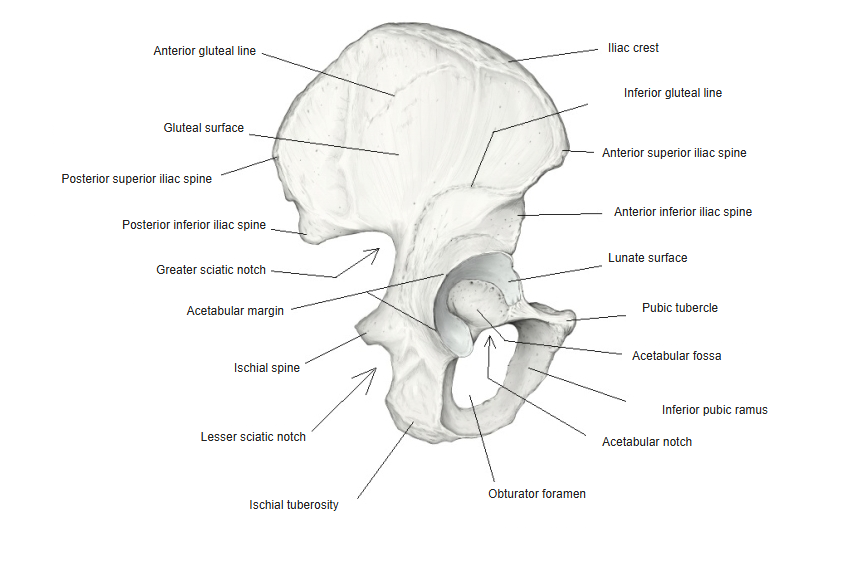
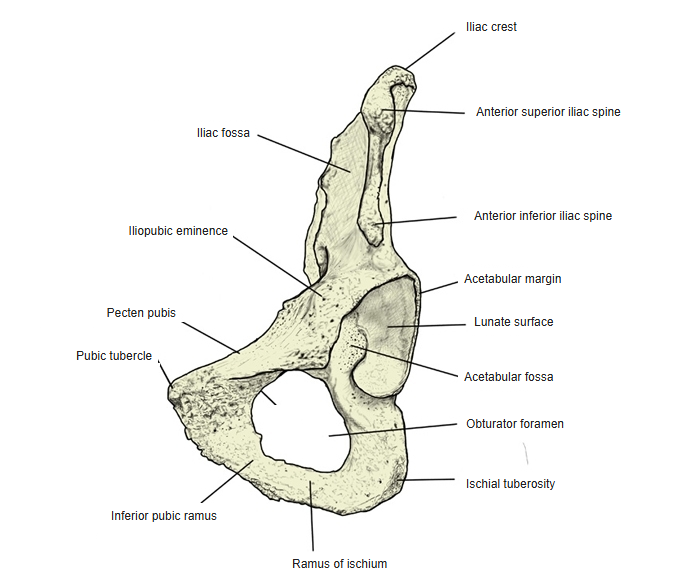
- One of the three bones that make up the hip bone (with the ilium and pubis) – the lowest and most posterior of the three. It bounds the obturator foramen from behind and below.
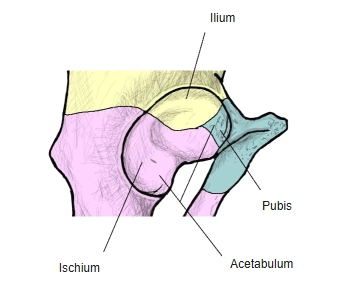
- It consists of the body of the ischium, which forms the posterior and inferior part (about two-fifths) of the acetabulum, and the ramus of the ischium, which runs forwards to join the inferior ramus of the pubis (together the ischiopubic ramus).
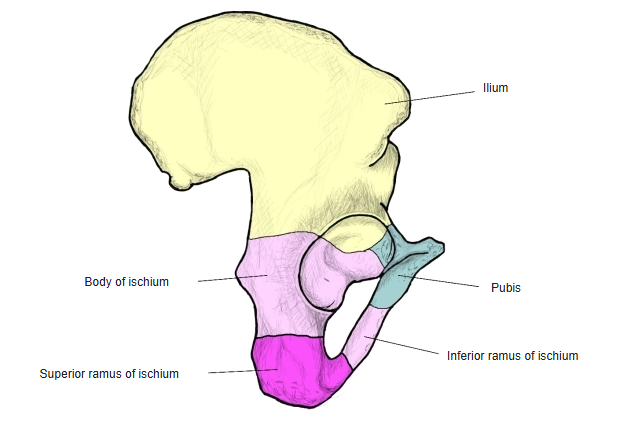
- Some older texts divide the ischium into a body, a superior ramus (running down from the body to the ischial tuberosity) and an inferior ramus (running forwards from the tuberosity to the pubis); in current terminology these are the lower body and the ramus.
- The ischial tuberosity is the rough swelling we sit on; the hamstrings arise from it.
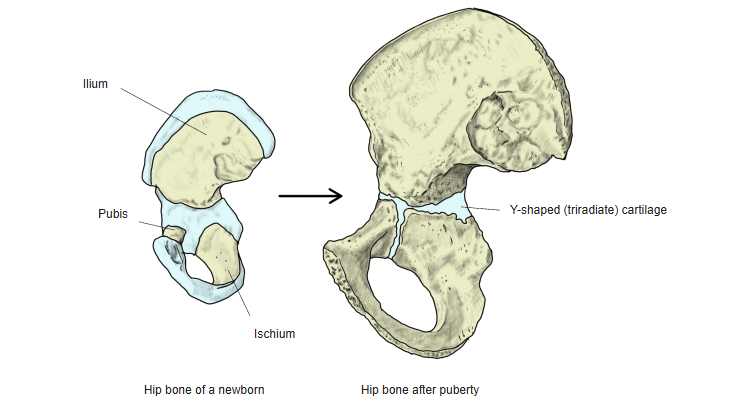
- Until puberty the ischium is joined to the ilium and pubis by cartilage (the Y-shaped triradiate cartilage in the acetabulum); in adolescence they fuse by bone into a single hip bone.
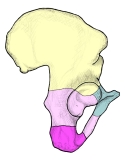
Body and rami of the ischium 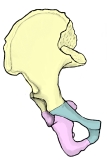
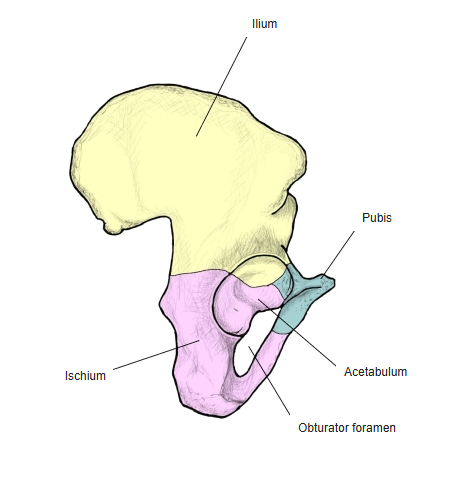
Right hip bone: ilium, ischium and pubis (lateral)
- Bones of the lower limb (one side)
- Pelvic girdle
- Hip bone ← ilium, ischium and pubis fused
- Free lower limb
- Thigh and knee
- Femur
- Patella
- Leg
- Tibia ← big-toe side
- Fibula ← little-toe side
- Foot
- Tarsal bones (7)
- Metatarsal bones (5)
- Phalanges (14)
- Thigh and knee
- Pelvic girdle
Illustrations
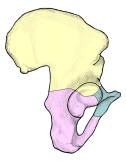
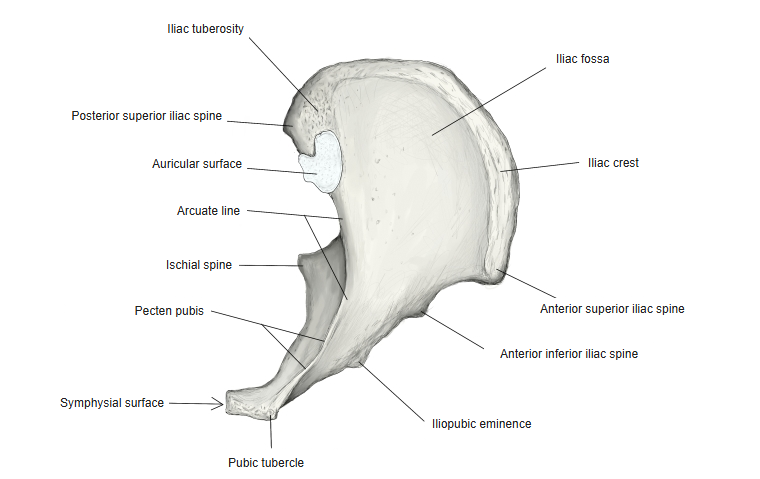
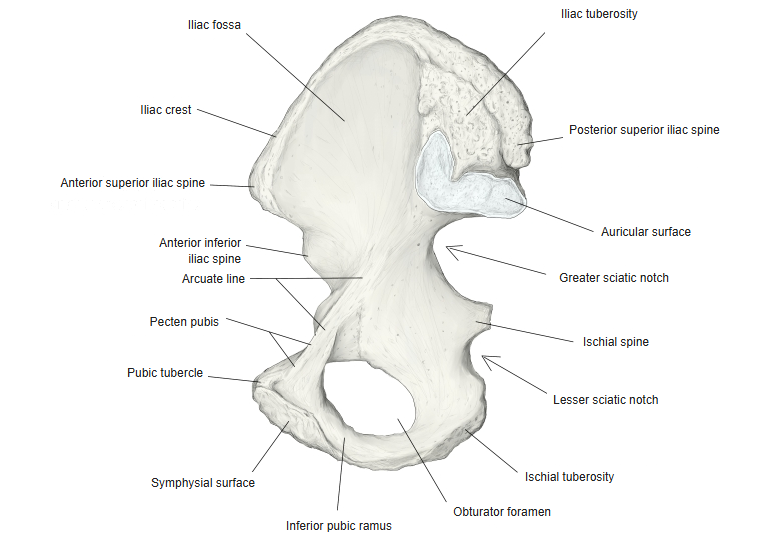
Right hip bone: ilium, ischium and pubis (medial) 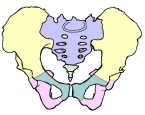
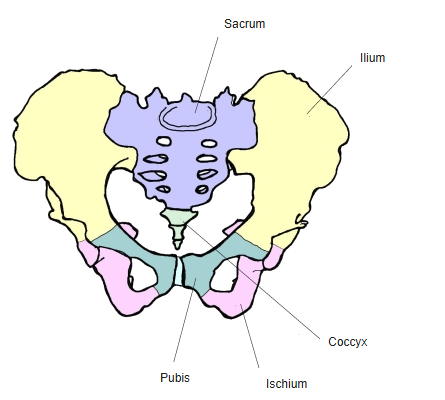
Pelvis: ilium, ischium, pubis, sacrum and coccyx 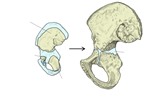
Hip bone of a newborn and after puberty 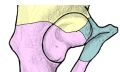
Acetabulum: contribution of the three bones 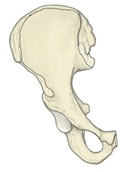
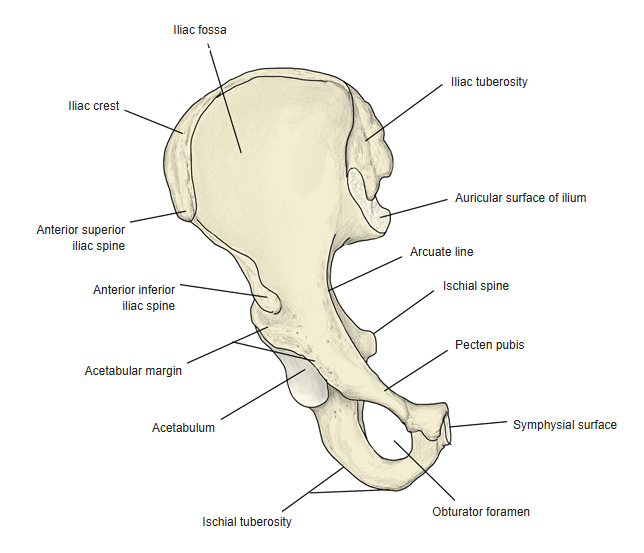
Right hip bone (anterior) 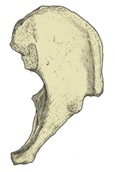
Left hip bone (from above) 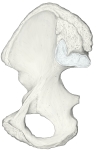
Right hip bone (medial) 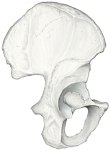
Right hip bone (lateral) 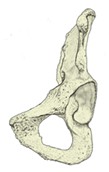
Right hip bone (anterior oblique)
Articulations
| # | Bone | Joint |
|---|---|---|
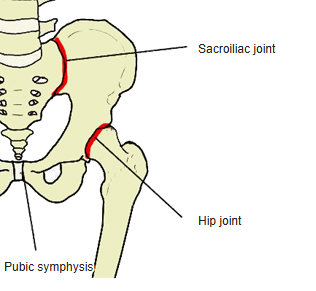
| 1 | Femur | Hip joint (acetabulum – head of femur) |
| 2 | Ilium, pubis | Fused by bone in the acetabulum and along the ischiopubic ramus after adolescence (cartilaginous union before) |
Joints of the hip bone
Ligaments
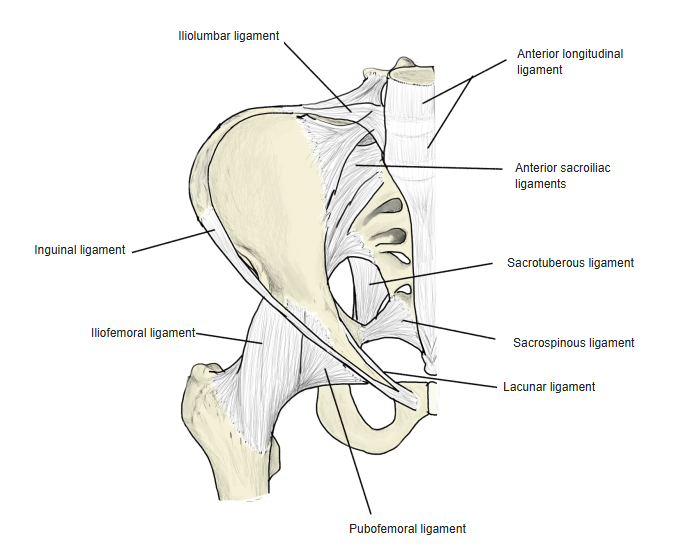
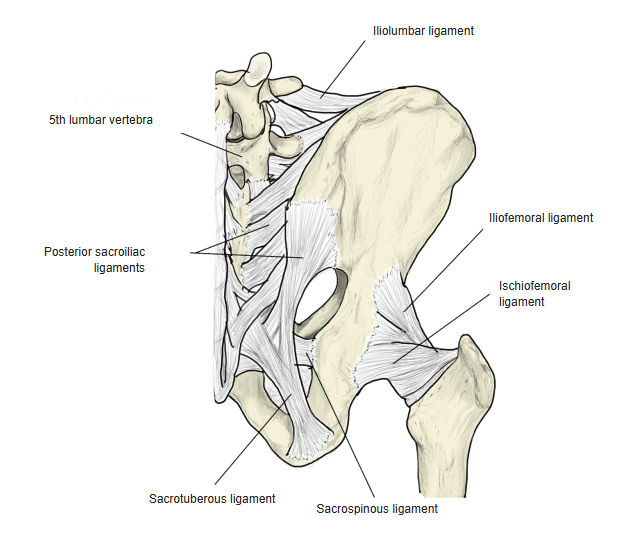
The following ligaments attach to the ischium. The list is intended to be comprehensive but may omit minor ligaments.
| # | Ligament | Connects |
|---|---|---|
| 1 | Sacrotuberous ligament | Ischial tuberosity – sacrum, coccyx and posterior inferior iliac spine |
| 2 | Sacrospinous ligament | Ischial spine – lateral margins of the sacrum and coccyx |
| 3 | Ischiofemoral ligament | Ischial part of the acetabular rim – neck of the femur and trochanteric fossa |
| 4 | Transverse acetabular ligament | Bridges the acetabular notch (ischium – pubis) |
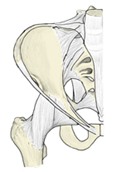
Ligaments of the pelvis (anterior) 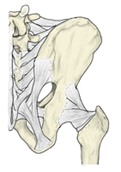
Ligaments of the pelvis (posterior)
Muscle attachments
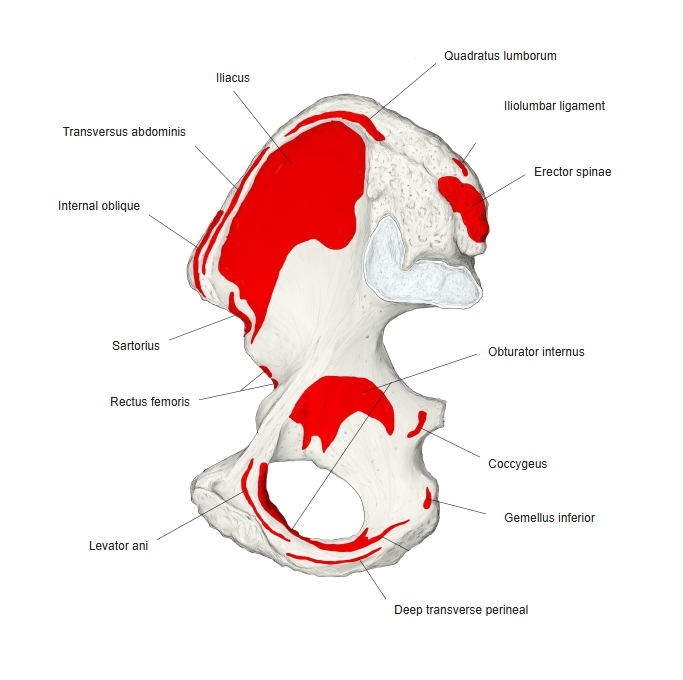
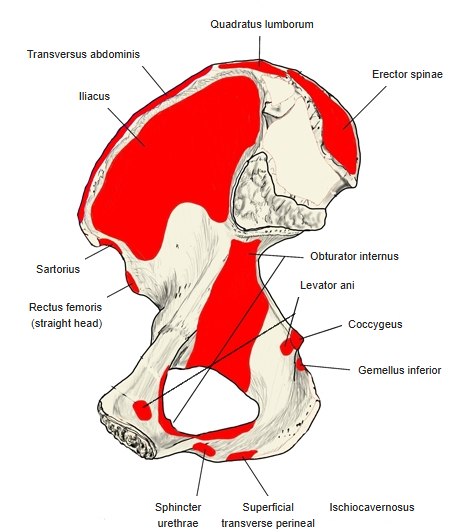
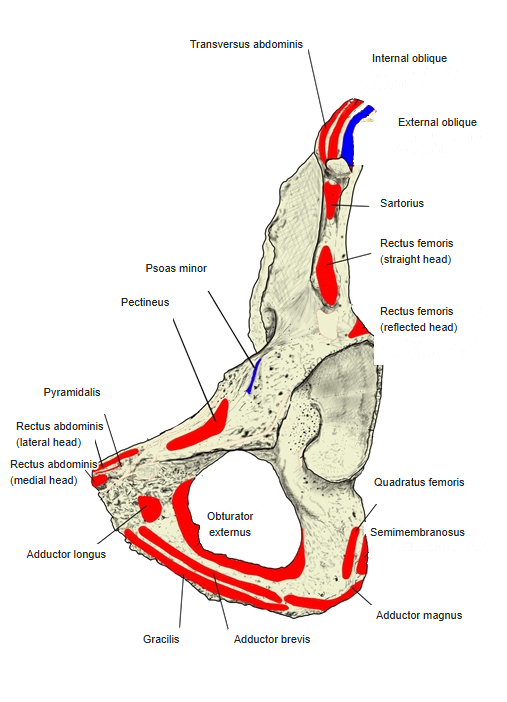
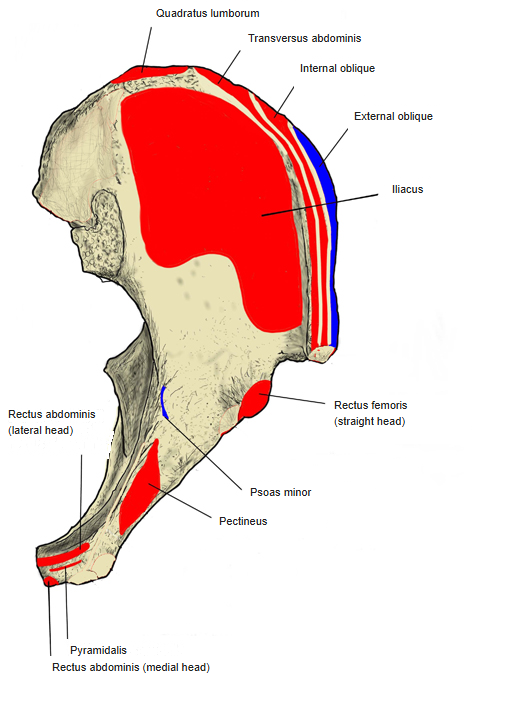
- Origin of: Gemellus superior, Gemellus inferior, Biceps femoris (long head), Semitendinosus, Semimembranosus, Quadratus femoris, Adductor magnus, Gracilis, Obturator internus, Obturator externus, Coccygeus, Deep transverse perineal, Superficial transverse perineal, Ischiocavernosus
- Insertion of: none
Ischial spine: gemellus superior and coccygeus. Ischial tuberosity: biceps femoris (long head), semitendinosus, semimembranosus, quadratus femoris, gemellus inferior and the ischial part of adductor magnus. Ramus: gracilis and adductor magnus (with the pubis), the perineal muscles and ischiocavernosus. Margins of the obturator foramen: obturator internus (inside) and obturator externus (outside). No muscles insert on the ischium.
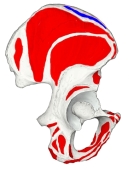
Muscle attachments (lateral surface) 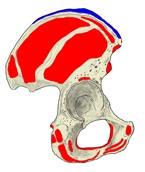
Muscle attachments (lateral surface) 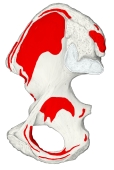
Muscle attachments (medial surface) 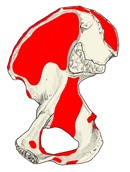
Muscle attachments (medial surface) 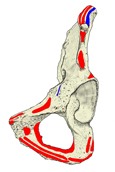
Muscle attachments (anterior oblique) 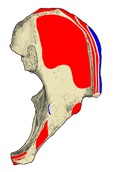
Muscle attachments (from above)
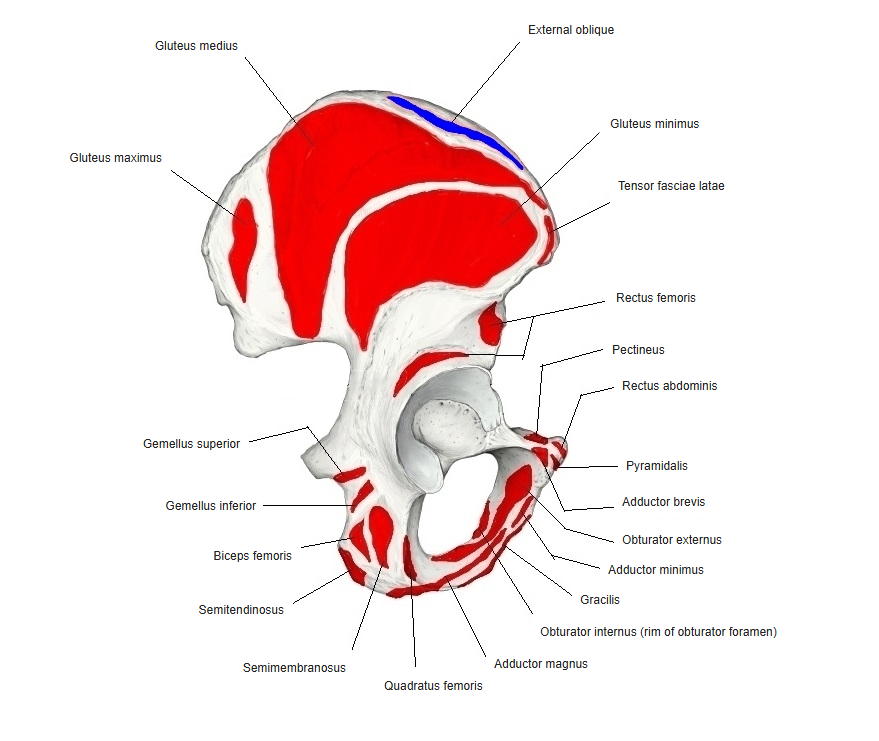
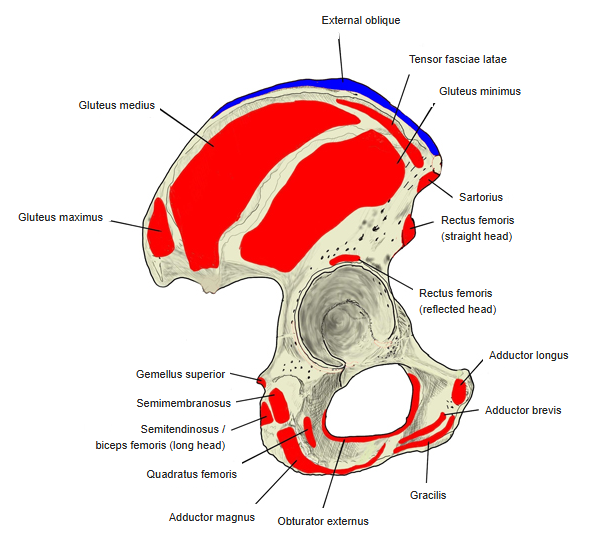
Parts
- Body of ischium – the thick upper part; forms the posteroinferior part of the acetabulum.
- Ischial spine – a pointed projection on the posterior border; the sacrospinous ligament, coccygeus and superior gemellus attach to it.
- Greater sciatic notch (lower part) and lesser sciatic notch – the notches above and below the ischial spine; converted into the greater and lesser sciatic foramina by the sacrospinous and sacrotuberous ligaments.
- Ischial tuberosity – the large rough swelling at the lower back of the body; origin of the hamstrings, quadratus femoris and the ischial part of adductor magnus, and attachment of the sacrotuberous ligament.
- Ramus of ischium – the thin bar running forwards and upwards from the tuberosity to unite with the inferior ramus of the pubis.
- Posterior obturator tubercle – a small tubercle on the margin of the obturator foramen.
References and sources
- Further reading: Ischium, Wikipedia.