Naris (Latin: naris)
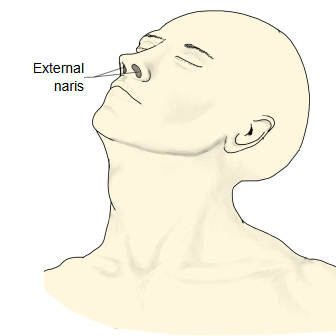
Also called External naris or the nostril or the anterior naris
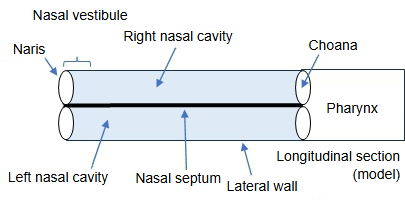
· The boundary between the nasal cavity and the pharynx is the choana (posterior or internal naris). So the nasal cavity extends from the external naris in front to the choana behind, where it opens into the nasopharynx.
· The right and left nares are separated by the columella, the mobile lower part of the nasal septum, and bounded on the outer side by the ala (wing) of the nose, which is shaped by the major alar cartilage and small accessory nasal cartilages.
· Each naris opens into the nasal vestibule, a short skin-lined space with coarse hairs (vibrissae) that help to filter the incoming air.
· The nares are soft-tissue openings; they should not be confused with the piriform aperture, the bony opening of the nasal cavity in the skull. Their size can be changed slightly by nasalis and other small muscles around the nose, for example when breathing hard.
 Head (seen from below and in front)
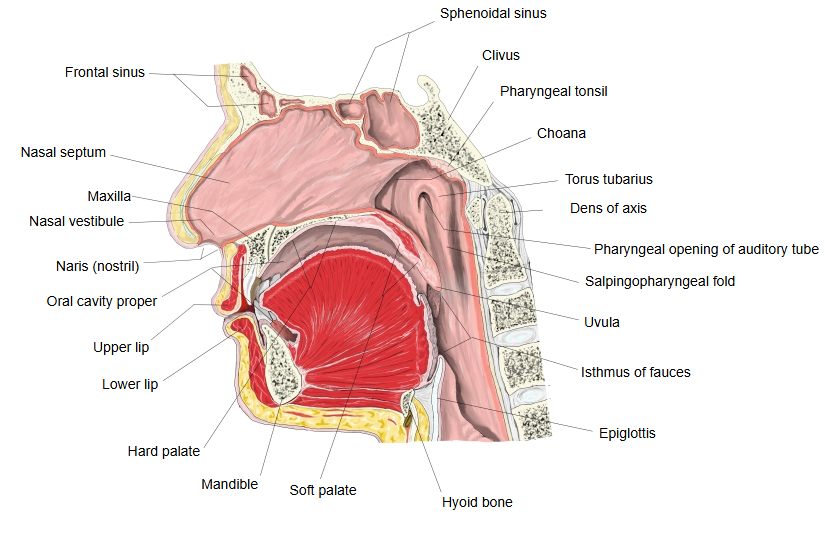
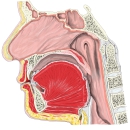 Nasal and oral cavities (median section)
Related terms
References and sources
- Further reading: Nostril, Wikipedia.
- Further reading: Nasal vestibule, Wikipedia.
- Federative International Programme for Anatomical Terminology (FIPAT). Terminologia Anatomica, 2nd ed. (TA2), 2019.