Inferior radioulnar joint (Latin: articulatio radioulnaris distalis)
Also called the distal radioulnar joint
What is the inferior radioulnar joint?
- Bones: ulnar notch (radius) ⇔ articular circumference of the head of the ulna (ulna)
- Type: a uniaxial pivot joint
- Movement: works together with the superior radioulnar joint to turn the forearm (pronation and supination).
- Palmar radioulnar ligament : on the palmar side
- Dorsal radioulnar ligament : on the dorsal side
- Articular disc : separates the inferior radioulnar joint from the radiocarpal joint
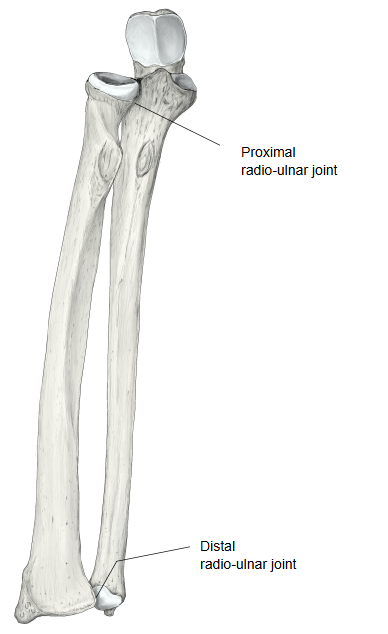
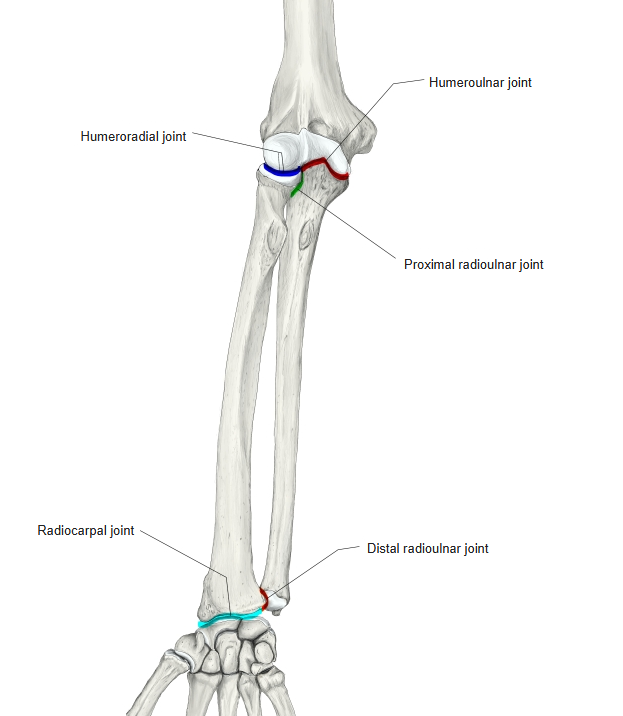
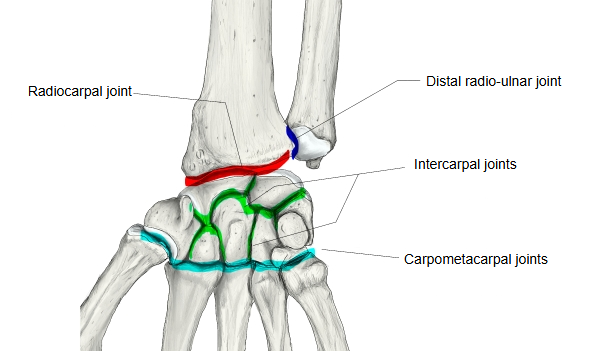
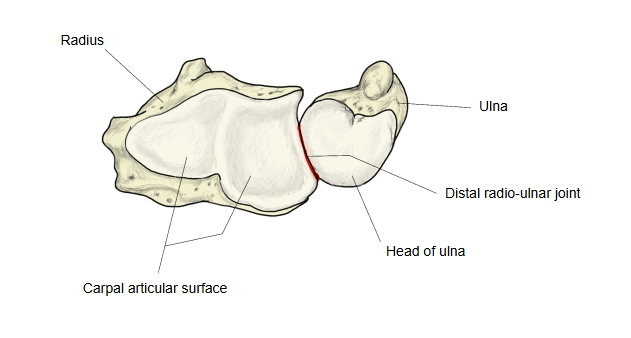
Joint cavity
The lower wall of the joint cavity is the upper surface of the articular disc. The disc is a triangular plate of fibrocartilage: its base is attached to the lower margin of the ulnar notch of the radius, and its apex to the root of the ulnar styloid process. Its lower surface takes part in the radiocarpal joint, so it keeps the two joints apart. Part of the joint cavity extends upwards for a short distance between the radius and the ulna (the sacciform recess), which gives the cavity its L shape.
Movements
The superior and inferior radioulnar joints work together to turn the forearm: supination (palm facing forwards or upwards) and pronation (palm facing backwards or downwards). The axis of the movement is a line through the head of the radius and the head of the ulna. The ulna stays still, and the lower end of the radius, carrying the hand, turns around the head of the ulna.
With the upper limb straight, turning the forearm is usually combined with rotation of the arm at the shoulder. To see pronation and supination at the radioulnar joints alone, bend the elbow to about a right angle. The fibres of the interosseous membrane of the forearm and the oblique cord carry forces from the hand and wrist up the forearm towards the arm, and they become tight and limit the movement when the forearm is turned too far.
Supination is produced mainly by the Supinator and the Biceps brachii; pronation mainly by the Pronator quadratus and the Pronator teres. The Brachioradialis can bring the forearm back to the mid-position from either full pronation or full supination.