Canal of Hering
Also called Hering's canal or the cholangiole (in some sources)
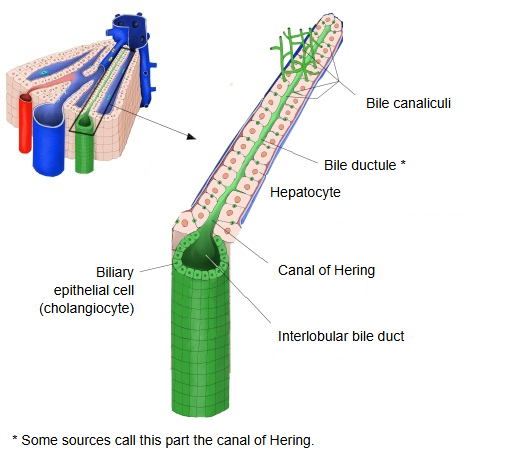
Sources differ a good deal in the names of the channels that carry the bile made by the hepatocytes to the interlobular bile ducts outside the hepatic lobule, and it is not clear which naming is correct or most common. The description below is one example.
· Some sources use the name canal of Hering for the bile ductule.
· The canal is about 10–15 µm across. It is thought to hold liver progenitor (stem) cells, which can form new hepatocytes or duct cells after injury.
The bile pathway inside the liver
Sources differ: some do not distinguish the bile canaliculus, canal of Hering and bile ductule, some do not use the names bile ductule and canal of Hering at all, and some reverse their order. The diameters are only rough guides.
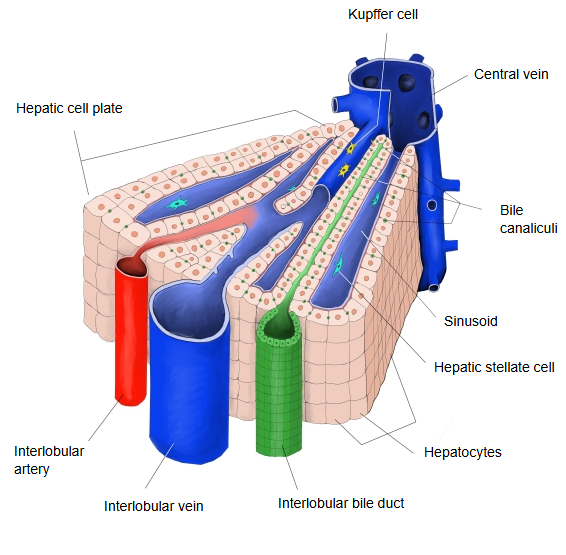
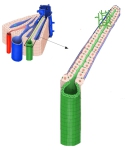 From bile canaliculi to bile duct
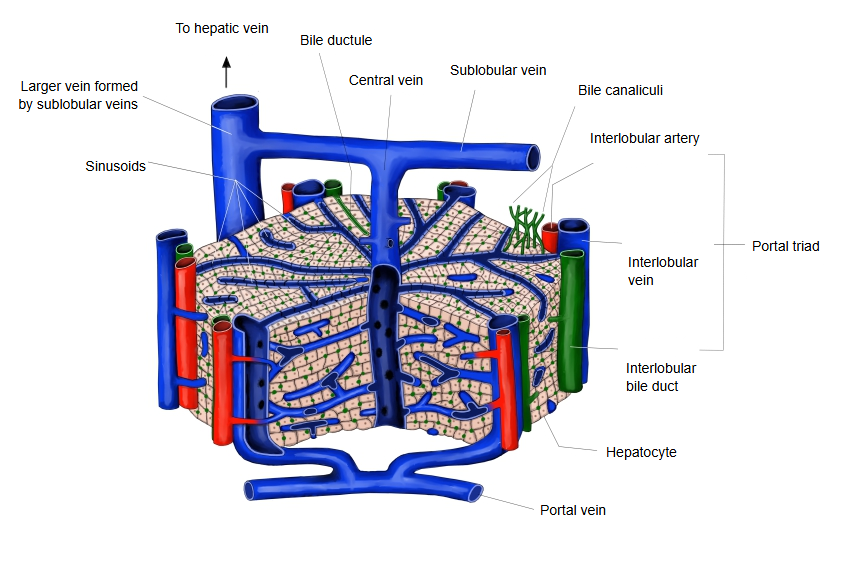
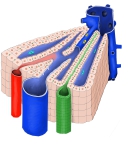 Structure of a hepatic lobule
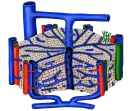 Hepatic lobule (cut-away)
Reference websites
[Wikipedia]
· Canals of Hering, Wikipedia.
· Bile canaliculus, Wikipedia.
[Websites with illustrations]
· Canals of Hering and liver progenitor cells (figure) (Experimental & Molecular Medicine)

· Bile canaliculi and the hepatic lobule (figure) (DoctorLib)

Related terms
References and sources
- Further reading: Canals of Hering, Wikipedia.
- Further reading: Bile canaliculus, Wikipedia.
- Federative International Programme for Anatomical Terminology (FIPAT). Terminologia Anatomica, 2nd ed. (TA2), 2019.