Epithelial cell (Latin: epitheliocytus)
Also called the epitheliocyte
Overview
The main features of epithelial cells are:
· Closely joined: the cells lie close together, firmly linked by tight junctions and other cell junctions, with very little material between them.
· Polarized: the free (apical) surface and the base (basal surface) differ in structure and function.
· Resting on a basement membrane: the cells are supported by the basement membrane beneath them.
· No blood vessels: an epithelium has no vessels of its own; nutrients diffuse to the cells through the basement membrane from the vessels of the connective tissue beneath.
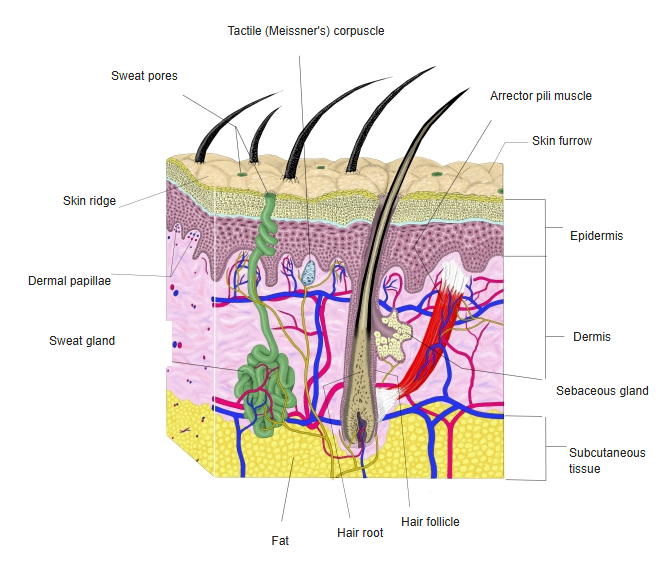
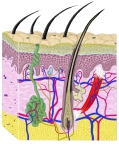 Skin
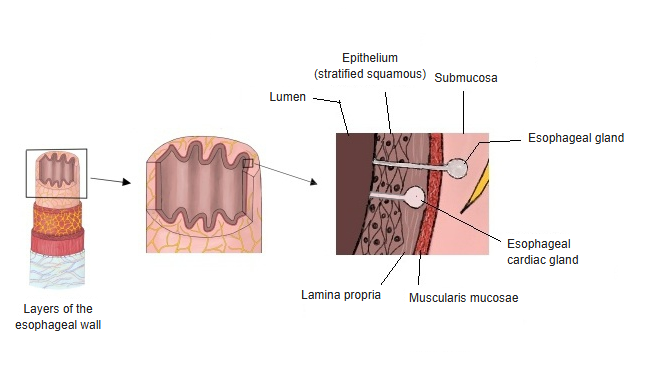
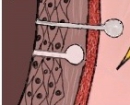 Mucosa of the oesophagus
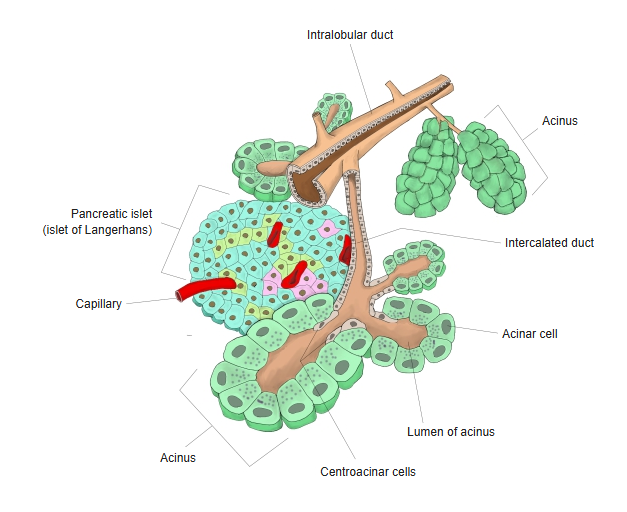
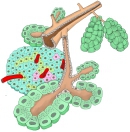 Acini and ducts (pancreas)
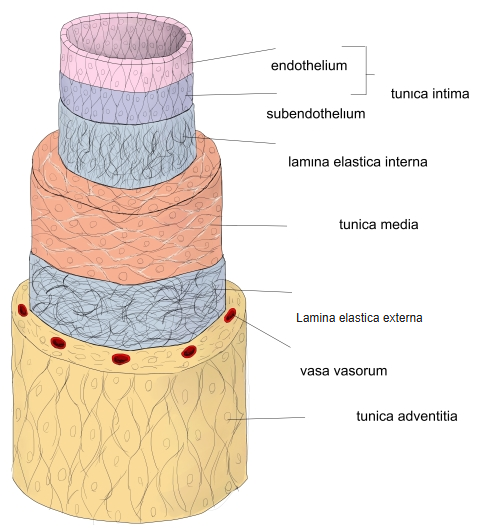
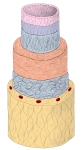 Wall of an artery (endothelium)
Classification
By shape
| Shape | Features | Examples | |
|---|---|---|---|
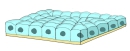
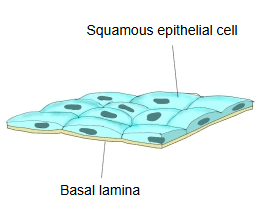
| 1 | Squamous epithelium | Thin and flat | Lining of blood vessels (endothelium), lung alveoli, inner lining of the heart, Bowman's capsule of the kidney, lining of the body cavities (mesothelium), etc. |
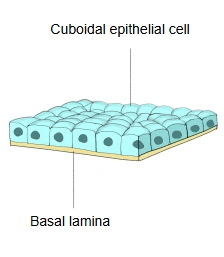
| 2 | Cuboidal epithelium | About as tall as wide | Kidney tubules, thyroid follicles, small ducts of the sweat glands, salivary glands and pancreas, surface of the ovary, front of the lens, gland acini, etc. |
| 3 | Columnar epithelium | Tall and column-like | Small intestine, stomach, lining of the uterus, etc. |
 Simple squamous epithelium
 Simple cuboidal epithelium
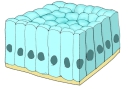 Simple columnar epithelium
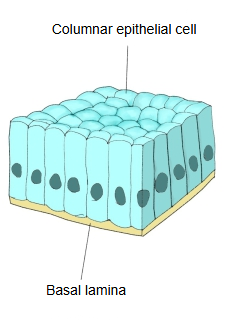
Texts differ on whether the endothelium of vessels and the mesothelium of body cavities count as true epithelia; they are usually classed as simple squamous epithelium.
By number of layers
| Layers | Features | Examples | |
|---|---|---|---|
| 1 | Simple epithelium | One layer of cells | Common where substances are absorbed or secreted |
| 2 | Stratified epithelium | Several layers; named after the shape of the surface cells | Skin, mouth, oesophagus, etc. |
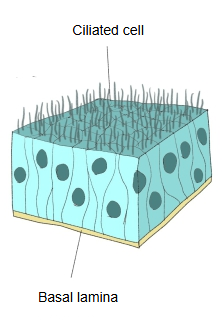
| 3 | Pseudostratified epithelium | Looks layered but is a single layer, because every cell rests on the basement membrane | Lining of the trachea, etc. |
- Simple squamous epithelium
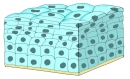 Stratified squamous epithelium
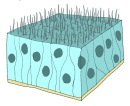 Pseudostratified epithelium
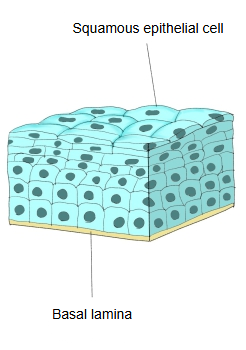
By function
| Type | Role | Examples | |
|---|---|---|---|
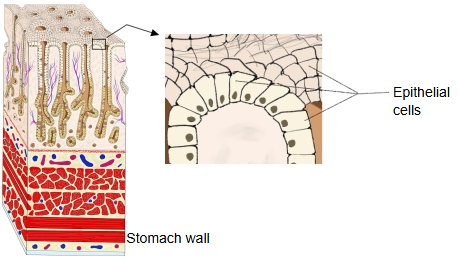
| 1 | Covering epithelium | Covers the body surface and the surfaces of organs | Skin, gastric mucosa |
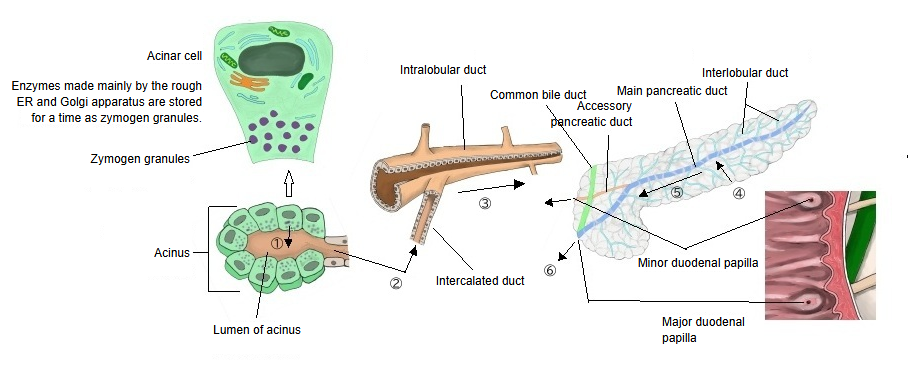
| 2 | Glandular epithelium | Secretes (e.g. acinar cells) | Salivary glands, pancreas |
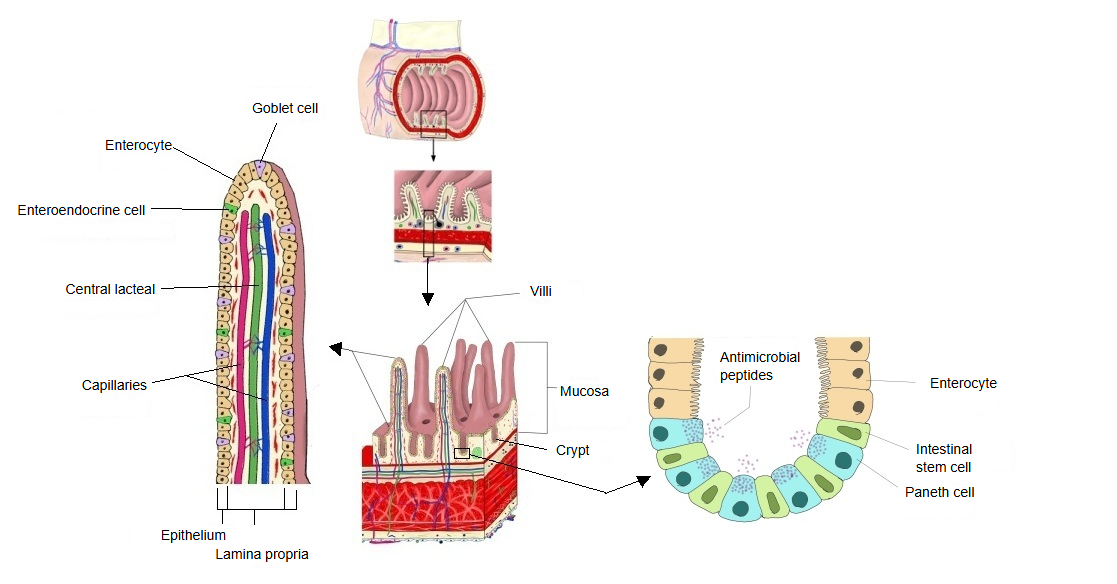
| 3 | Absorptive epithelium | Takes up nutrients and other substances | Enterocytes of the small intestine |
| 4 | Sensory epithelium | Contains cells that receive stimuli | Olfactory epithelium of the nasal mucosa, taste buds, sensory epithelium of the inner ear |
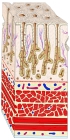 Gastric mucosa
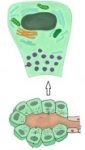 Acinus (pancreas)
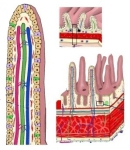 Epithelium of the small intestine
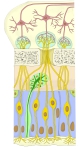 Olfactory epithelium
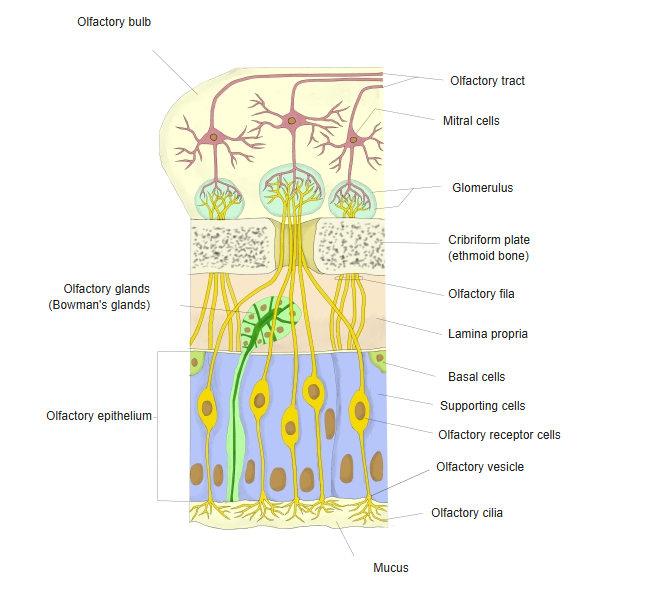
Examples (by organ)
· Small intestine: simple columnar epithelium; function: absorption.
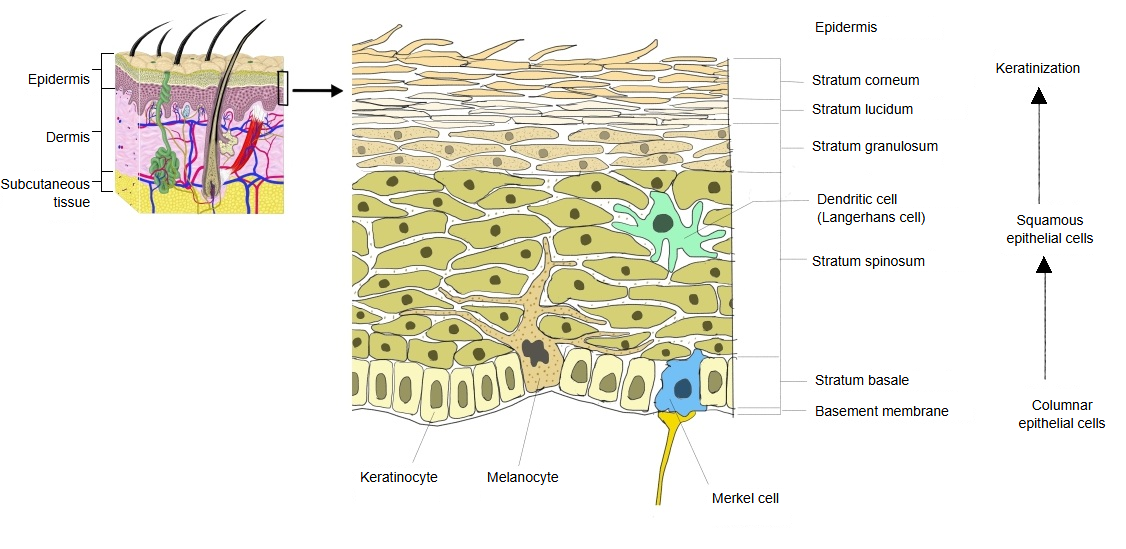
· Skin (epidermis): keratinized stratified squamous epithelium; function: protection. Columnar cells of the stratum basale become flat as they move up and keratinize.
· Trachea: pseudostratified ciliated columnar epithelium; function: secretes mucus and sweeps out foreign particles.
· Acini (of the pancreas and other glands): a single layer of cuboidal to pyramidal acinar cells; function: secretion of digestive enzymes.
- Epithelium of the small intestine
 Structure of the epidermis
- Pseudostratified epithelium
- Acinus (pancreas)
Related terms
- Basement membrane
- Pseudostratified epithelium
- Mesothelium
- Glandular cell
- Enterocyte
- Keratinocyte
- Acinar cells
References and sources
- Further reading: Epithelium, Wikipedia.
- Federative International Programme for Anatomical Terminology (FIPAT). Terminologia Anatomica, 2nd ed. (TA2), 2019.