Multipolar neuron
Also called the multipolar nerve cell
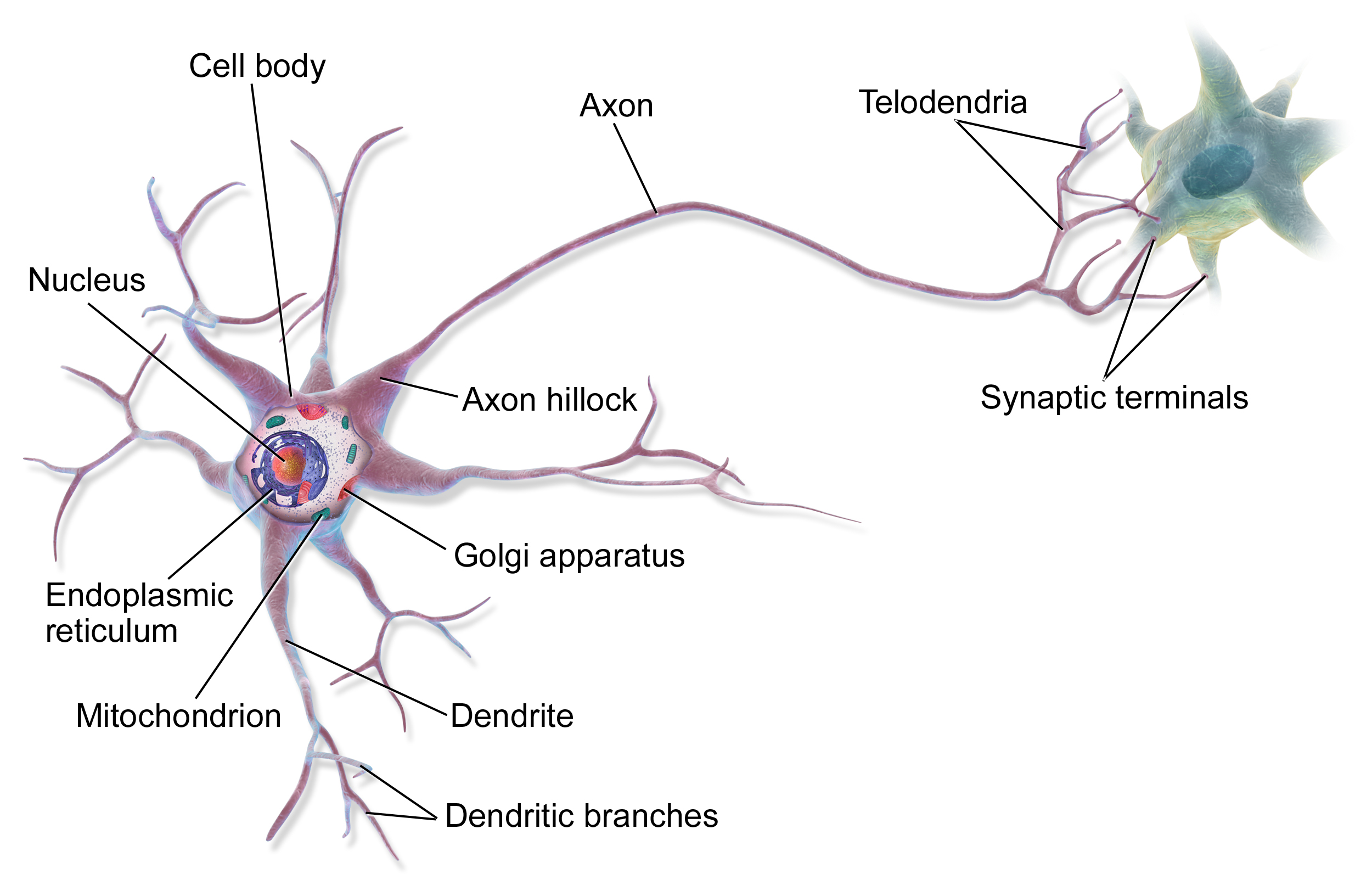
· Having many dendrites means receiving correspondingly more information from other cells: each dendrite carries many synapses, so the cell can combine signals from many other neurons.
· It usually has a roughly oval (or star-shaped) cell body, from which dendrites arise in all directions.
Named examples of multipolar neurons include:
· Dogiel cells · Purkinje cells · ganglion cells · pyramidal cells
Others are the motor neurons of the anterior horn of the spinal cord and most interneurons. Multipolar neurons make up the great majority of neurons in the central nervous system (the cerebral and cerebellar cortex, the grey matter of the brainstem and the spinal cord); outside it they form the neurons of the autonomic ganglia.
of nerve
cell
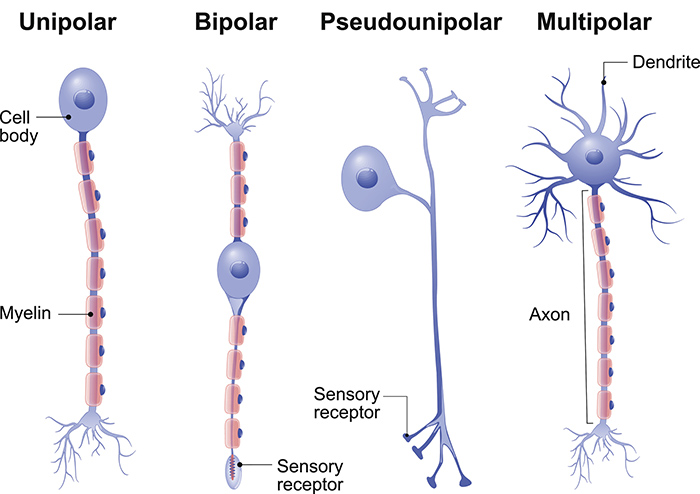
- Unipolar neuron : one process from the cell body. Found in the central nervous system of invertebrates; true unipolar neurons are rare in humans.
- Bipolar neuron : two processes from the cell body (one dendrite and one axon). Found in special sense organs: the retina, the olfactory epithelium of the nose and the vestibular and cochlear (spiral) ganglia. Share: a few % of all neurons.
- Multipolar neuron : many processes from the cell body. About 99% of the neurons of the central nervous system. Found in the cortex of the brain, the spinal cord and the autonomic ganglia. Share: over 90% of all neurons.
- Pseudounipolar neuron : one process from the cell body, which divides into two (a peripheral and a central process); the signal can bypass the cell body. The sensory neurons of the dorsal root and cranial sensory ganglia. Share: a few % of all neurons.
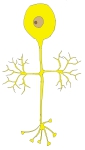 Unipolar neuron
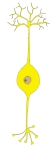 Bipolar neuron
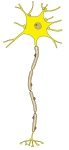 Multipolar neuron
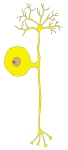 Pseudounipolar neuron
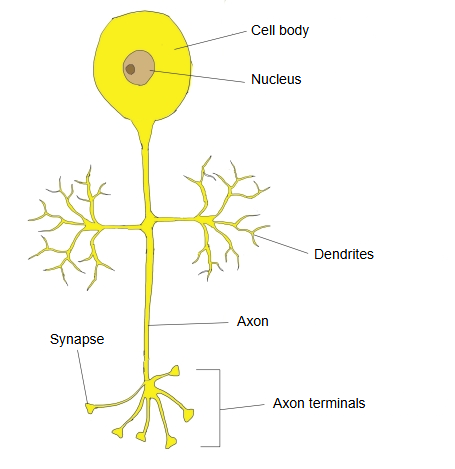
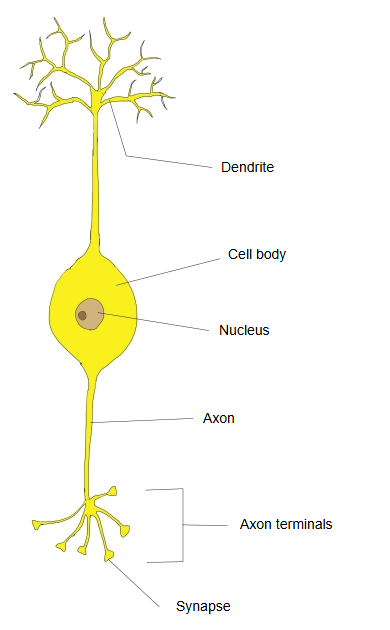
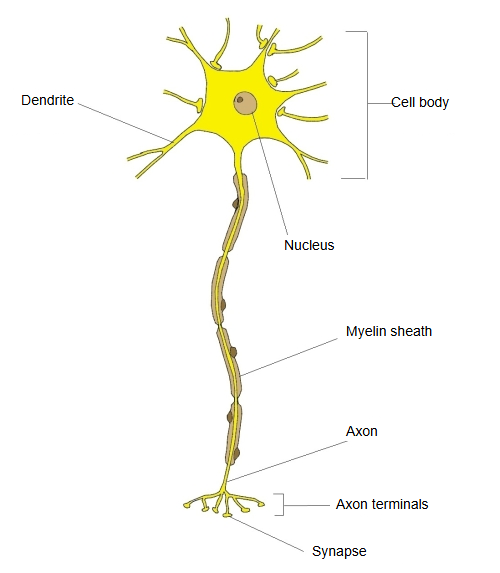
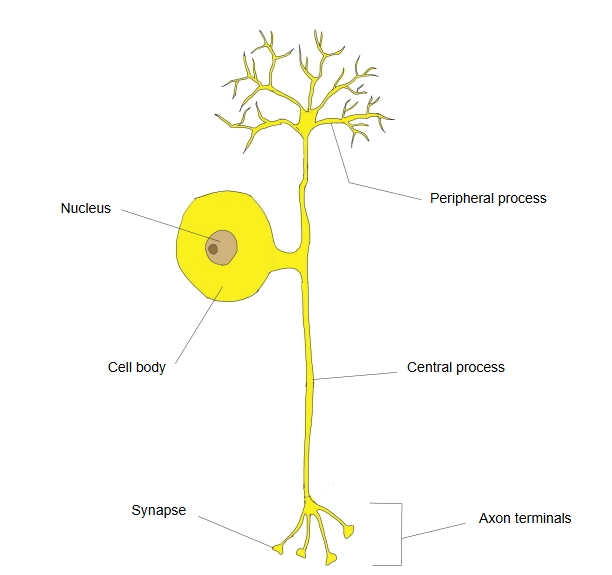
Reference websites
[Wikipedia]
· Multipolar neuron, Wikipedia.
· Neuron, Wikipedia.
[Websites with illustrations]
· Multipolar neuron (Blausen illustration) (Wikimedia Commons)
· Types of neurons (Queensland Brain Institute)
Related terms
- Neuron
- Central process
- Unipolar neuron
- Pseudounipolar neuron
- Interneuron
- Dendrite
- Axon
- Cell body
- Nervous tissue
- Autonomic ganglion
References and sources
- Further reading: Multipolar neuron, Wikipedia.
- Further reading: Neuron, Wikipedia.
- Federative International Programme for Anatomical Terminology (FIPAT). Terminologia Anatomica, 2nd ed. (TA2), 2019.