Urogenital muscles
Also called the muscles of the urogenital triangle
The urogenital muscles are the muscles of the so-called external genital region, and belong to the muscles of the perineum. Some textbooks divide the muscles of the perineum into two groups, the urogenital muscles and the anal muscles, as shown below.
of the
perineum
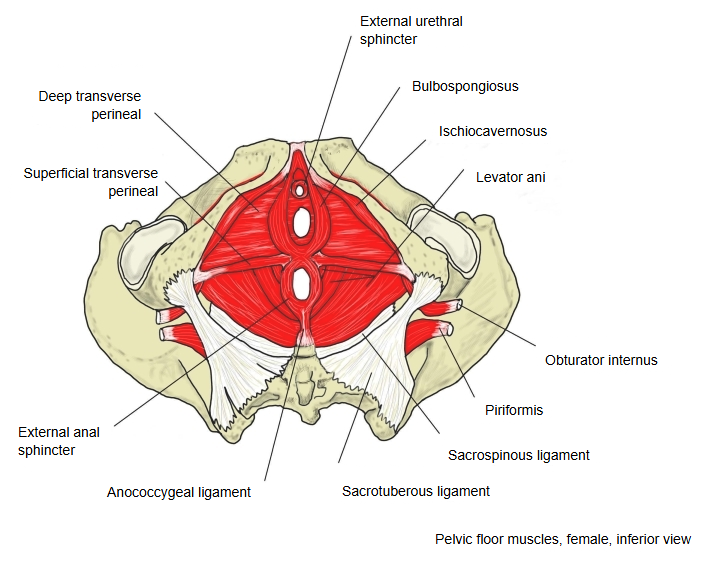
- Urogenital muscles : the muscles of the external genital region
- Bulbospongiosus
- Ischiocavernosus
- Superficial transverse perineal muscle : (transversus perinei superficialis)
- Deep transverse perineal muscle : (transversus perinei profundus)
- External urethral sphincter : (sphincter urethrae)
- Anal muscles
All the muscles in this overview together make up the pelvic floor muscles in the wider sense. The urogenital muscles are the front group: the muscles around the external genitalia and the urethra in the urogenital triangle, while the anal group lies behind them. The grouping is a textbook convenience, not a term of the official anatomical terminology. Most texts do not count the levator ani and the coccygeus as muscles of the perineum: together they form the pelvic diaphragm, the roof of the perineum, and only the external anal sphincter belongs to the anal triangle of the perineum itself.
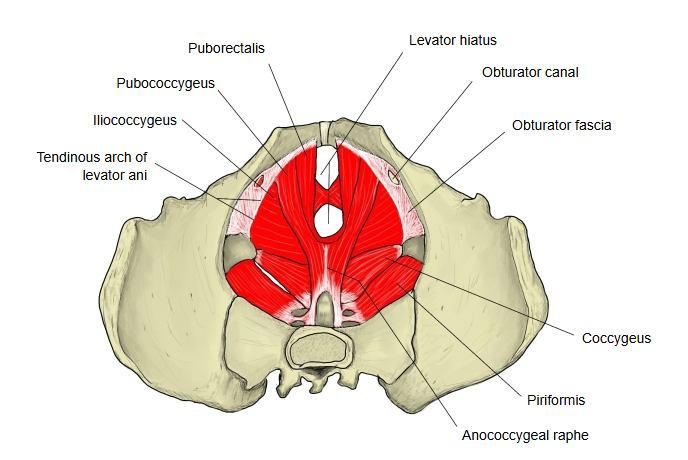
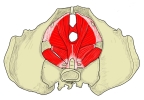 Female pelvic floor (superior view)
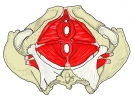 Female pelvic floor (inferior view)
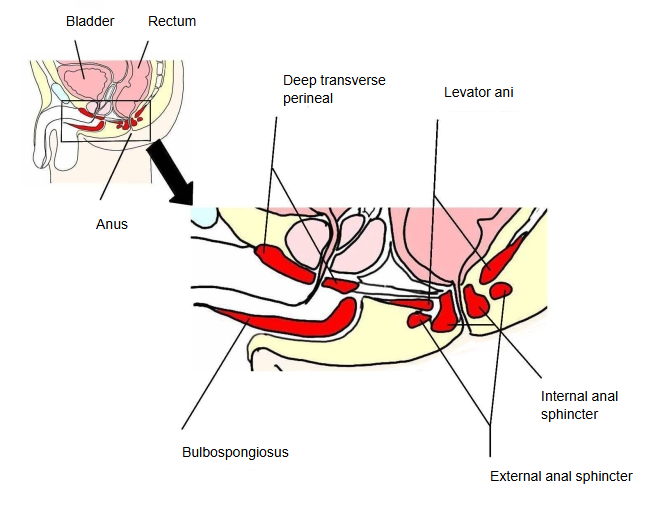
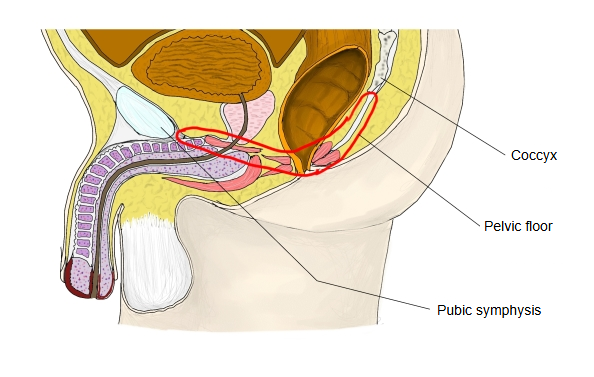
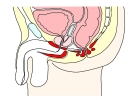 Pelvic floor (median section)
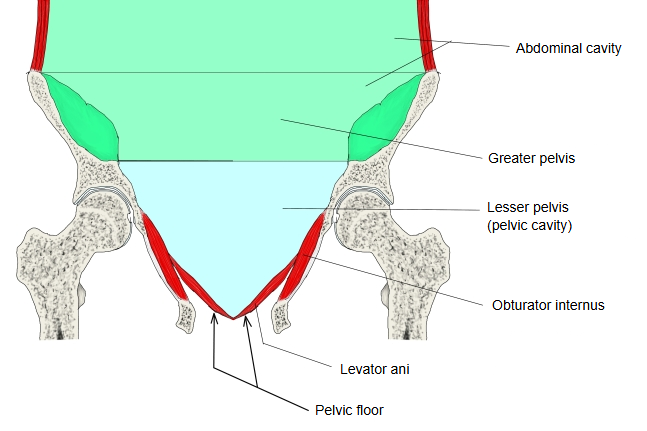
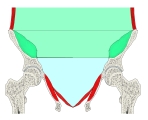 Pelvis (coronal section)
 Pelvic floor (median section)
Reference websites
[Wikipedia]
· Perineum, Wikipedia.
[Websites with illustrations]
· Pelvic floor muscles (medial view) (Netter Images)

Related terms
- Urogenital triangle
- Muscles of perineum
- Anal muscles
- Pelvic floor muscles
- Perineal membrane
- Perineal body
- Bulbospongiosus
- Ischiocavernosus
References and sources
- Further reading: Perineum, Wikipedia.
- Federative International Programme for Anatomical Terminology (FIPAT). Terminologia Anatomica, 2nd ed. (TA2), 2019.