Salpingopharyngeus (Latin: musculus salpingopharyngeus)
- Overview
- Illustrations
- Origin / insertion
- Action
- Nerve / blood supply
- Reference websites
- (Wikipedia, websites with illustrations)
- Related terms
Overview
- Superficial muscles of the neck (10)
- Deep muscles of the neck (8)
- Muscles of the pharynx (6)
- Pharyngeal constrictors (3) : superior, middle, inferior (its lowest part is the cricopharyngeus)
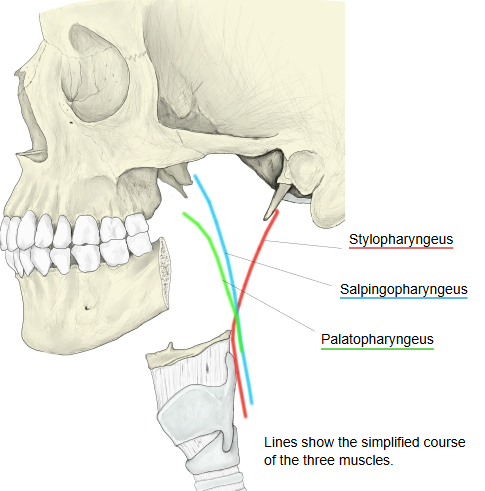
- Pharyngeal elevators (3) : stylopharyngeus, salpingopharyngeus, palatopharyngeus
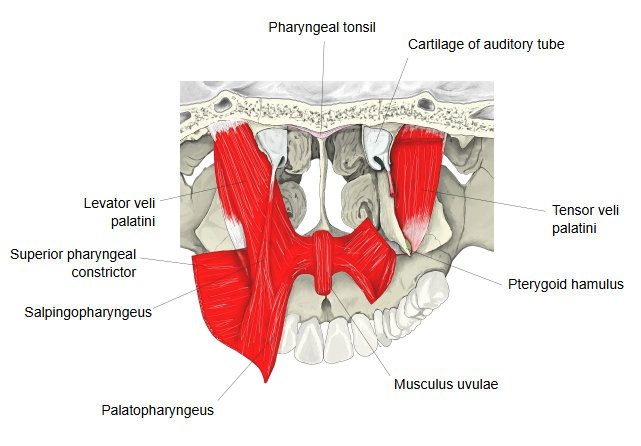
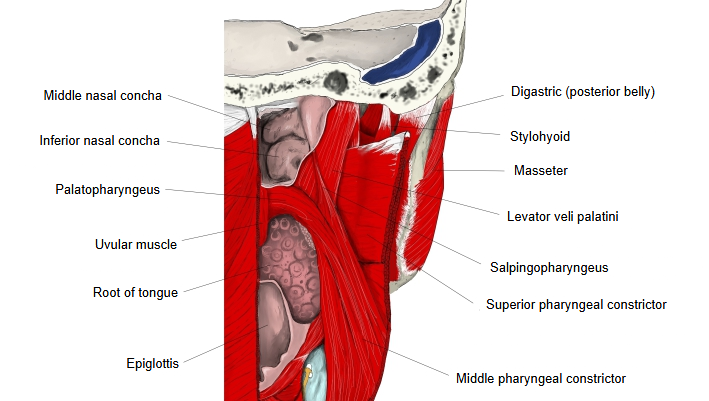
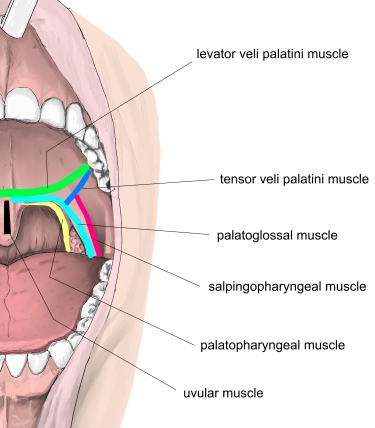
· A slender muscle, often small; it is sometimes absent. It raises the salpingopharyngeal fold of the mucosa, which runs down from the torus tubarius.
- Pharyngeal constrictors (circular muscles)All three end on the pharyngeal raphe.
- Superior constrictor : from the medial pterygoid plate and hamulus, the pterygomandibular raphe, the mandible and the side of the tongue
- Middle constrictor : from the greater and lesser horns of the hyoid bone and the stylohyoid ligament
- Inferior constrictor : from the thyroid and cricoid cartilages
- Pharyngeal elevators (longitudinal muscles)
- Palatopharyngeus : from the palatine aponeurosis and the hard palate; to the posterior border of the thyroid cartilage and the pharyngeal wall
- Salpingopharyngeus : from the cartilage of the auditory tube; joins the palatopharyngeus
- Stylopharyngeus : from the styloid process of the temporal bone; to the thyroid cartilage (upper and posterior borders) and the pharyngeal wall
Illustrations
More figures: Pharynx and esophagus (posterior view) · Muscles of the neck (list)
Origin / insertion
[Origin] : the lower part of the cartilage of the auditory tube, near its pharyngeal opening.
[Insertion] : it runs down the side wall of the pharynx, at the border between the side and back walls, spreads out and blends with the back part of the palatopharyngeus.
Action
Raises the pharynx (and with it the larynx) during swallowing and speaking, and pulls the side walls of the pharynx upward. Some texts add that it helps to open the pharyngeal opening of the auditory tube during swallowing; sources differ (the tensor veli palatini is the main opener).
Nerve / blood supply
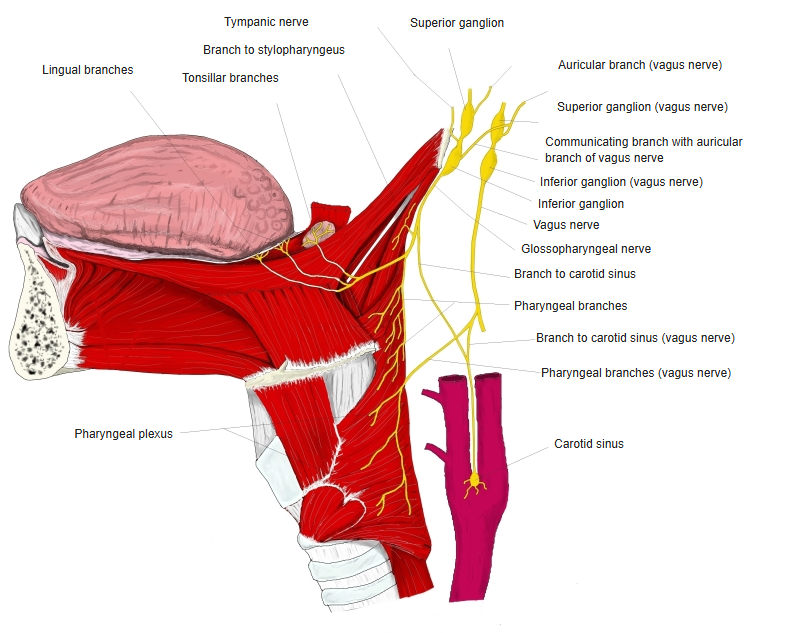
· Nerve : the pharyngeal plexus, through the pharyngeal branches of the vagus nerve (cranial nerve X). Of the pharyngeal elevators only the stylopharyngeus is supplied by the glossopharyngeal nerve.
· Arteries : the ascending pharyngeal artery and the ascending palatine artery.
· Veins : the pharyngeal venous plexus, draining by the pharyngeal veins to the internal jugular vein.
 Pharyngeal plexus
Reference websites
[Wikipedia]
· Salpingopharyngeus muscle, Wikipedia.
[Websites with illustrations]
· Salpingopharyngeus (image) (Wikimedia Commons)

Related terms
- Pharyngeal elevator muscles
- Salpingopharyngeal fold
- Torus tubarius
- Pharyngeal opening of auditory tube
- Pharyngeal plexus
- Palatopharyngeus
- Stylopharyngeus
- Pharyngotympanic tube
- Pharynx
References and sources
- FIPAT. Terminologia Anatomica, 2nd ed. (TA2), 2019: musculus salpingopharyngeus.
- Salpingopharyngeus muscle, Wikipedia.