Joints (Latin: juncturae; articulationes)
- Overview
- Immovable joints
- Fibrous joints (Syndesmosis, Suture, Gomphosis)
- Cartilaginous joints
- Bony union
- Movable joints
Overview
- Immovable joints
- Fibrous joints
- Syndesmosis : the bones are joined by a ligament or a membrane of fibrous connective tissue (e.g. interclavicular ligament, tibiofibular syndesmosis, interosseous membranes of the forearm and leg)
- Suture : mainly between the bones of the skull; serrate, squamous and plane sutures
- Gomphosis : between the root of a tooth and its socket
- Cartilaginous joints : e.g. the pubic symphysis; the joint between the sphenoid and occipital bones in children
- Bony union (synostosis) : usually a cartilaginous joint that has turned into bone, e.g. the fused sacral vertebrae of the adult sacrum
- Fibrous joints
- Movable joints : two bones separated by a joint cavity and joined by a joint capsule with special structures; also called synovial joints (joints in the narrow sense)
The roughly 200 bones of the body are connected, two or more at a time, by joints in the broad sense. Joints are classified by the kind of tissue that lies between the two bones, but the main division is by mobility: immovable joints and movable joints.
Immovable joints
Immovable joints do not move at all, or move only very slightly. By the way the bones are joined they are divided into three groups: fibrous joints, cartilaginous joints and bony union.
- Fibrous joints : there is no gap between the bones; they are filled with connective tissue, and there is almost no movement
- Syndesmosis : the bones are joined by a ligament or a membrane of fibrous connective tissue (e.g. interclavicular ligament, interosseous membranes of the forearm and leg)
- Suture : found mainly between the bones of the skull, which are joined by a very thin layer of connective tissue; serrate, squamous and plane sutures
- Gomphosis : between the root of a tooth and its socket
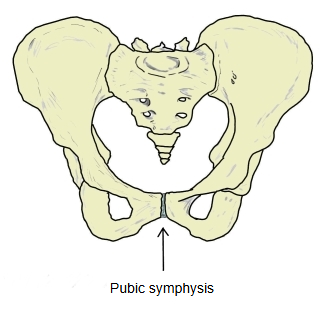
- Cartilaginous joints : the bones are joined by cartilage, e.g. the fibrocartilaginous pubic symphysis
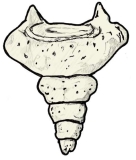
- Bony union : the bones are joined by bone, e.g. the fused vertebrae of the adult sacrum
Fibrous joints
[Syndesmosis]
Two bones are joined by a ligament or by a membrane of connective tissue.
Bones joined by a ligament between them
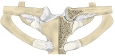 Interclavicular ligament
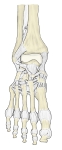 Anterior tibiofibular ligament (tibiofibular syndesmosis)
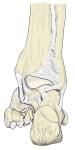 Posterior tibiofibular ligament (tibiofibular syndesmosis)
Bones joined by an interosseous membrane
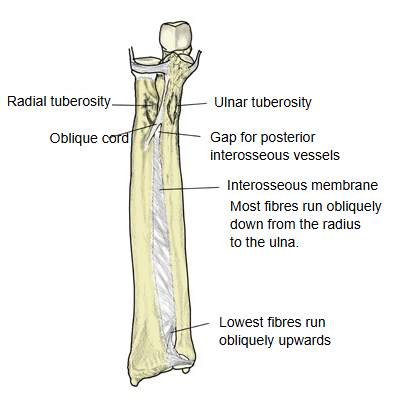
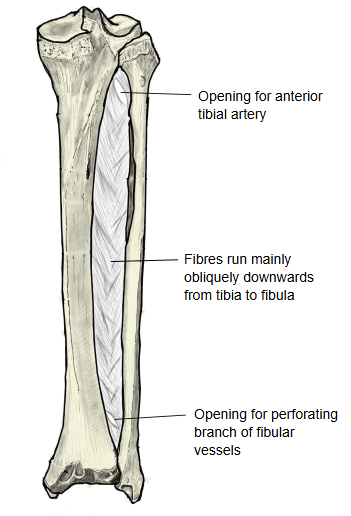
Note: the name “interosseous membrane” is normally used only for the interosseous membrane of the forearm and the interosseous membrane of the leg. The membranes between the atlas and the occipital bone (anterior and posterior atlanto-occipital membranes) and between the atlas and the axis (anterior and posterior atlanto-axial membranes) also join two bones with a sheet of fibrous tissue, but they are not usually called interosseous membranes.
[Suture]
The way the bones of the skull are joined to each other: by a very thin layer of connective tissue.
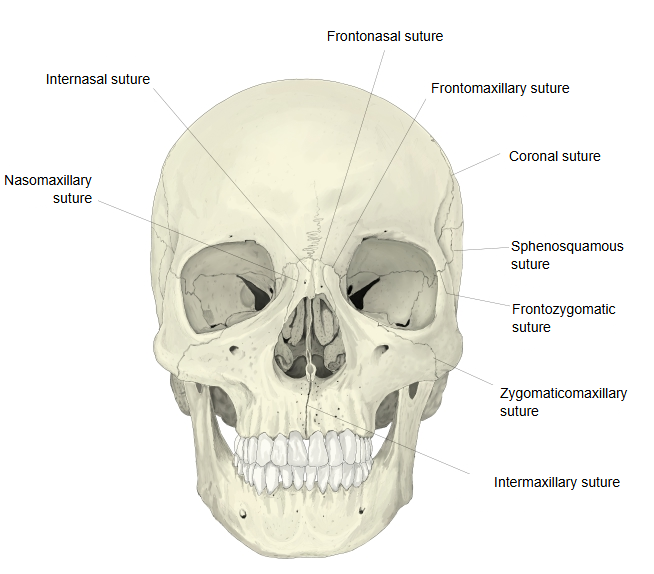
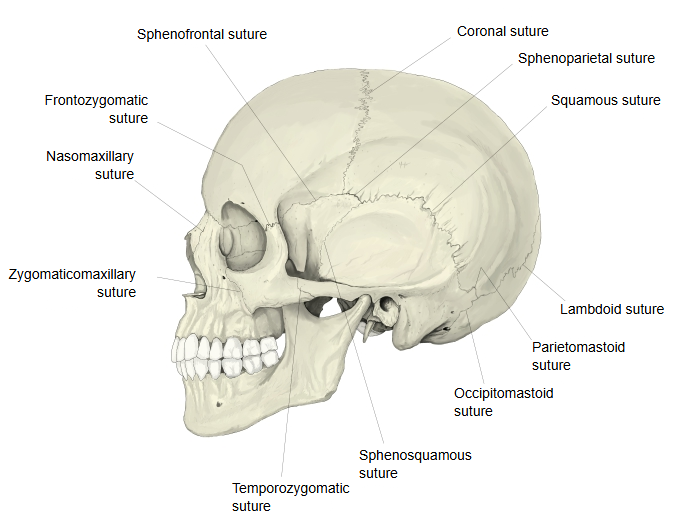
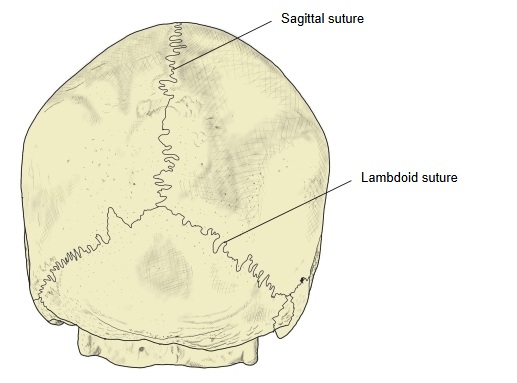
⇒ More about sutures: Suture
[Gomphosis]
The joint between the root of a tooth and the bony socket (dental alveolus) in the jaw. The tooth sits in its socket like a peg driven into a hole, and is held there by a thin layer of fibrous connective tissue (the periodontal ligament).
Cartilaginous joints
Two bones are joined by cartilage. There are two kinds:
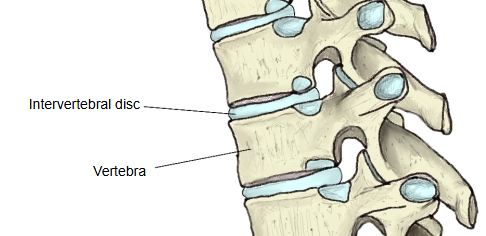
- Symphysis (fibrocartilaginous joint) : the layer next to each bone is hyaline cartilage, joined in the middle by fibrocartilage; e.g. the pubic symphysis and the joints between the bodies of the vertebrae
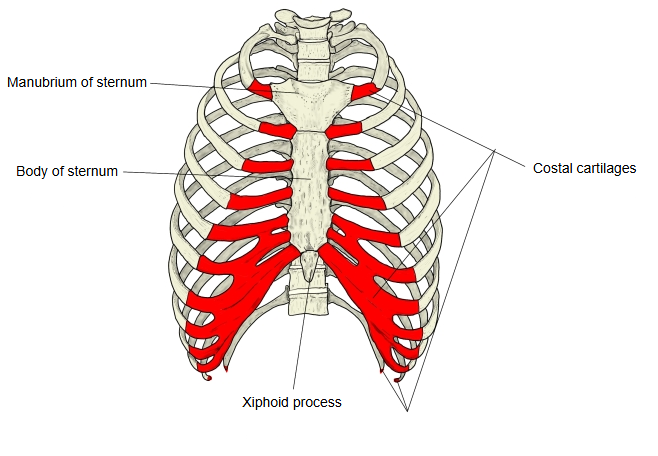
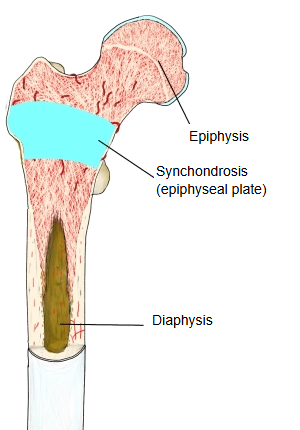
- Synchondrosis (hyaline cartilaginous joint) : the bones are joined by hyaline cartilage; most are found during growth and turn into bone later (the joint of the first rib with the sternum is an exception that persists)
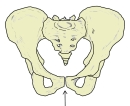 Pubic symphysis
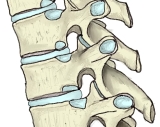 Intervertebral discs
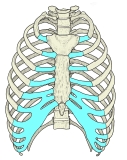 Costal cartilages
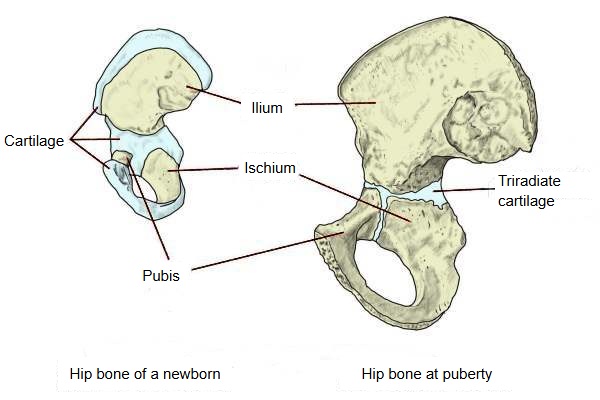
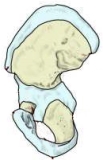 Hip bone of a newborn
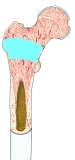 Growing bone (epiphyseal plate)
Bony union
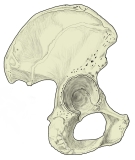
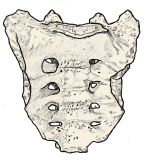
Bones that were first joined by cartilage, where the cartilage has turned into bone during growth. Typical examples are the hip bone (ilium, ischium and pubis), the sacrum (five sacral vertebrae) and the coccyx (three to five coccygeal vertebrae).
Movable joints
⇒ The movable joints (joints in the narrow sense) have their own page: Synovial joints.