Radiocarpal joint (Latin: articulatio radiocarpalis)
What is the radiocarpal joint?
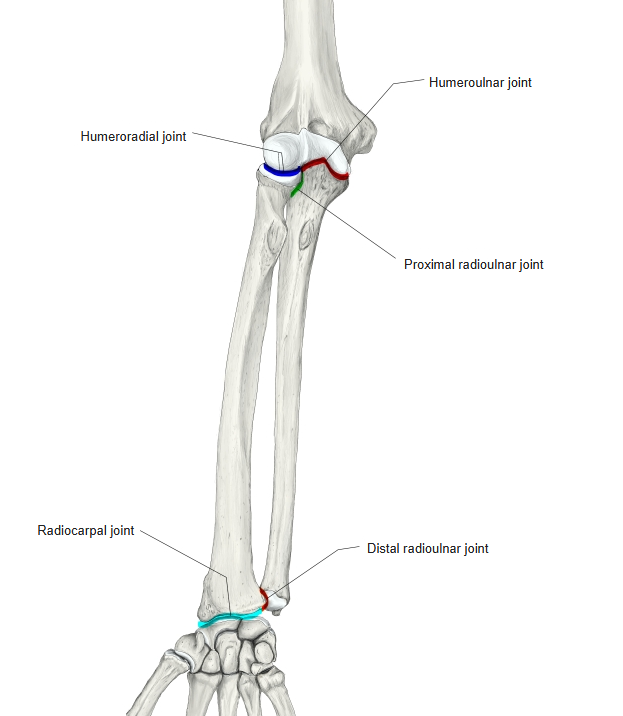
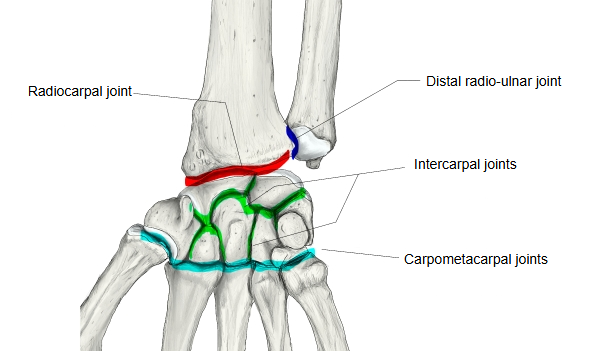
The joints of the hand can be divided into three main groups. The radiocarpal joint is one of the four joints of the wrist joint (carpal joints).
- Wrist joint (4 joints) : Radiocarpal joint, Intercarpal joints, Midcarpal joint, Pisiform joint
- Carpometacarpal joints (3 kinds)
- Finger joints (2 kinds)
Bones
Type
Ligaments
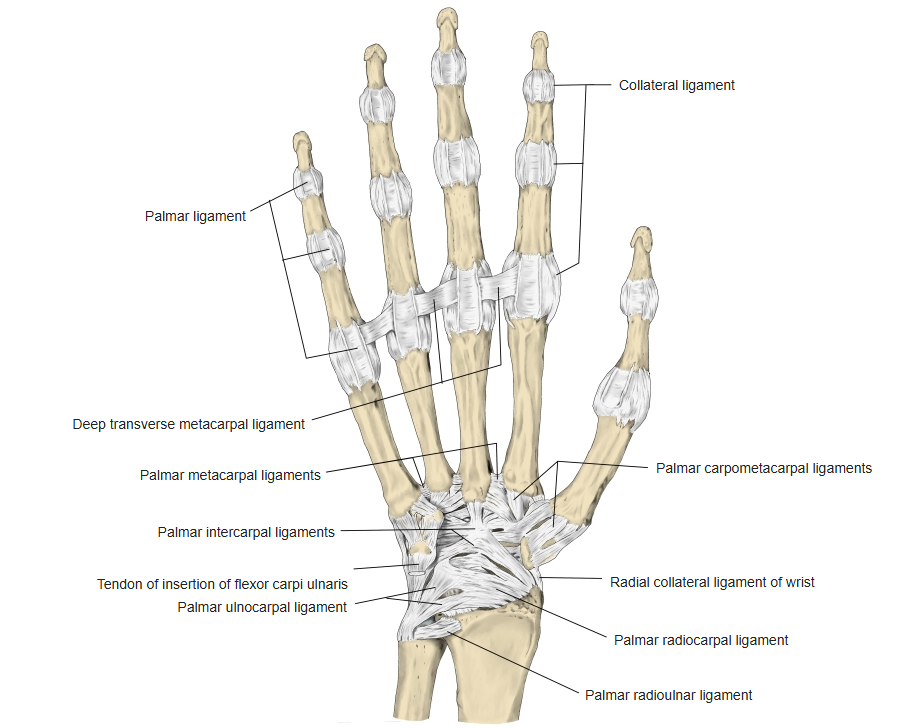
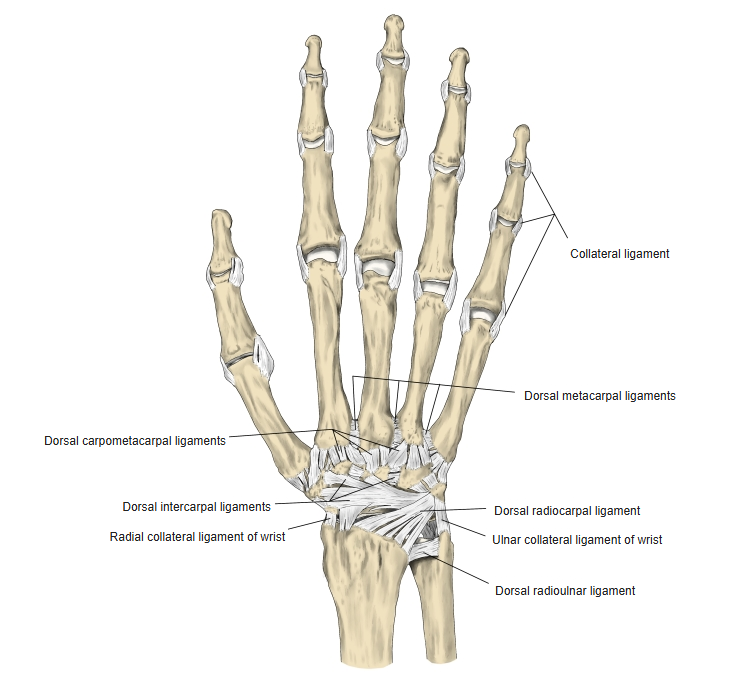
The ligaments related to the radiocarpal joint are listed below; the list may not be complete.
| Ligament | Attachments | |
|---|---|---|
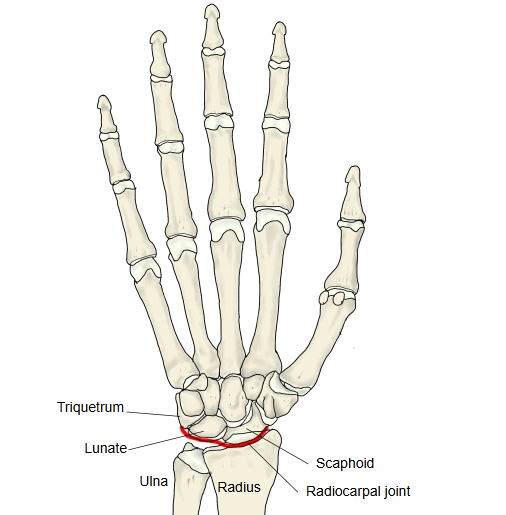
| 1 | Dorsal radiocarpal ligament | Radius (back of the lower end) ⇔ carpal bones (scaphoid, lunate, triquetrum) |
| 2 | Palmar radiocarpal ligament | Radius (styloid process and front of the lower end) ⇔ carpal bones (scaphoid, lunate, capitate) |
| 3 | Radial collateral ligament of wrist | Radius (styloid process) ⇔ scaphoid, trapezium |
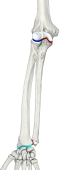
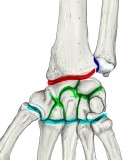
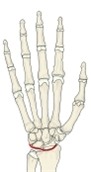
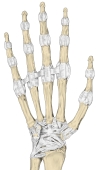 Right hand (palmar view)
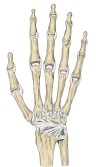 Right hand (dorsal view)
Joint capsule and movements
The lower end of the ulna does not take part in the radiocarpal joint directly: it is separated from it by the articular disc of the inferior radioulnar joint. The pisiform does not take part either.
The movements are biaxial. The hand bends towards the palm (flexion) and towards the back (extension), and towards the thumb side (radial deviation) and the little-finger side (ulnar deviation). These movements can also be done one after another as a circling movement (circumduction). Ulnar deviation is larger than radial deviation, because of the slope of the articular surface: the styloid process of the radius reaches further down than the ulnar side. Flexion towards the palm and the ulnar side is accompanied by a slight twisting, and bending obliquely between these two directions has the largest range.
- The joint capsule is thin.
- The joint cavity sometimes communicates with the cavities of the inferior radioulnar joint, the intercarpal joints and the pisiform joint.