Cheek (Latin: bucca)
cavity
- Lips : the front wall of the mouth: the upper lip and lower lip, joined at each corner (the labial commissure).
- Oral cavity : the space inside the lips and cheeks, in two parts: the oral vestibule in front (narrow) and the oral cavity proper behind.
- Palate : the upper wall (roof) of the mouth, in two parts: the hard palate in front (the larger part) and the soft palate behind.
- Floor of mouth : the bottom of the mouth, covered by soft mucous membrane with much loose connective tissue beneath.
- Cheeks : the side walls of the mouth, lateral to the lips; they form the oral vestibule and are made of skin, muscle (buccinator) and mucous membrane.
How far does the cheek reach?
Where does the "cheek" end? Few sources say so clearly, but if the cheek is taken as the buccal region of the regions of the body, as given in a standard Japanese anatomy textbook, it is quite a small area.
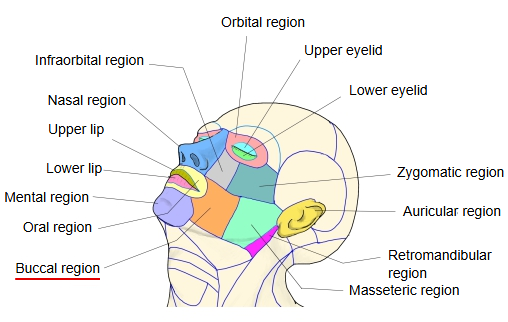
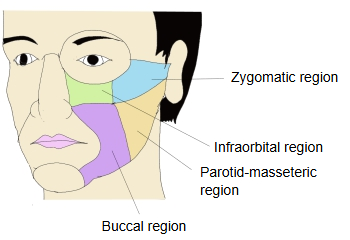
Some sources, as in the illustration below, take a wider area and divide it into four regions (buccal, infraorbital, zygomatic and parotid-masseteric).
· Its layers, from outside in, are skin, subcutaneous fat, the buccinator with its fascia, and the mucous membrane of the mouth.
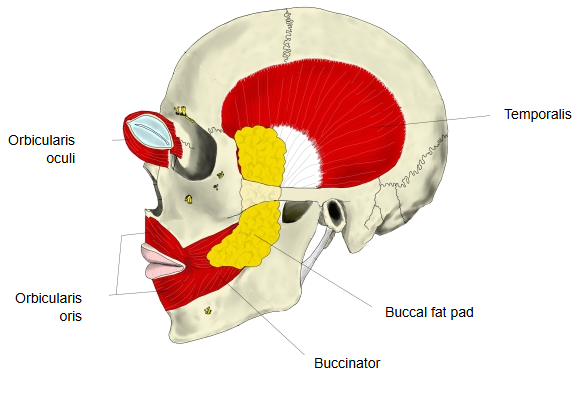
· On the inside the cheek forms the lateral wall of the oral vestibule, the narrow space between the cheeks and lips and the teeth and gums. The buccinator presses the cheek against the teeth during chewing and blowing.
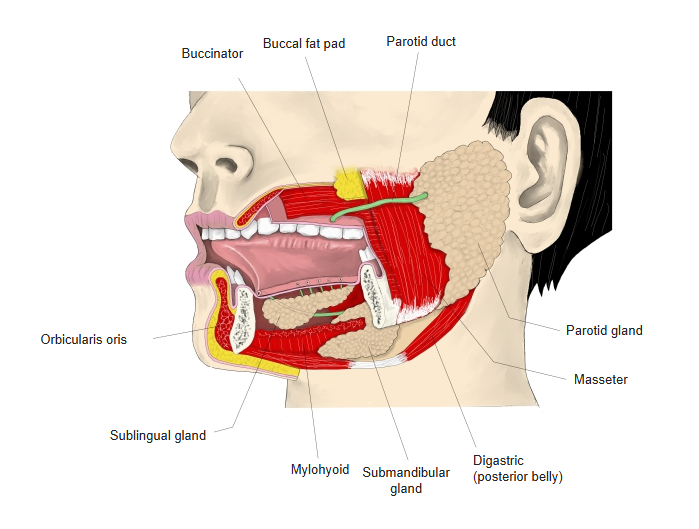
· The parotid duct pierces the buccinator and opens into the vestibule at the parotid papilla, opposite the upper second molar.
That textbook names only the buccinator among the muscles of the cheek, so it uses the cheek in the narrow sense.
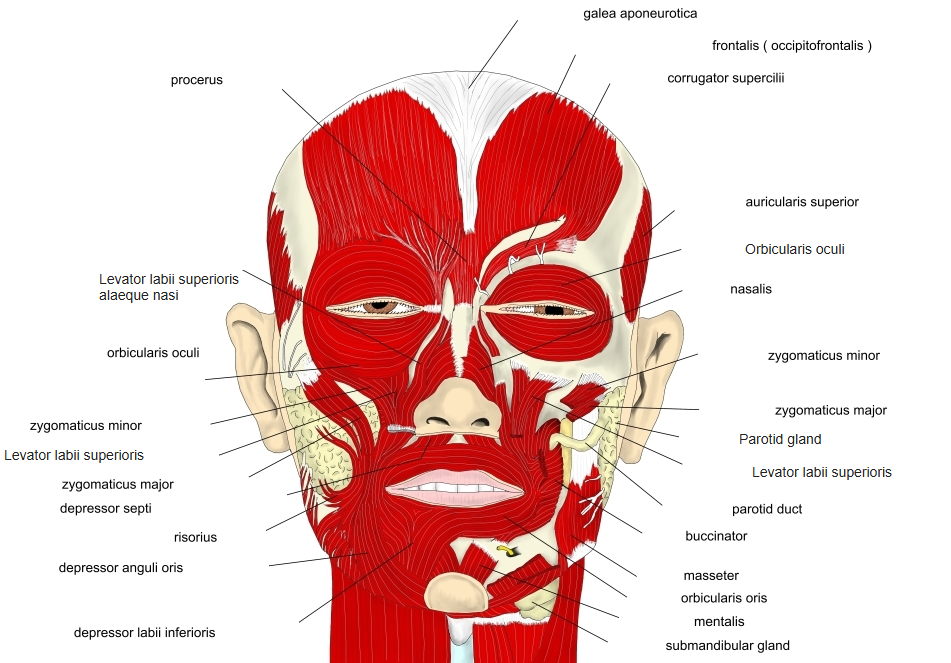
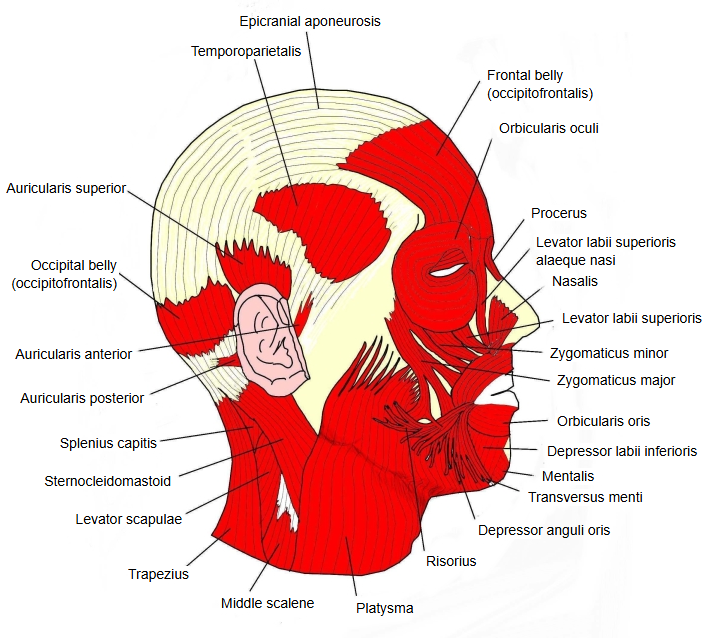
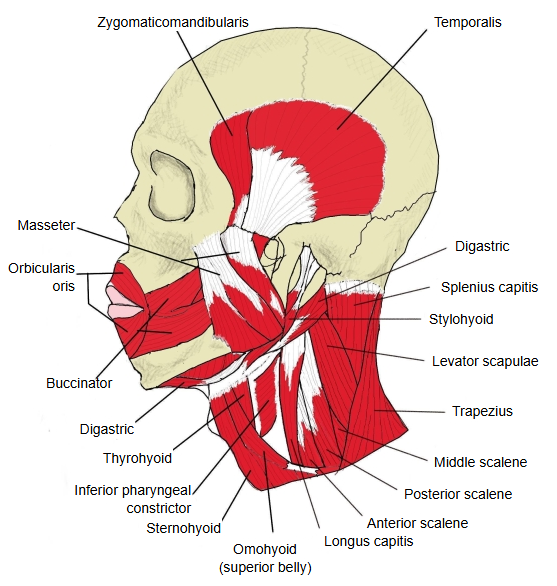
When the cheek is taken in the wider sense, more muscles can be counted as its muscles: although the textbook uses only the name buccinator, the following muscles also seem to be parts of the cheek.
1. 1. Buccinator 2. Masseter 3. Zygomaticus major 4. Zygomaticus minor 5. Risorius 6. Levator labii superioris
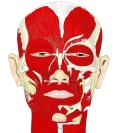 Muscles of facial expression (anterior view)
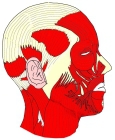 Muscles of facial expression (lateral view)
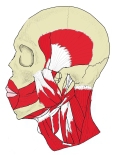 Muscles of mastication and the neck
In the wider sense, the following structures can also be counted as parts of the cheek.
1. 1. Parotid gland 2. Buccal fat pad
· The parotid gland lies at the back of the cheek, in front of the ear and over the masseter.
· The buccal fat pad lies between the buccinator and the masseter; it is large in infants and gives the cheeks their rounded shape.
· Small buccal glands lie in the submucosa and open into the vestibule.
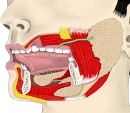 Major salivary glands
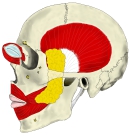 Buccal fat pad
Reference websites
[Wikipedia]
· Cheek, Wikipedia.
· Buccal space, Wikipedia.
· Buccal fat pad, Wikipedia.
[Websites with illustrations]
· The oral cavity (TeachMeAnatomy)
· Buccinator muscle (Kenhub)
Related terms
References and sources
- Further reading: Cheek, Wikipedia.
- Further reading: Buccal space, Wikipedia.
- Further reading: Buccal fat pad, Wikipedia.
- Federative International Programme for Anatomical Terminology (FIPAT). Terminologia Anatomica, 2nd ed. (TA2), 2019.