Subtalar joint (Latin: articulatio subtalaris)
Also called the talocalcaneal joint or the posterior lower ankle joint
Overview
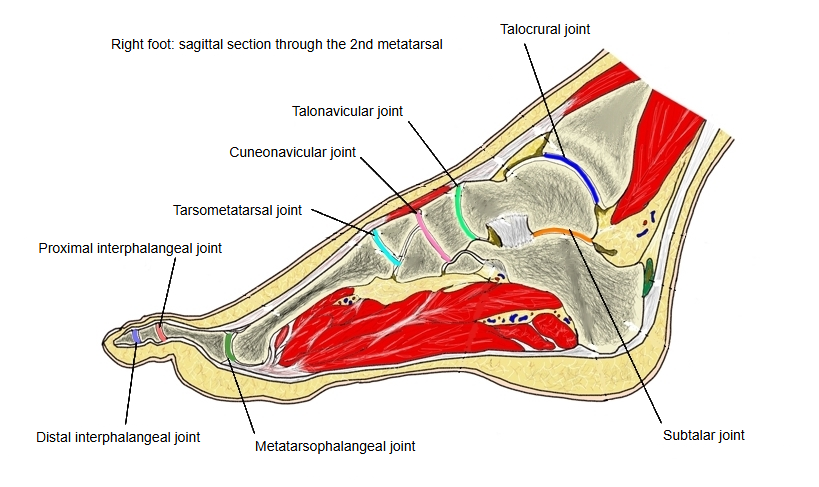
One of the intertarsal joints of the foot: the joint between the posterior calcaneal articular surface of the talus and the posterior talar articular surface of the calcaneus. Its joint capsule is thin and encloses a separate joint cavity; in old age the cavity sometimes communicates with that of the talocrural joint.
- Joints of the tarsus : talocrural joint; intertarsal joints: talocalcaneonavicular, subtalar, transverse tarsal, calcaneocuboid, cuneonavicular, cuneocuboid, cuboideonavicular and intercuneiform joints
- Joints of the metatarsus : tarsometatarsal and intermetatarsal joints
- Joints of the toes : metatarsophalangeal and interphalangeal joints
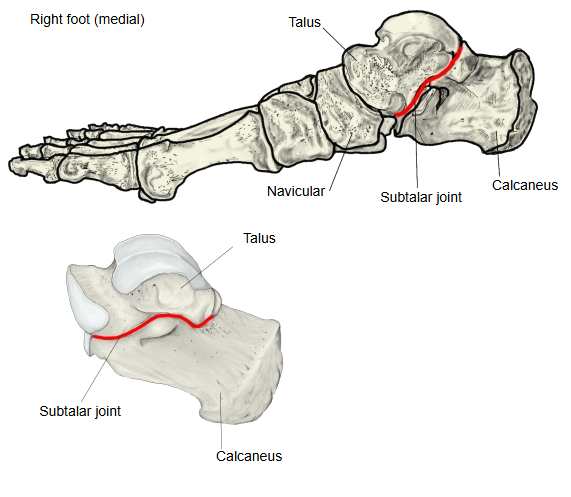
The talocrural, subtalar and talocalcaneonavicular joints work together when the foot pushes off, as in jumping, and are therefore also called the ankle joints. The subtalar joint is the posterior lower ankle joint.
Articular surfaces, capsule and ligaments
- The joint lies between the posterior calcaneal articular surface on the underside of the body of the talus and the posterior talar articular surface on the upper side of the calcaneus.
- Both surfaces are oval, with their long axes running from posteromedial to anterolateral. They are curved like part of a cylinder: the talar surface is concave and the calcaneal surface convex.
- The joint cavity is separate. The capsule is attached close to the margins of the articular surfaces and is somewhat stronger on its medial, lateral and posterior sides.
- In front, the joint is closed by strong fibres in the back part of the tarsal sinus that join the talus and calcaneus: the interosseous talocalcaneal ligament.
- The calcaneal part of the medial (deltoid) ligament and the calcaneofibular ligament of the talocrural joint also act as accessory ligaments of the subtalar joint.
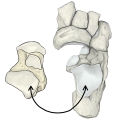 Tarsal bones
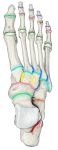 Right foot (dorsal view)
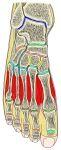 Right foot (section)
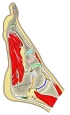 Right foot (sagittal section)
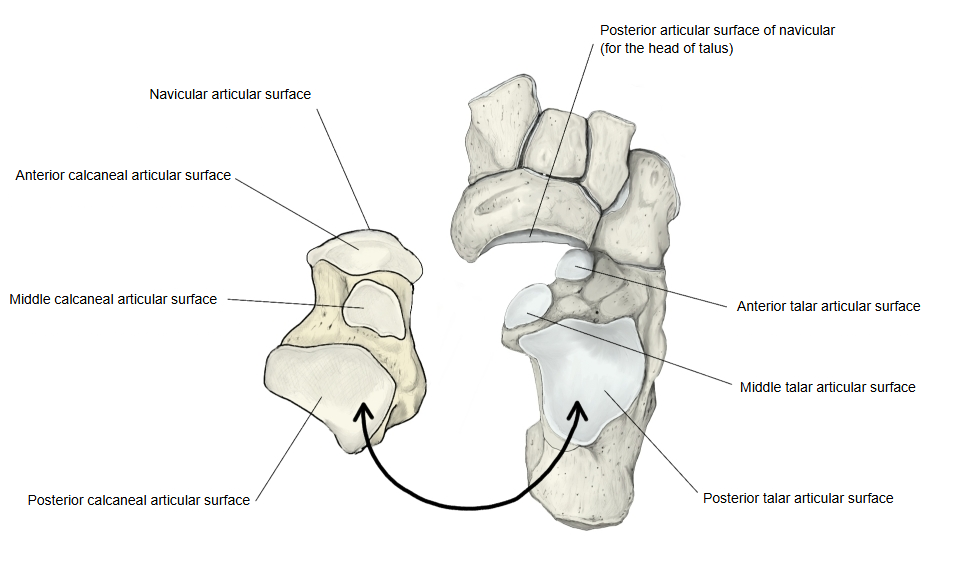
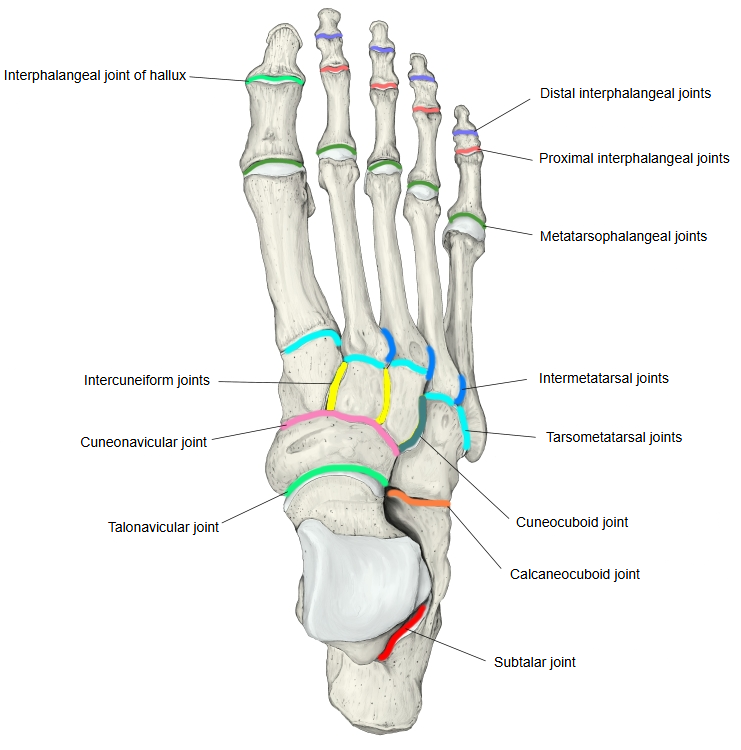
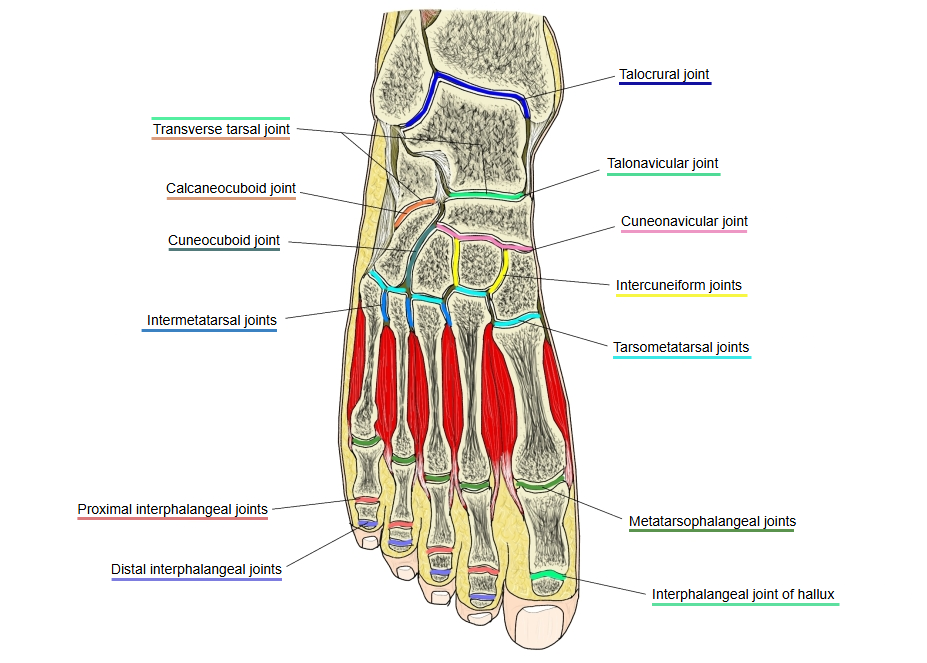
Bones
Type
Ligaments
Textbooks name different ligaments for this joint: some give only the lateral and medial talocalcaneal ligaments, others add the anterior and posterior talocalcaneal ligaments. The interosseous talocalcaneal ligament also holds the joint together, so all five are listed here.
| Ligament | |
|---|---|
| 1 | Lateral talocalcaneal ligament |
| 2 | Medial talocalcaneal ligament |
| 3 | Anterior talocalcaneal ligament |
| 4 | Posterior talocalcaneal ligament |
| 5 | Interosseous talocalcaneal ligament |