Base of lung (Latin: basis pulmonis)
Also called Diaphragmatic surface of lung
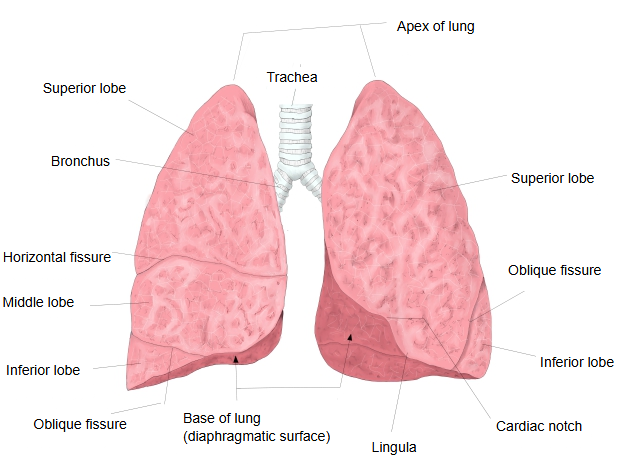
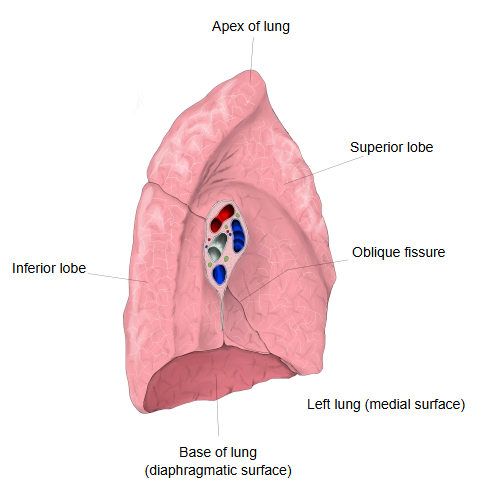
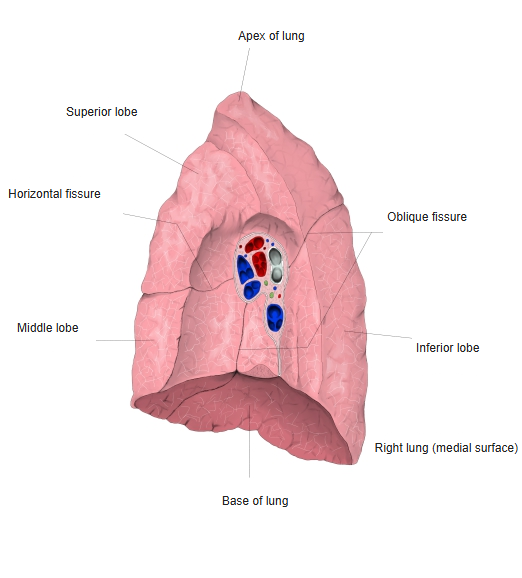
· The base is the lower surface of the lung and rests on the diaphragm. It is hollowed out upwards to fit the dome of the diaphragm, and the hollow is deeper in the right lung, because the liver pushes the right dome of the diaphragm higher than the left.
· The base is formed mainly by the inferior lobe; in the right lung the middle lobe also takes a small part in front.
· It is covered by visceral pleura and faces the diaphragmatic pleura across the pleural cavity. Its sharp outer edge, the inferior border, slips into the costodiaphragmatic recess during deep inspiration.
· Through the diaphragm, the base of the right lung lies over the right lobe of the liver; the base of the left lung lies over the left lobe of the liver, the fundus of the stomach and the spleen.
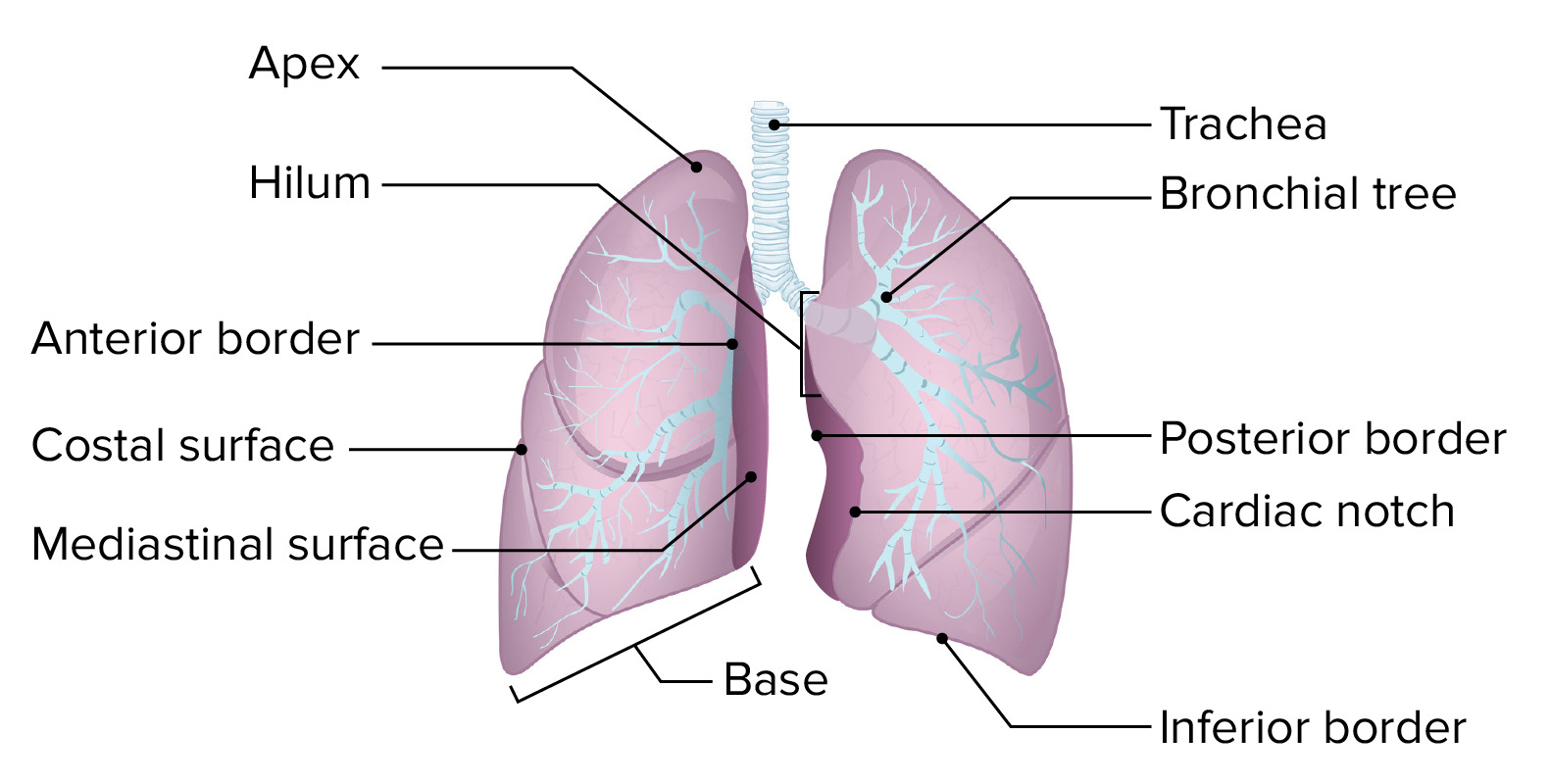
- Apex : the blunt, rounded top, rising about 2–3 cm above the medial third of the clavicle into the root of the neck and covered by the cervical pleura. Grooves: for the subclavian artery (both lungs), for the left brachiocephalic vein (left) and for the superior vena cava (right).
- Three surfaces : the costal surface (the largest, facing the ribs), the mediastinal (medial) surface (with the hilum, where the bronchus, vessels and nerves enter and leave) and the diaphragmatic surface (= the base).
- Three borders : the anterior border (between the costal and mediastinal surfaces in front), the inferior border (between the costal and diaphragmatic surfaces) and the rounded posterior border (between the costal and mediastinal surfaces behind).
- Base : concave, following the dome of the diaphragm; = the diaphragmatic surface.
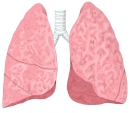 Lungs (anterior view)
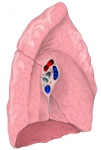 Left lung (medial surface)
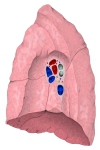 Right lung (medial surface)
Reference websites
[Wikipedia]
· Lung, Wikipedia.
[Websites with illustrations]
· The basic structure of the lung (figure) (Lecturio)
· The lungs (TeachMeAnatomy)
Where it is found
Related terms
References and sources
- Further reading: Lung, Wikipedia.
- Federative International Programme for Anatomical Terminology (FIPAT). Terminologia Anatomica, 2nd ed. (TA2), 2019.