Greater palatine groove of maxilla (Latin: sulcus palatinus major maxillae)
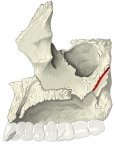 Maxilla (nasal surface)
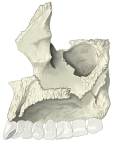 Maxilla (medial view)
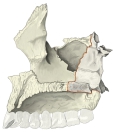 Maxilla and palatine bone (medial view)
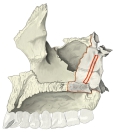 Greater palatine canal (position)
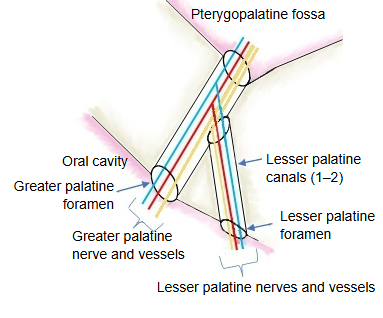
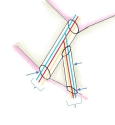 Greater and lesser palatine canals (diagram)
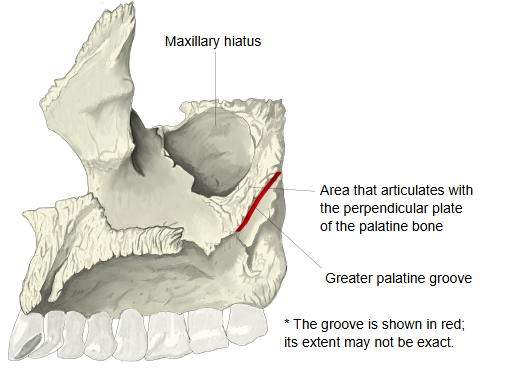
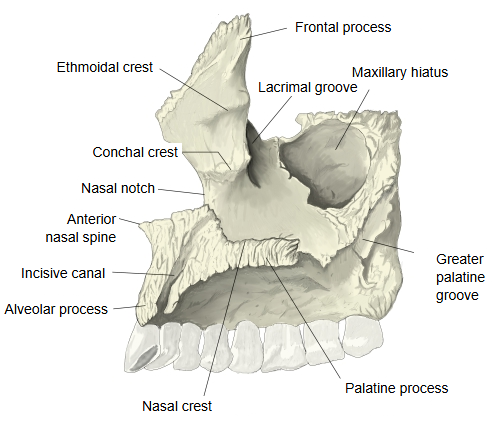
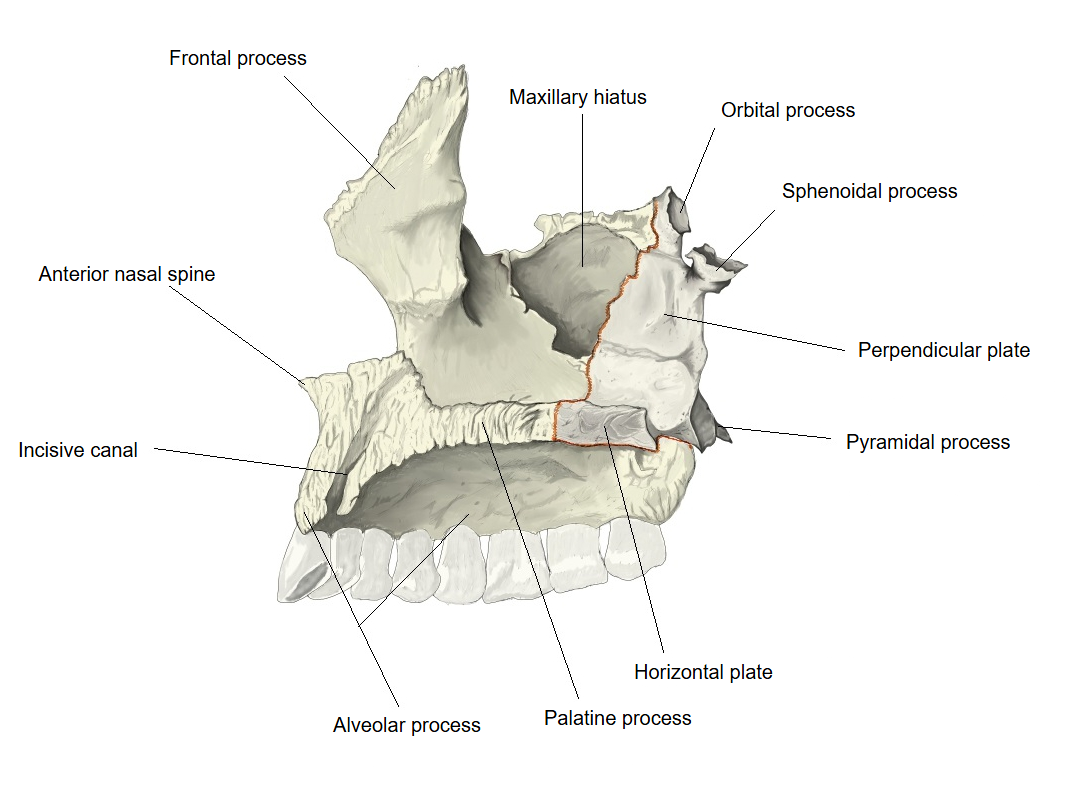
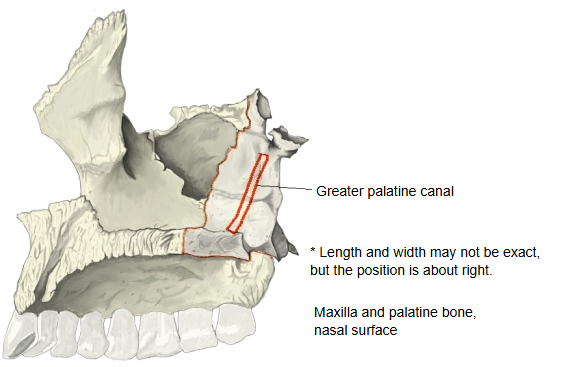
The part of the nasal surface behind the maxillary hiatus joins the perpendicular plate of the palatine bone; the orbital process of the palatine bone meets the upper back part of this area. In the lower back part of the area that joins the perpendicular plate, the greater palatine groove runs obliquely from behind and above, downwards and forwards, and joins the groove of the same name on the palatine bone to form the greater palatine canal, which opens on the palate at the greater palatine foramen.
The matching groove of the palatine bone is a deep vertical groove on the back part of the maxillary surface of its perpendicular plate. When the palatine bone articulates with the maxilla the two grooves become the greater palatine canal (in older texts the pterygopalatine canal), which transmits the descending palatine artery and its veins and the greater palatine nerve (formerly the anterior palatine nerve); the lesser palatine nerves and vessels branch off through the lesser palatine canals.
Reference websites
[Wikipedia]
· Maxilla, Wikipedia.
· Greater palatine canal, Wikipedia.
[Websites with illustrations]
· Articulation of the left palatine bone with the maxilla (Gray's Anatomy, fig. 167) (Wikimedia Commons)

· Left maxilla, inner (nasal) surface (Gray's Anatomy, fig. 158) (Wikimedia Commons)

Related terms
- Greater palatine canal
- Greater palatine foramen
- Body of maxilla
- Maxillary hiatus
- Pterygopalatine fossa
- Lesser palatine canals
- Maxilla
- Greater palatine groove of palatine bone
References and sources
- Further reading: Maxilla, Wikipedia.
- Further reading: Greater palatine canal, Wikipedia.
- Federative International Programme for Anatomical Terminology (FIPAT). Terminologia Anatomica, 2nd ed. (TA2), 2019.