Extrinsic muscle
Also called the extrinsic muscles
· An extrinsic muscle is a muscle that arises outside an organ or body part, such as the hand, foot, tongue, eyeball or larynx, and inserts into it, so that it moves that part. It is not the name of a single muscle but a term used to classify muscles.
· In contrast, a muscle whose origin and insertion both lie within the part is called an intrinsic muscle.
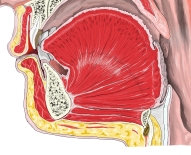 Extrinsic muscles of the tongue (extrinsic)
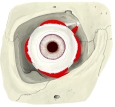 Extra-ocular muscles (extrinsic)
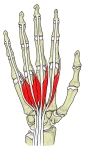 Intrinsic muscles of the hand (intrinsic)
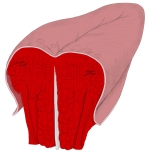 Intrinsic muscles of the tongue (intrinsic)
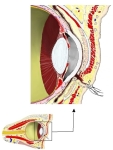 Intra-ocular muscles (intrinsic)
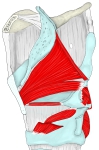 Intrinsic laryngeal muscles (intrinsic)
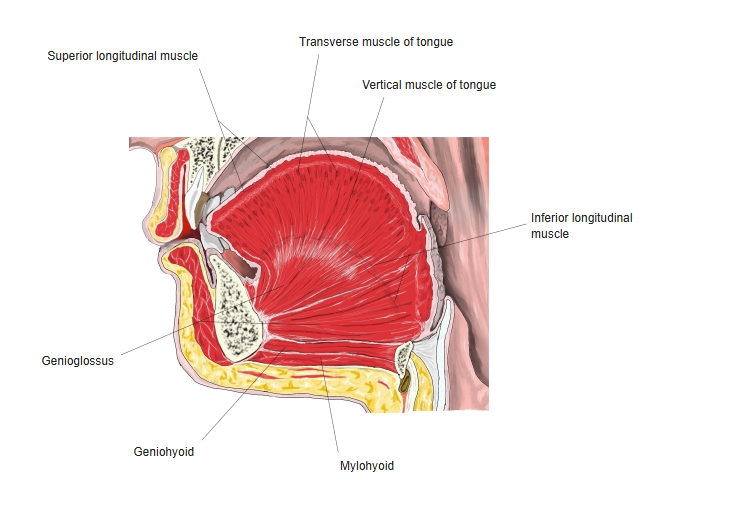
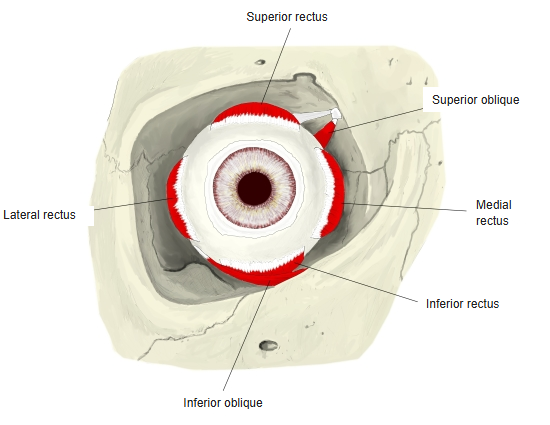
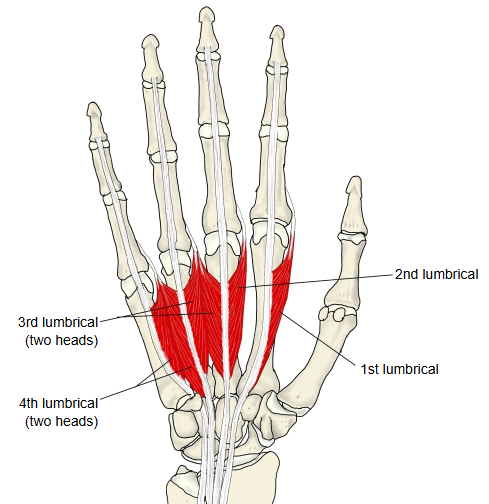
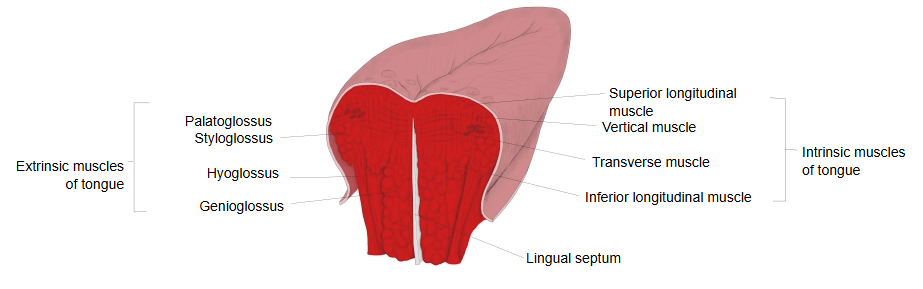
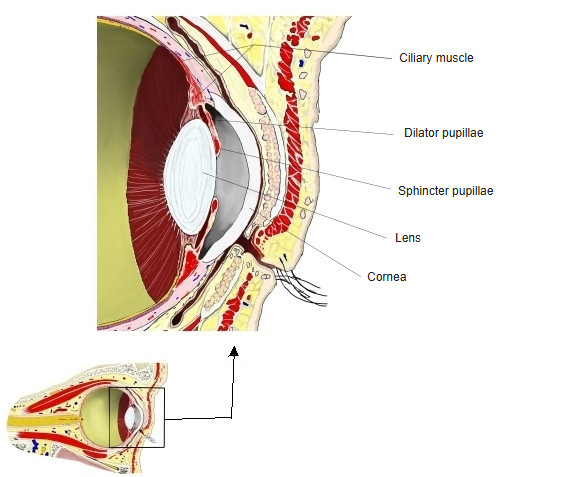
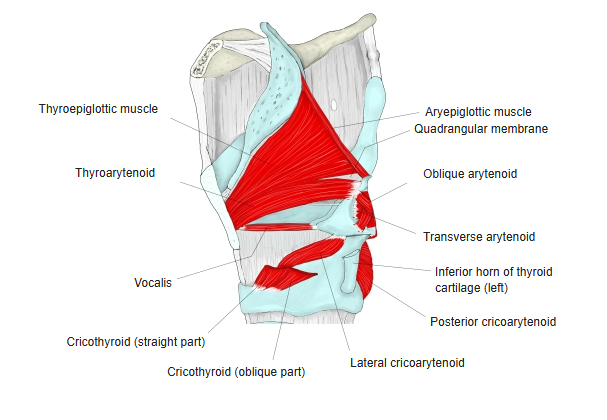
· The main examples for each part are as follows.
· In general, extrinsic muscles move the whole part and give strength, while intrinsic muscles change its shape and make fine adjustments. For example, the extrinsic muscles of the tongue change its position and the intrinsic muscles change its shape; the extrinsic muscles of the hand give a strong grip and the intrinsic muscles control fine finger movements.
· Some sources also count the palatoglossus among the extrinsic muscles of the tongue; which muscles are included differs between sources (see Extrinsic muscles of tongue).
More details
· For all the muscles of the eye and the larynx, see Extra-ocular muscles and Laryngeal muscles.
Reference websites
[Wikipedia]
· Intrinsic and extrinsic muscles, Wikipedia.
[Websites with illustrations]
· The extrinsic eye muscles (OpenStax) (Wikimedia Commons)

· Muscles that move the tongue (OpenStax) (Wikimedia Commons)

· Muscles of the leg that move the foot and toes (OpenStax) (Wikimedia Commons)

· Intrinsic muscles of the hand (OpenStax) (Wikimedia Commons)

Related terms
- Extrinsic muscles of tongue
- Extrinsic auricular muscles
- Extra-ocular muscles
- Intrinsic muscles of hand
- Intrinsic laryngeal muscles
- Intrinsic auricular muscles
- Laryngeal muscles
References and sources
- Further reading: Intrinsic and extrinsic muscles, Wikipedia.
- Federative International Programme for Anatomical Terminology (FIPAT). Terminologia Anatomica, 2nd ed. (TA2), 2019.