Hiatus for lesser petrosal nerve (Latin: hiatus canalis nervi petrosi minoris)
Also called the hiatus of canal for lesser petrosal nerve
· Just medial to it is the hiatus for the greater petrosal nerve, which leads the groove for the greater petrosal nerve into the canal for the greater petrosal nerve (greater petrosal nerve).
- Squamous part : the part that takes up the middle and the whole upper part of the bone; it has a temporal surface and a cerebral surface.
- Petrous part
- Mastoid part : below the squamous part (from the mastoid process to the parietal notch).
- Pyramid : a three-sided pyramid running forwards and medially from the boundary of the squamous and mastoid parts; it has an apex, surfaces and borders.
- Apex : points towards the foramen lacerum; the internal opening of the carotid canal opens here.
- Anterior surface : = cerebral surface: trigeminal impression, arcuate eminence, grooves for the greater and lesser petrosal nerves.
- Posterior surface : = cerebellar surface: internal acoustic opening, subarcuate fossa, external aperture of the vestibular aqueduct.
- Inferior surface : = basal surface: styloid process, jugular fossa, groove for the mastoid canaliculus, external aperture of the cochlear canaliculus, external opening of the carotid canal, petrous fossula, inferior opening of the tympanic canaliculus.
- Tympanic part : the smallest part: a thin, half-tube-shaped plate of bone that forms the front and lower walls of the external acoustic meatus.
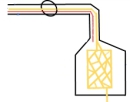 Lesser petrosal nerve leaving the tympanic cavity (diagram)
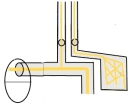 Greater and lesser petrosal grooves (diagram)
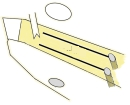 Sphenopetrosal fissure (diagram)
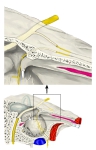 Right tympanic cavity, medial wall (oblique section)
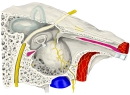 Right tympanic cavity, medial wall
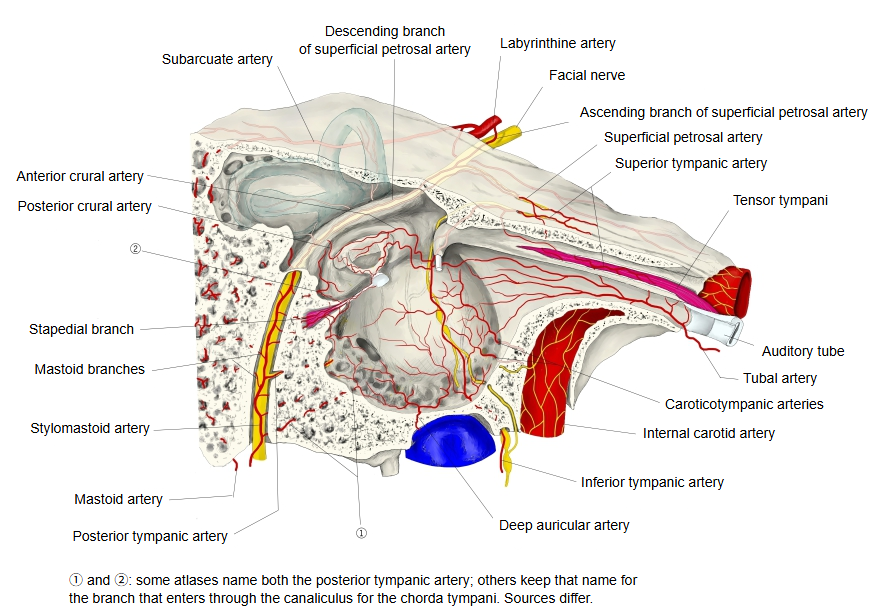
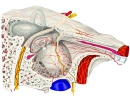 Arteries of the tympanic cavity
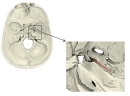 Internal cranial base
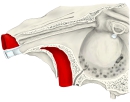 Left tympanic cavity (anterolateral view)
 Glossopharyngeal branches in the tympanic cavity
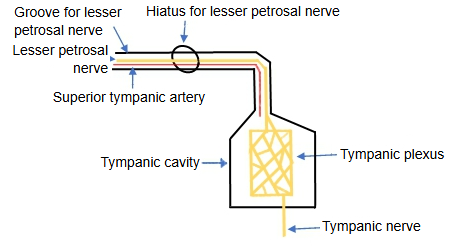
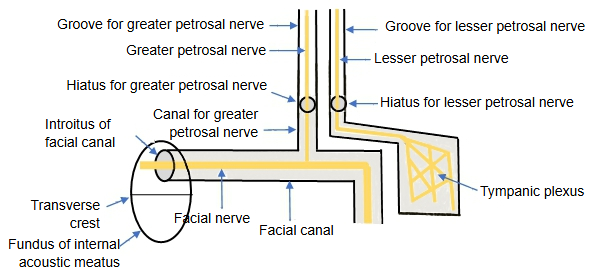
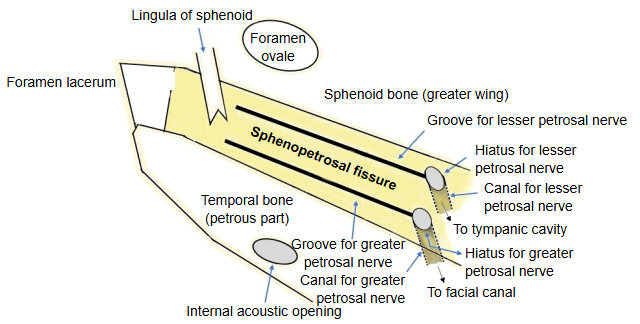
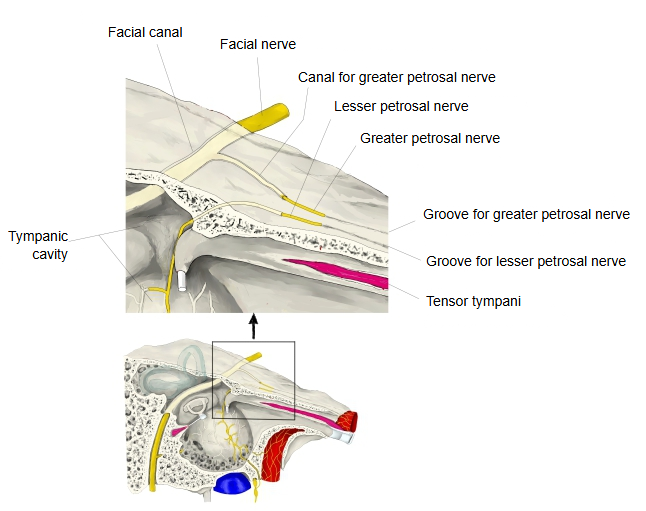
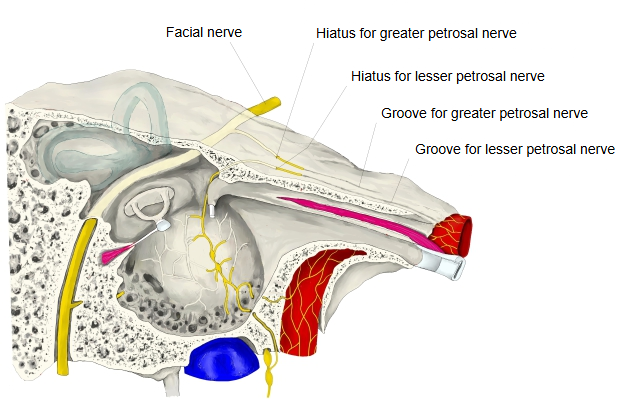
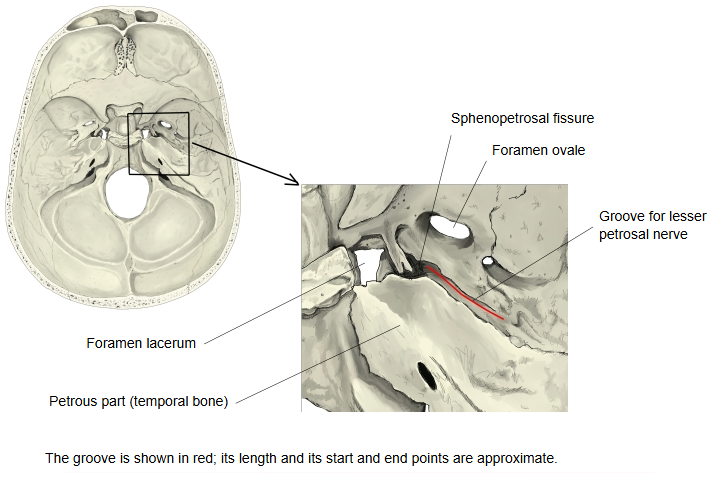
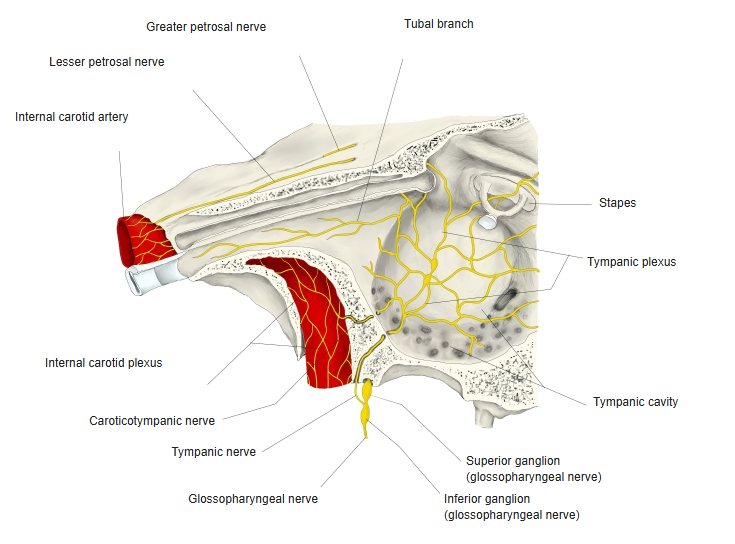
The hiatus lies on the upper surface of the petrous part, above the tympanic cavity. Behind it, a short bony canal, the canal for the lesser petrosal nerve, leads down to the tympanic cavity; in front of it, the groove for the lesser petrosal nerve leads forwards and medially towards the foramen ovale.
Course of the lesser petrosal nerve
1. The tympanic nerve enters the tympanic cavity and forms the tympanic plexus on the promontory.
2. The plexus continues as the lesser petrosal nerve, which passes through the canal and this hiatus.
3. The nerve runs in its groove and leaves the skull to reach the otic ganglion; its fibres supply the parotid gland.
Sources differ: some texts call this opening the superior opening of the tympanic canaliculus; others give that name to the opening at the other (tympanic-cavity) end of the canal for the lesser petrosal nerve.
Reference websites
[Wikipedia]
· Hiatus for lesser petrosal nerve, Wikipedia.
· Lesser petrosal nerve, Wikipedia.
[Websites with illustrations]
· Left temporal bone, inner surface (Gray's Anatomy) (Wikimedia Commons)

· Temporal bone: anatomy, parts, sutures and foramina (Kenhub)
Related terms
- Groove for lesser petrosal nerve
- Canal for lesser petrosal nerve
- Lesser petrosal nerve
- Superior opening of tympanic canaliculus
- Tympanic plexus
- Petrous part
- Foramen ovale
- Otic ganglion
- Temporal bone
References and sources
- Further reading: Lesser petrosal nerve, Wikipedia.
- Further reading: Petrous part of the temporal bone, Wikipedia.
- Federative International Programme for Anatomical Terminology (FIPAT). Terminologia Anatomica, 2nd ed. (TA2), 2019.